Abstract
The bralette has transcended its origins as a simple, unstructured undergarment to become a significant emblem of modern lingerie, embodying a cultural shift towards comfort, authenticity, and versatile styling. This article examines the multifaceted nature of bralette lingerie, moving beyond superficial aesthetics to explore the technical, material, and stylistic considerations essential for an informed selection. It investigates the principles of fit for a non-wired garment, analyzing the roles of band tension, cup volume, and structural design elements in providing support and shape. The discourse extends to a detailed analysis of fabrics, from natural fibers like cotton to intricate synthetics like lace and mesh, evaluating their properties in relation to comfort, durability, and sensory experience. Furthermore, the article situates the bralette within a broader wardrobe context, discussing its application from daily wear to its inclusion in more specialized categories such as bridal and erotic lingerie. By providing a structured, analytical framework, this guide serves to empower the consumer, transforming the act of purchasing lingerie from a speculative choice into a deliberate and satisfying expression of personal identity and well-being.
Key Takeaways
1. Proper fit is paramount; measure your underbust and consider breast shape.
2. Fabric choice dictates comfort, support, and the garment's overall aesthetic.
3. Align your bralette style with its intended purpose, from daily wear to special occasions.
4. Understand non-wired support features like wide bands and strategic seams.
5. Build a versatile bralette lingerie wardrobe with a mix of basic and statement pieces.
6. Proper care, primarily hand washing, is essential for garment longevity.
7. Explore how bralettes can be integrated as fashion-forward outerwear pieces.
Guide 1:Understanding Your Body's Architecture: The Foundation of Fit
The selection of any garment, particularly one as intimate as a piece of lingerie, begins not with the item itself, but with a profound and honest appraisal of the body it is meant to adorn. The bralette, in its celebration of the natural form, demands this understanding with particular urgency. Unlike the rigid architecture of a traditional underwire bra, a bralette works in concert with the body's own landscape. Its effectiveness hinges on a precise harmony between its design and your unique anatomical structure. Therefore, the first and most critical step in choosing the perfect bralette lingerie is to become a student of your own form.
Measuring for a Bralette: Beyond the Band and Cup
The conventional system of bra sizing, with its familiar band and cup letters, was developed in the 1930s and, while functional, often fails to capture the nuance required for a perfect fit, especially for wire-free garments (Farrell-Beck, 2004). For a bralette, which often uses more generalized sizing like small, medium, and large, two key measurements provide the necessary data for an informed choice: the underbust and the fullest part of the bust.
To begin, stand upright in a relaxed posture, preferably without a padded bra. Take a soft measuring tape and wrap it snugly around your ribcage, directly beneath your bust where the band of a bra would sit. Ensure the tape is parallel to the floor all the way around. This measurement, in inches or centimeters, is your underbust dimension. It is the primary anchor point for any bralette, providing the majority of the garment's support. A band that is too loose will ride up your back, offering no support, while one that is too tight will constrict and cause discomfort.
Next, measure the fullest part of your bust. This is typically across the nipple line. Keep the tape parallel to the floor and ensure it is not too tight; it should skim the body without compressing the breast tissue. The difference between this measurement and your underbust measurement gives an indication of your cup volume. While you may not be converting this to a traditional cup size, understanding this differential is crucial. A larger difference suggests a need for a bralette with more depth in the cups, possibly with darts or seams to create shape, while a smaller difference might be accommodated by a simpler, flatter design.
The Significance of Breast Shape and Volume
Beyond raw measurements lies the subtler, yet equally important, consideration of breast shape. Breasts are not uniform, and their shape significantly influences how a bralette will fit and feel. Are your breasts fuller at the bottom or more evenly distributed? Are they widely spaced or close-set? Do they have a more relaxed or a self-supporting posture?
Consider, for a moment, two individuals with identical band and bust measurements. One may have wide-set breasts with volume concentrated at the sides, while the other has close-set breasts with forward projection. The first individual might find a plunge-style bralette with a narrow center gore uncomfortable or ill-fitting, whereas the second might find it perfect. Conversely, a bralette with a wide, solid front panel might offer excellent coverage for the first person but feel restrictive to the second.
Understanding your shape helps you anticipate these issues. For example, individuals with fuller, heavier breasts might seek out bralette styles with wider straps and a more substantial band to distribute weight effectively. Those with less volume at the top of the bust may prefer a halter or high-neck style to provide more coverage and prevent gaping. This self-knowledge transforms shopping from a game of chance into a process of targeted selection.
Sister Sizing and its Application to Wire-Free Designs
The concept of "sister sizing" in traditional bras posits that the volume of a bra cup is relative to the band size. For instance, a 34C cup holds the same volume as a 32D or a 36B. While this system is based on underwire bra construction, its underlying principle-the interplay between band and volume-is highly relevant to bralette fitting.
When you encounter bralettes with S/M/L sizing, the manufacturer has typically created a size chart that maps these general sizes to a range of traditional band and cup sizes. If you find yourself between sizes, the logic of sister sizing can be a helpful guide. Let's imagine your measurements place you between a medium and a large. If your frame is relatively small but your bust is full, you might find the medium band fits your ribcage better, but the cups are too small. Conversely, a large might offer the right cup volume but a band that is too loose.
In this scenario, look at the bralette's construction. Does it have an adjustable band with multiple hook-and-eye closures? If so, you might opt for the large and use the tightest hook. Does it have adjustable straps? This can help you customize the fit and lift. A bralette with significant stretch in the lace or fabric might accommodate your bust volume even in the smaller band size. This analytical approach allows you to make a more nuanced decision than simply picking one size or the other.
Guide 2:Deciphering Fabric and Material: A Dialogue Between Skin and Textile
The material of a bralette is the medium through which its design is expressed. It is the point of direct contact with the skin, the element that determines breathability, the source of its stretch and support, and the canvas for its aesthetic appeal. To choose a bralette is to choose a textile relationship. The vast array of available fabrics is not merely a matter of visual preference; it is a functional choice that dictates the garment's performance and sensory character. A thoughtful examination of material properties is essential for selecting a piece that not only looks appealing but also feels harmonious against the body.
|
Feature |
Cotton/Modal |
Lace/Mesh |
Blended Synthetics (Nylon/Spandex) |
|
Primary Feeling |
Soft, Breathable, Natural |
Delicate, Textured, Alluring |
Smooth, Stretchy, Supportive |
|
Best For |
Everyday wear, sleep, sensitive skin |
Aesthetic appeal, layering, sexy lingerie sets |
Active use, shaping, fuller busts |
|
Breathability |
High |
High (in open patterns) |
Moderate to Low |
|
Support Level |
Low to Moderate |
Low to Moderate |
Moderate to High |
|
Durability |
Moderate |
Low to Moderate (delicate) |
High |
|
Care |
Machine washable (gentle) |
Hand wash only |
Machine washable (gentle) |
The Breathable Embrace of Cotton and Modal
Cotton, a fiber cherished for millennia, offers a familiar and comforting presence. In bralette lingerie, its primary virtues are softness and breathability. A cotton bralette allows air to circulate freely, wicking moisture away from the skin, a quality that makes it an exceptional choice for daily wear, warm climates, or for those with sensitive skin prone to irritation. Think of it as the quiet, reliable friend in your lingerie drawer.
Modal, a semi-synthetic fiber derived from the pulp of beech trees, offers a similar experience but with a heightened sense of luxury. It is exceptionally soft, often described as having a silky feel, and boasts even greater moisture-wicking capabilities than cotton. Modal also has excellent drape and is resistant to shrinking and fading, maintaining its integrity and color through repeated washes. When blended with a small amount of elastane or spandex, both cotton and modal gain the necessary stretch to move with the body, providing gentle support without constriction. These materials are the foundation of comfort-focused bralette design.
The Intricate Allure of Lace and Mesh
Lace is the poet of the lingerie world. It speaks a language of intricacy, romance, and suggestion. Functionally, lace used in bralettes can be divided into two main categories: stretch lace and rigid lace. Stretch lace, which incorporates elastic fibers, is the more common choice for the body of a bralette, as it allows the garment to conform to the body's curves. It provides a flexible fit that is both beautiful and comfortable.
Rigid lace, or non-stretch lace, is often used for decorative trims or as a stabilizing element in more structured designs. For example, a panel of rigid lace at the center gore can help provide separation, while a trim along the band can prevent it from rolling. Mesh, a close cousin of lace, offers a more modern and athletic aesthetic. Its open, net-like structure provides excellent breathability and a tantalizing sheerness, making it a popular choice for both everyday styles and more provocative erotic lingerie. When selecting a lace or mesh bralette, pay attention to the softness of the material. High-quality lace should feel pleasing against the skin, not scratchy or stiff.
The Supportive Nature of Blended Synthetics
For those seeking a higher level of support from a wire-free design, blended synthetics like nylon and spandex are indispensable. Nylon is prized for its strength, durability, and smooth finish. It creates a sleek surface that allows outer clothes to drape without clinging. Spandex (also known by brand names like Lycra) is the hero of stretch and recovery. It is a synthetic polymer that can be stretched to many times its original length and then return to its original shape.
When combined, these fibers create a fabric that is both powerful and pliable. A bralette made from a high-percentage nylon-spandex blend can offer a surprising degree of lift and shaping. This is the material often found in "power mesh," a denser, more supportive version of fashion mesh, used to line cups or construct bands for fuller busts. These materials are the workhorses of the supportive bralette, demonstrating that engineering and comfort can coexist beautifully.
Sustainable and Ethical Fabric Choices
The conversation around textiles in 2025 must include the dimensions of sustainability and ethics. The fashion industry is increasingly accounting for its environmental and social impact, and lingerie is no exception (Pletcher, 2024). Consumers now have the option to choose bralettes made from materials like organic cotton, which is grown without synthetic pesticides, or recycled nylon, which is created from post-consumer waste like fishing nets and industrial plastics. These choices reduce the garment's environmental footprint. Similarly, seeking out brands that are transparent about their supply chains and ensure fair labor practices adds an ethical dimension to your purchase, allowing your choice of lingerie to align with your broader values.
Guide 3:Aligning Style with Purpose: From Everyday Comfort to Erotic Lingerie
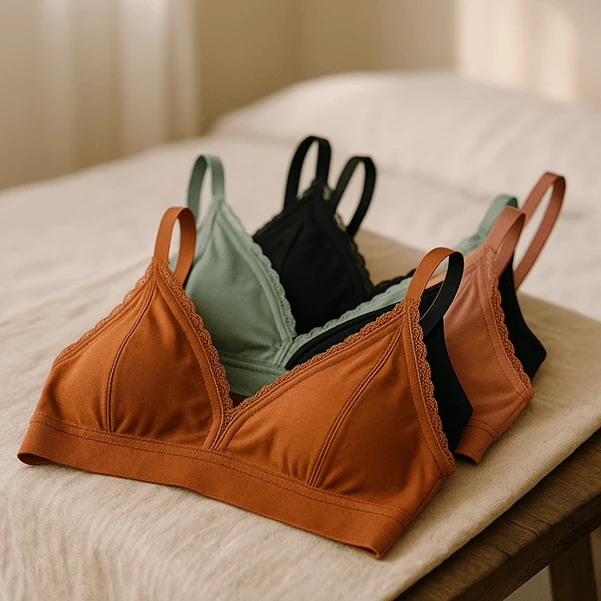
A bralette is not a monolithic entity. It is a diverse category of garments, each with a distinct personality and purpose. The aesthetic and structural design of a bralette-its "style"-determines its function and the context in which it will thrive. Choosing the right style is a matter of aligning the garment's character with your own needs and intentions. Do you seek a discreet foundation for your work attire, a beautiful piece to be glimpsed beneath a shirt, or an item intended for private admiration? The answer will guide you through the rich vocabulary of bralette design.
|
Style Type |
Description |
Best For |
Support Level |
|
T-Shirt Bralette |
Smooth, seamless cups, often molded. |
Wearing under form-fitting tops for a smooth silhouette. |
Moderate |
|
Plunge Bralette |
Deep V-neckline, narrow center gore. |
Low-cut tops and dresses. |
Low to Moderate |
|
Longline Bralette |
Band extends down the ribcage. |
Added support, smoothing, can be worn as a top. |
Moderate to High |
|
High-Neck Bralette |
Fabric extends up towards the collarbone. |
Layering under sheer tops, modesty under button-downs. |
Moderate |
|
Racerback Bralette |
Straps meet in a T or Y shape in the back. |
Preventing strap slippage, pairing with sleeveless tops. |
Moderate |
|
Halter Bralette |
Straps tie or connect behind the neck. |
Halter tops and backless dresses. |
Low to Moderate |
The Everyday Essential: T-shirt and Plunge Bralettes
For the demands of daily life, certain styles have emerged as foundational pieces. The t-shirt bralette is the epitome of practicality. It is designed with smooth, often lightly molded or lined cups that create a seamless silhouette under even the most unforgiving jersey knits. Its purpose is to provide comfort and a natural shape without calling attention to itself. It is the invisible architecture that supports your day.
The plunge bralette serves a different, though equally common, sartorial need. Its defining feature is a deep V-neckline, which makes it the ideal companion for low-cut tops and dresses. By cutting away the center fabric, it remains hidden while still providing support from the band and sides. A well-designed plunge bralette is a feat of engineering, proving that functionality need not be sacrificed for a specific neckline. These two styles form the bedrock of a functional bralette lingerie wardrobe.
The Statement Piece: Longline, High-Neck, and Racerback Styles
Some bralettes are not meant to remain hidden. They are designed to be seen, to participate in the overall fashion statement. The longline bralette is a prime example. Its band extends downwards, sometimes by several inches, onto the ribcage or waist. This extended band not only offers enhanced support and a smoothing effect but also transforms the garment into something akin to a crop top. Worn under a sheer blouse or a sharp blazer, it becomes a deliberate and stylish focal point.
The high-neck bralette features a panel of fabric, often decorative lace or mesh, that extends upwards from the cups towards the collarbone. This style is perfect for layering. It can add a touch of modesty and intrigue to a low-cut sweater or fill in the neckline of a button-down shirt worn partially open. Similarly, the racerback bralette, with its athletic-inspired strap configuration, is not only practical for preventing strap slippage but also creates a visually interesting detail when worn with open-back tops. These styles invite you to think of your lingerie not just as an undergarment, but as an accessory.
The Realm of Sensation: Exploring Sexy Lingerie Sets and Bridal Lingerie
Lingerie also inhabits a world of intimacy, celebration, and heightened sensation. In this context, the bralette takes on a different role. As part of a sexy lingerie set, it is designed to delight the senses. Materials become more adventurous: sheer mesh, intricate eyelash lace, perhaps even faux leather or satin. The design might incorporate provocative cutouts, delicate strapping details, or minimal coverage to emphasize and adorn the body's natural form. These are pieces of wearable art, intended to create a specific mood and experience.
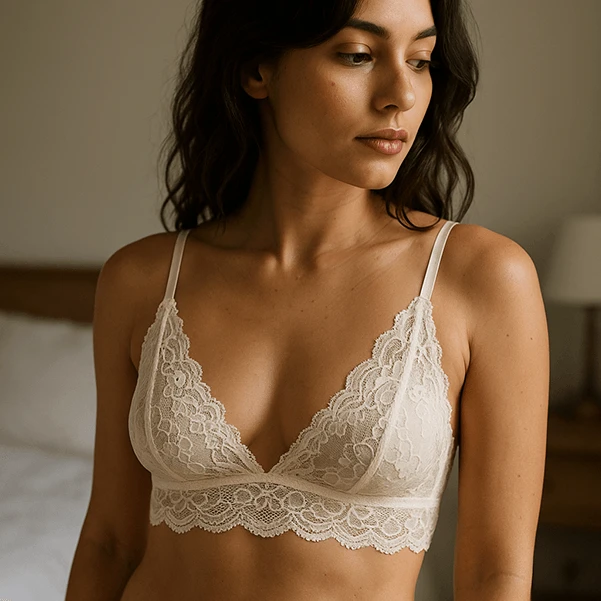
In the context of bridal lingerie, the bralette offers a modern, comfortable alternative to the often-restrictive corsets or bustiers of the past. A bride might choose a beautiful ivory or white lace bralette to wear while getting ready, or as a comfortable yet special piece for her wedding night. It can be part of a coordinated set that feels both celebratory and authentically personal, reflecting a contemporary approach to bridal traditions. The bralette's versatility allows it to be a part of these most personal and memorable moments.
Bralettes as Outerwear: A Fashion Forward Approach
The line between underwear and outerwear has become increasingly blurred, and the bralette is at the forefront of this trend. This is perhaps its most modern and empowering expression. A sturdy, stylish bralette, particularly a longline or high-neck style, can be worn on its own as a top, especially in warmer weather or at festivals. Paired with high-waisted trousers, skirts, or even layered over a simple white shirt, the bralette becomes a bold fashion statement. This usage challenges traditional notions of what lingerie is "for," reframing it as a versatile and expressive component of a complete wardrobe, much like a camisole or a crop top. It represents a confidence in one's own style and a comfort with one's own body.
Guide 4:Navigating Support Without Underwire: The Engineering of Comfort
One of the most persistent questions surrounding the bralette pertains to support, particularly for those with fuller busts. The absence of an underwire-the very feature that defines the bralette-can seem antithetical to the concept of lift and security. However, this view underestimates the sophisticated, albeit subtle, engineering inherent in a well-designed wire-free garment. Support in a bralette is not achieved through rigid force but through a holistic system of tension, material science, and intelligent construction. Understanding these principles allows one to select a bralette that offers comfort without compromising on function.
The Role of Wide Bands and Strategic Seaming
In any bra, with or without wire, the band provides the vast majority-up to 80%-of the support. In a bralette, its role is even more critical. A wider band, especially one made from a firm, resilient material, distributes the weight of the bust over a larger area of the torso. This reduces the pressure on any single point and creates a more stable anchor for the entire garment. Look for bands that are at least an inch wide, and for fuller busts, bands that are even wider, including longline styles. The band should fit snugly against the ribcage, firm but not constricting, and remain parallel to the floor from front to back.
Seaming within the cups is another crucial element of wire-free engineering. A simple, seamless triangle of fabric offers minimal shaping. However, the introduction of seams can create a three-dimensional cup that encapsulates and supports the breast tissue. A vertical seam running up the center of the cup, for example, can provide forward projection, preventing the "uni-boob" effect. A horizontal seam can offer lift from below. Some bralettes feature a multi-part cup with several seams, creating a tailored fit that rivals many underwire bras in its ability to shape and support.
Adjustable Straps and Their Impact on Lift
While the band does the heavy lifting, the straps play an important role in fine-tuning the fit and providing a final element of lift. The common misconception is that tightening the straps is the primary way to achieve lift. In reality, overburdening the straps will only lead to shoulder pain and a band that rides up in the back, compromising the garment's foundational support.
The true function of the straps is to hold the top of the cups flush against the body, ensuring a secure fit and preventing gaping. Adjustable straps are a non-negotiable feature for achieving a truly customized fit. They allow you to account for your unique torso length and shoulder slope. Wider, cushioned straps are a particularly valuable feature for those with fuller busts, as they help to distribute the load more comfortably across the shoulders, preventing the painful digging that can occur with narrow straps. When trying on a bralette, adjust the straps so they are secure but not bearing the full weight of your bust. You should be able to comfortably slip two fingers underneath the strap at your shoulder.
Power Mesh and Reinforced Panels for Fuller Busts
The evolution of textile technology has been a game-changer for the supportive bralette. Materials like power mesh-a firm, dense, yet breathable synthetic knit-are now commonly used to add reinforcement without adding bulk or sacrificing comfort. A bralette designed for a fuller cup size might feature cups fully lined with power mesh to provide enhanced support and minimize stretch.
Another technique is the use of a "side sling" or "power bar." This is an internal panel of supportive, low-stretch fabric built into the side of the cup. Its function is to gently push the breast tissue from the side towards the center of the body. This provides a more forward-facing silhouette, prevents side spillage, and offers a remarkable degree of shaping and security. When shopping for a supportive bralette, look for these hidden details. Run your fingers along the inside of the cups and band to feel for these reinforcing panels. They are the quiet signatures of a thoughtfully engineered, high-performance garment.
Guide 5:Considering the Occasion: The Social and Personal Context of Lingerie
The choice of lingerie is rarely made in a vacuum. It is a decision deeply embedded in a context of situation, audience, and personal intent. A piece of bralette lingerie is not just an object; it is a participant in the events of your day, whether those events are public and professional or private and intimate. Acknowledging the occasion is an act of sartorial intelligence, ensuring that your choice of undergarment supports not only your body but also your purpose and state of mind. The same bralette that feels liberating and stylish on a weekend might feel inappropriate or impractical in a different setting. Thus, a nuanced understanding of context is key to leveraging the full potential of your lingerie wardrobe.
Professional Settings and Modesty
In a professional environment, the primary goal of an undergarment is often discretion. The focus should be on your work and your professional presence, not on your lingerie. In this context, the t-shirt bralette, with its smooth, seamless cups and neutral color, is an invaluable asset. It provides a natural, rounded shape under blouses, sweaters, and tailored dresses without creating any distracting lines or textures.
The consideration of modesty is also paramount. A bralette that offers full coverage, preventing any potential for "spillage" or gaping, is generally the most appropriate choice. High-neck styles can be particularly useful, offering a built-in layer of coverage under button-down shirts or wrap dresses that might otherwise be too revealing for a conservative workplace. The color choice is also strategic; selecting a bralette that closely matches your skin tone will ensure it remains invisible under light-colored or slightly sheer fabrics. In this setting, the bralette's success is measured by its ability to perform its function flawlessly while remaining completely unnoticed.
Intimate Moments and Bridal Lingerie
At the other end of the spectrum are occasions of intimacy and celebration, where lingerie moves from the background to the foreground. Here, the bralette is chosen not for its invisibility but for its expressive and sensory qualities. This is the domain of delicate lace, sheer mesh, intricate strapping, and rich colors. A bralette chosen for an intimate evening or as part of a sexy lingerie set is about creating an experience-for the wearer as much as for a partner. It is a tool for self-expression, confidence, and play.
Bridal lingerie occupies a special place within this category. The wedding day and the events surrounding it are steeped in tradition and personal significance. A bride might select a beautiful lace bralette in white, ivory, or champagne to wear as part of her trousseau. It can serve a dual purpose: a comfortable, beautiful piece to wear while preparing for the ceremony, and a special garment for the wedding night. Unlike more restrictive traditional bridal lingerie, a bralette allows for a sense of ease and authenticity, reflecting a modern sensibility that values comfort alongside beauty, even on the most formal of occasions.
Active Lifestyles and Leisurewear
The bralette has also found a natural home in the realms of leisure and light activity. For a weekend of running errands, relaxing at home, or engaging in gentle exercise like yoga or walking, the comfort of a bralette is unmatched. A simple cotton or modal blend bralette provides just enough support without the constriction of a traditional sports bra. Its breathability and softness make it ideal for extended wear.
Racerback styles are particularly well-suited for an active lifestyle, as the strap configuration allows for a full range of shoulder motion and ensures the straps stay securely in place. The rise of "athleisure" as a dominant fashion trend has also elevated the bralette in this context. It's no longer just an undergarment for lounging; it's a component of a deliberate leisure outfit, often paired with matching leggings, joggers, or worn under an open hoodie or zip-up jacket. This reflects a broader cultural shift that blurs the lines between activewear, loungewear, and everyday fashion, with comfort and versatility as the guiding principles.
Guide 6:The Art of Curation: Building a Versatile Bralette Wardrobe
A thoughtful wardrobe is not merely an accumulation of individual items; it is a curated collection where each piece serves a purpose and relates to the others. This principle applies as much to lingerie as it does to outerwear. Building a versatile bralette wardrobe is an art of balance-a strategic interplay between foundational basics and expressive accent pieces. It is about creating a system of options that equips you for any occasion, mood, or outfit. This approach moves beyond impulsive purchases to the deliberate creation of a personal lingerie library that is both functional and joyful.
The Core Collection: Neutrals and Basics
The foundation of any strong bralette wardrobe is the core collection. These are the workhorse pieces, the garments that provide reliable, invisible support for the majority of your daily outfits. The primary characteristic of this collection is functionality and neutrality.
Your first priority should be to acquire at least one or two high-quality t-shirt bralettes in colors that are most practical for your wardrobe. For many, this means a color that matches their skin tone, which will render the bralette invisible under white and light-colored clothing. A black bralette is another essential, as it works perfectly under dark garments. These should be your most comfortable, best-fitting pieces-the ones you can put on in the morning and forget you are wearing.
In addition to the smooth-cup style, consider adding a basic plunge bralette to your core collection. This will cover your needs for V-necks and lower-cut tops. The focus for these core pieces should be on fit, comfort, and quality of material. They are an investment in your daily comfort and confidence.
The Accent Pieces: Color, Texture, and Embellishment
Once your foundation is secure, you can begin to explore the more expressive possibilities of bralette lingerie. Accent pieces are where you can play with color, texture, and style. This is your opportunity to select garments that reflect your personal aesthetic and bring you joy.
Consider a bralette in a rich jewel tone-an emerald green, a sapphire blue, or a deep ruby red. A flash of such a color beneath a neutral top can be a delightful secret or a subtle style statement. Explore different textures. A delicate eyelash lace bralette adds a touch of romance, while one with geometric mesh details can feel modern and edgy. Look for pieces with unique features, like intricate back strapping that would look beautiful under an open-back sweater, or a high-neck lace overlay perfect for peeking out of a blazer. These accent pieces are not necessarily for everyday wear, but they are the garments that elevate your lingerie drawer from purely functional to truly personal and exciting.
Coordinating with Other Garments like Jumpsuits and Corsets
A truly versatile bralette wardrobe considers the interplay with other, less common garments. The right bralette can be the key to successfully styling a tricky piece like a jumpsuit. Many jumpsuits, particularly those with looser tops or lower armholes, require a thoughtful undergarment choice. A racerback bralette can complement the cut of a sleeveless jumpsuit, while a pretty lace bandeau or triangle bralette can be an intentional, stylish element to show off.
The bralette can also serve as a modern, comfortable counterpoint to more structured garments like corsets. While a corset provides significant shaping for the waist and torso, it may or may not offer bust support. Wearing a simple, soft bralette underneath a fashion corset can provide the necessary coverage and comfort for the bust, allowing you to enjoy the dramatic silhouette of the corset without sacrificing ease. Thinking about these pairings allows you to get more wear out of both your lingerie and your broader wardrobe, creating a cohesive and functional style system.

Guide 7:Caring for Your Garments: Ensuring Longevity and Beauty
The delicate construction and fine materials of bralette lingerie require a mindful approach to care. Proper washing and storage are not just chores; they are acts of preservation that protect your investment and ensure your favorite pieces remain beautiful and functional for as long as possible. The enemies of lingerie are heat, agitation, and harsh detergents. By adopting a gentle care routine, you can significantly extend the life of your bralettes, keeping the fabrics vibrant, the elastic resilient, and the delicate details intact.
The Gentle Art of Hand Washing
Hand washing is, without question, the gold standard for caring for all delicate lingerie, including bralettes. It may seem time-consuming, but the process is quite simple and the benefits are immense. Fill a clean basin or sink with cool or lukewarm water-hot water can damage delicate fibers like lace and degrade elastic. Add a small amount of a gentle, pH-neutral detergent specifically designed for delicates.
Submerge your bralettes in the soapy water and let them soak for about 20-30 minutes. Gently swish them through the water and lightly work the suds into the fabric with your hands, paying particular attention to the band where oils and sweat accumulate. Avoid any harsh scrubbing, twisting, or wringing, as this can stretch and damage the garment. After soaking, drain the soapy water and rinse the bralettes thoroughly under cool, running water until no suds remain.
To remove excess water, do not wring the bralette out. Instead, gently squeeze the water out, then lay the garment flat on a clean, dry towel. Roll the towel up with the bralette inside and press firmly to absorb more moisture. Finally, reshape the bralette and lay it flat on another dry towel or hang it over a drying rack to air dry, away from direct sunlight or heat.
Machine Washing with Care
While hand washing is always preferred, a machine can be used if done with extreme care. This method should be reserved for more robust bralettes made from cotton or durable synthetics, and never for very delicate lace or silk pieces.
First, always fasten any hooks and eyes on the bralette to prevent them from snagging on other items. Place the bralettes inside a mesh lingerie bag. This is a crucial step that protects them from the agitation of the machine and prevents straps from getting tangled and stretched. Wash them with other delicate items of similar colors.
Select the most delicate cycle your machine offers, often labeled "Hand Wash" or "Delicates," and use cold water exclusively. Use the same gentle, pH-neutral detergent you would for hand washing. Once the cycle is complete, remove the bralettes from the mesh bag immediately. Never, under any circumstances, put your bralettes in the dryer. The high heat will destroy the elastic fibers (spandex/elastane) in a very short time, causing the garment to lose its shape and supportive qualities. Reshape them and air dry them using the same method as for hand washing.
Proper Storage and Rotation
How you store your bralettes is just as important as how you wash them. Tossing them into a crowded drawer can cause them to become tangled, snagged, and misshapen. The ideal storage method is to lay them flat in a drawer, one on top of the other, without folding the cups. If you have molded-cup bralettes, nesting them inside one another helps them maintain their shape.
For non-molded bralettes, you can fold them in half, tucking the straps in, before laying them in the drawer. Using drawer dividers can be an excellent way to keep your lingerie organized and protected. Finally, practice rotation. Avoid wearing the same bralette two days in a row. Giving the garment a day off allows the elastic in the band and straps to rest and recover, helping it maintain its resilience and supportive properties for much longer. This simple habit is one of the most effective ways to prolong the life of your entire lingerie collection.
Frequently Asked Questions (FAQ)
Can I wear a bralette if I have a large bust?
Absolutely. The key is to look for bralettes specifically designed with features for fuller busts. Seek out styles with wide, supportive bands, multi-part seamed cups for shaping, adjustable straps, and reinforcing materials like power mesh lining or side support slings. Many brands now offer bralettes in cup-specific sizes (e.g., M-Plus or 36G) that provide excellent support without an underwire.
What is the main difference between a bralette and a soft-cup bra?
The terms are often used interchangeably, but there can be a subtle distinction. Generally, a "bralette" refers to a more stylized, often unlined and unstructured garment, frequently featuring decorative lace or straps and sized S/M/L. A "soft-cup bra" or "wire-free bra" might imply a more functional, structured garment with molded or seamed cups and traditional bra sizing (e.g., 36C), just without the underwire. However, the line is very blurry, and many garments fit both descriptions.
How do I stop the band of my bralette from rolling up?
A rolling band is almost always a sign of an improper fit. It typically means the band is too small for your frame, causing it to curl under pressure. It can also happen if the band is too loose and is riding up your back, in which case it lacks the proper tension to stay in place. Ensure you are wearing the correct band size by measuring your underbust. Additionally, longline bralette styles with wider bands are much less prone to rolling than very narrow bands.
Can a bralette be worn as a sports bra?
For very low-impact activities like gentle yoga, stretching, or lounging, a comfortable and supportive bralette can be sufficient. However, for any high-impact activities like running, jumping, or intense cardio, a bralette is not a substitute for a true sports bra. Sports bras are specifically engineered with compression and/or encapsulation technology to minimize breast movement, which is crucial for comfort and protecting breast ligaments.
How can I style a bralette as outerwear without feeling too exposed?
Layering is your best friend. Start by wearing a statement lace or longline bralette under a sheer blouse or an open-knit sweater; this allows the bralette to be a visible part of the outfit in a subtle way. Another popular and chic option is to wear a bralette under a sharp blazer or suit jacket with high-waisted trousers. For a more casual look, let a colorful or strappy bralette peek out from under a loose-fitting tank top or a button-down shirt worn with the top few buttons undone.
How often should I replace my bralettes?
The lifespan of a bralette depends on its quality, how often you wear it, and how you care for it. With proper rotation and gentle hand washing, a good quality bralette can last for a year or more. Signs that it's time for a replacement include a stretched-out band that no longer fits snugly, straps that have lost their elasticity and no longer stay adjusted, fabric that has become pilled or discolored, or any broken hardware.
Conclusion
The journey to finding the perfect bralette lingerie is a process of introspection and education. It begins with an intimate understanding of your own body-its measurements, its shapes, its needs. It unfolds through a tactile exploration of materials, weighing the breathable comfort of cotton against the supportive strength of synthetics and the decorative allure of lace. This journey requires a consideration of purpose, distinguishing between the discreet needs of a professional setting and the expressive desires of an intimate one.
Mastering the principles of wire-free support, from the foundational role of the band to the subtle engineering of seamed cups, transforms the selection process from a guess to a science. By learning to curate a collection of both core basics and expressive accents, and by committing to the gentle art of garment care, the bralette ceases to be a mere undergarment. It becomes a reliable tool, a form of self-expression, and a source of daily comfort and confidence. Ultimately, the perfect bralette is not found, but chosen-an informed decision that reflects a harmonious relationship between the garment, the body, and the life it is meant to live.
References
Farrell-Beck, J. (2004). Uplift: The Bra in America. University of Pennsylvania Press.
Pletcher, J. (2024). Fast fashion. In Britannica.
Streefkerk, R. (2020, November 4). APA in-text citations (7th ed.). Scribbr.
Purdue University. (2025). In-text citations: The basics. Purdue Online Writing Lab. https://owl.purdue.edu/owl/researchandcitation/apastyle/apaformattingandstyleguide/intextcitationsthe_basics.html