Abstract
An examination of the 2025 swimwear market reveals a significant evolution in the design and manufacturing of high waist swim bottoms. This analysis focuses on seven defining trends that are shaping consumer preferences and production methodologies. Key developments include the widespread adoption of bio-adaptive and sustainable textiles, a move towards architectural silhouettes that prioritize sculptural form, and the rise of modular, hyper-personalized swimwear components. Further investigation covers the refinement of integrated tummy control technologies for enhanced comfort, the reimagining of retro aesthetics for a modern audience, the use of texture as a primary design element, and the notable convergence of lingerie construction with swimwear functionality. The implications of these trends for original equipment manufacturers (OEM) and original design manufacturing (ODM) are explored, highlighting new challenges and opportunities in material sourcing, technical production, and creating a versatile swimwear collection. The study synthesizes these elements to provide a comprehensive guide for brands navigating the future of swimwear design.
Key Takeaways
1. Prioritize bio-adaptive fabrics to meet growing consumer demand for sustainability.
2. Embrace architectural cuts and asymmetry for a modern, sculptural aesthetic.
3. Offer modular components to facilitate hyper-personalization and styling versatility.
4. Integrate comfortable tummy control technology for superior fit and function.
5. Reimagine retro designs with updated prints and modern hardware for nostalgic appeal.
6. Utilize textured fabrics like ribbing and smocking to add tactile dimension.
7. Apply lingerie construction techniques to create sophisticated high waist swim bottoms.
Trend1:The Ascendancy of Bio-Adaptive and Intelligent Fabrics
The dialogue surrounding fashion is increasingly, and rightly, centered on its environmental and ethical footprint. In the realm of swimwear, this conversation gains a particular urgency. The materials must withstand sun, salt, and chlorine while remaining comfortable against the skin. For 2025, the most profound shift is the movement away from virgin synthetics towards a new class of materials I like to call bio-adaptive fabrics. These are not merely recycled; they are intelligent, responsive, and often derived from sources that actively contribute to environmental restoration. Understanding this trend is paramount for any brand seeking to develop a relevant and responsible swimwear collection.
Understanding Material Innovation: From Recycled to Regenerative
Let's first clarify the landscape of sustainable textiles, as the terminology can be confusing. For years, the gold standard for "eco-friendly" swimwear has been fabric made from recycled post-consumer waste, such as plastic bottles (rPET) or fishing nets (ECONYL). These materials are a significant step forward, as they divert waste from landfills and oceans and reduce the demand for new petroleum extraction (Yim et al., 2021). As a manufacturer, working with these materials involves verifying the supply chain and certification, ensuring that the "recycled" claim is not just marketing but a traceable reality.
However, the horizon for 2025 is expanding towards regenerative materials. What does "regenerative" mean in this context? Imagine fabrics derived from sources that actively improve the environment as they grow. Think of textiles from seaweed or algae farms that de-acidify ocean water, or plant-based nylons derived from crops grown using regenerative agriculture practices that sequester carbon in the soil. These materials represent a paradigm shift from doing "less bad" to doing "more good." For a high waist swim bottom, this could mean a fabric that is not only beautiful and functional but also part of a positive ecological cycle. The technical challenge lies in achieving the necessary stretch, recovery, and durability that consumers expect from high-performance swimwear.
The Functional Aesthetics of Smart Textiles
Beyond sustainability, the fabrics for 2025 are becoming more functional. We are seeing the integration of properties that adapt to the wearer and the environment. Consider a high waist swim bottom made from a textile with enhanced UV protection woven directly into its fibers, offering a consistent UPF 50+ rating that doesn't wash out over time. Another innovation is thermoregulating fabric, which can help manage skin temperature, feeling cool to the touch even under a hot sun. Some advanced fabrics even change color or pattern when exposed to water, adding an element of playful transformation.
These "smart" properties affect the aesthetic and the experience. A fabric with superior moisture-wicking capabilities not only dries faster but also feels more pleasant against the skin post-swim. For a piece like a high waist swim bottom, which covers a significant portion of the torso, these comfort-driven functions are not minor details; they are central to the garment's perceived quality and value. When a wearer feels comfortable and protected, their confidence is naturally elevated.
Sourcing and OEM/ODM Considerations for Eco-Fabrics
For a brand partnering with an OEM/ODM provider like Catonie, navigating this new world of fabrics is a collaborative effort. The process begins with a clear design vision. Do you want to lead with a message of recycled materials, or are you aiming for the cutting edge of regenerative textiles? This decision influences every subsequent step.
Sourcing these advanced materials requires a global network of specialized mills and suppliers. Certifications like the Global Recycled Standard (GRS) for recycled content or Cradle to Cradle for circular economy principles become vital vetting tools. It is the responsibility of the manufacturing partner to ensure these supply chains are robust and transparent.
From a production standpoint, new fabrics can present new challenges. For example, bio-based nylons might have different heat tolerances during the dyeing and finishing process compared to traditional nylon. Textured fabrics made from recycled yarns may require adjustments in sewing tension to prevent puckering. A proficient OEM/ODM partner possesses the technical expertise to conduct thorough testing and adapt production lines to handle these material innovations without compromising the final quality of the garment. This ensures that the high waist swim bottoms are not just conceptually advanced but also flawlessly executed.
Trend2:Architectural Silhouettes: The New Geometry of Swimwear
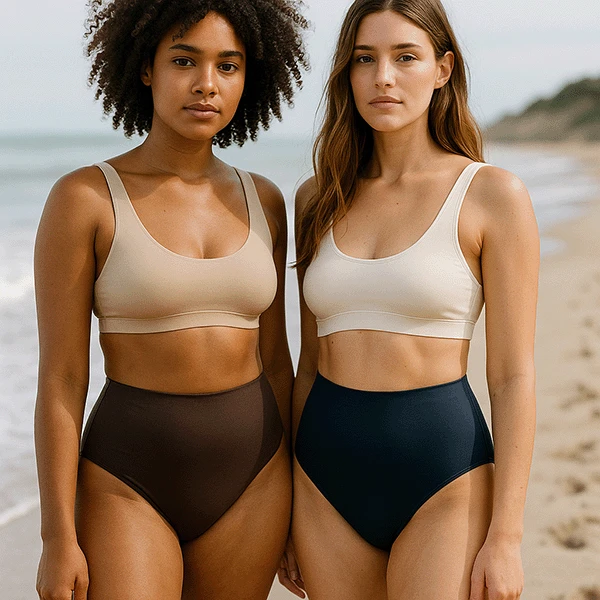
The high waist swim bottom has a classic, almost archetypal, silhouette. It evokes images of 1950s Hollywood glamour and seaside elegance. While that heritage remains a powerful touchstone, the 2025 iteration is being deconstructed and reassembled through the lens of architectural design. The focus is shifting from simple coverage to sculptural form, using lines, curves, and negative space to create a garment that is both a piece of apparel and a piece of wearable art.
The Influence of Modernism on Swimwear Design
Think about the principles of modernist architecture: clean lines, an emphasis on structure, and the idea that form should follow function. We are now seeing these principles applied directly to high waist swim bottoms. Instead of a single, uniform piece of fabric, designers are using strategic seaming and paneling to create visual interest and enhance the body's natural curves. A well-placed diagonal seam can elongate the torso, while a curved panel wrapping around the hip can create a more defined waistline.
This approach treats the body as a landscape and the swimsuit as a structure built upon it. The "function" is not just to cover the body but to celebrate its form. This is a more intellectual approach to swimwear design, one that appeals to a consumer who appreciates thoughtful construction and subtle details. It moves the high waist swim bottom away from being a purely "retro" item and recasts it as a thoroughly modern one.
Asymmetry and Negative Space as Design Elements
A key feature of this architectural trend is the use of asymmetry and cutouts, or what designers call "negative space." A high waist swim bottom might feature a single, sweeping cutout along the hip, or have a waistband that dips lower on one side than the other. These elements introduce a dynamic tension to the design. They draw the eye and create a sense of movement, even when the wearer is still.
These are not the overt, purely provocative cutouts of years past. The new approach is more considered and artful. A small, strategically placed void can be more impactful than a large, obvious one. It invites curiosity and adds a layer of sophistication. For a brand, incorporating these elements demonstrates a forward-thinking design sensibility. It shows an understanding that sexiness can be communicated through suggestion and artistry, a philosophy that resonates deeply with the design ethos behind sophisticated erotic lingerie, where the interplay of what is seen and what is concealed is paramount.
Technical Challenges in Producing Complex Cuts
Bringing these architectural designs to life requires a high degree of technical skill in pattern making and sewing. A simple rectangular pattern for a swim bottom is relatively straightforward to produce. An asymmetrical design with multiple curved panels and cutouts is another matter entirely.
|
Feature |
Traditional High Waist Bottom |
Architectural High Waist Bottom |
|
Pattern Complexity |
Low (2-4 simple pattern pieces) |
High (6-12+ complex, often asymmetrical pieces) |
|
Fabric Consumption |
Efficient, minimal waste |
Higher waste due to irregular shapes |
|
Sewing Technique |
Standard overlock and coverstitch seams |
Requires precision sewing, curved stitching, reinforced cutout edges |
|
Fit Challenge |
Relies on fabric stretch for fit |
Fit is built into the seams; less room for error |
|
Visual Effect |
Uniform, classic coverage |
Sculptural, dynamic, body-contouring |
As the table illustrates, the leap from a traditional to an architectural design is significant. Each seam must be perfectly aligned, and the edges of any cutout must be stabilized with clear elastic or specialized stitching to prevent them from stretching or sagging over time. The tension of the sewing machines must be calibrated precisely to the fabric's weight and stretch.
This is where the expertise of an experienced OEM/ODM partner becomes indispensable. A skilled pattern maker can translate a designer's architectural sketch into a functional pattern that accounts for fabric stretch and body movement. Experienced sewing operators can execute complex curves and sharp angles with the precision required. Without this technical foundation, an ambitious architectural design can easily result in a poorly fitting and unflattering garment. The goal is to create a piece that looks as good on the body as it does on the design table.
Trend3:Hyper-Personalization Through Advanced Modular Design
The modern consumer does not desire to be a passive recipient of fashion. They seek to be an active participant, a co-creator of their own style. This psychological shift is driving one of the most exciting trends in swimwear for 2025: hyper-personalization through modular design. The concept is simple yet powerful. Instead of selling a fixed bikini set, brands are offering a suite of individual components that can be combined in myriad ways. The high waist swim bottom becomes a foundational canvas upon which a personal swimwear wardrobe can be built.
The Psychology of Choice in Fashion
Providing choice is not merely a sales tactic; it taps into a deep-seated human need for autonomy and self-expression (Schwartz, 2004). When a customer can select not just the size and color of their high waist swim bottom, but also pair it with a variety of tops, belts, or even detachable sashes, they feel a sense of ownership over the final look. The resulting ensemble is not just something they bought; it is something they created.
This process fosters a stronger emotional connection to the product and the brand. It transforms the transactional nature of shopping into a creative and engaging experience. For a brand, this means thinking less about creating a single "perfect" swimsuit and more about creating a versatile system of compatible pieces. The high waist swim bottom is the anchor of this system, the versatile base that allows for extensive experimentation.
Mix-and-Match: Beyond Color to Texture and Form
The initial wave of mix-and-match swimwear focused primarily on combining different colors and prints. The 2025 evolution of this trend is far more sophisticated. It invites consumers to play with texture, silhouette, and function.
Imagine a sleek, minimalist high waist swim bottom in a matte black fabric. This could be paired with:
- A matching minimalist bandeau top for a chic, understated look.
- A voluminous, ruffled bikini top in the same color, creating a dramatic contrast in form.
- A ribbed-texture triangle top in a complementary jewel tone, adding tactile and visual interest.
- A long-sleeved rash guard in a bold print for a sporty, sun-protective option.
The system can be expanded further with accessories. A detachable belt with a statement buckle can be added to the high waist bottom to create a more fashion-forward look. A sheer, wrap-around sarong made from the same print as one of the top options ties the whole collection together. This modular approach extends the life and versatility of each piece, which also aligns with a more sustainable mindset of buying fewer, better things.
Implementing Modularity in an OEM/ODM Framework
Developing a successful modular swimwear collection requires meticulous planning and a strong partnership with your manufacturer. It is a challenge of systems design.
First, a core color palette must be established. These colors must be precisely matched across different fabric types-a matte nylon, a shiny tricot, and a ribbed knit in the same "emerald green" must be indistinguishable. This requires rigorous color lab-dipping and quality control at the dyeing stage.
Second, all connecting elements must be standardized. If the collection includes detachable straps or belts, the loops, hooks, or clasps used must be identical and interchangeable across all relevant pieces. This ensures a seamless user experience and avoids customer frustration.
Finally, the design of each individual piece must be considered in relation to the whole. A high waist swim bottom intended for a modular system needs to have a clean, versatile waistline that can be worn on its own or easily accommodate a belt. The leg cut must be balanced to work with both skimpy and full-coverage tops.
As an OEM/ODM provider, facilitating this level of systematic design is a core competency. It involves creating a "design library" of tested components-clasps, fabrics, and foundational silhouettes like the perfect high waist bottom-that a brand can use as building blocks for their unique modular collection. It transforms the manufacturing process from producing discrete items to engineering an entire ecosystem of apparel.

Trend4:The Evolution of Tummy Control: Comfort-First Engineering
The term "tummy control" has often been associated with restrictive, uncomfortable shapewear. It conjured ideas of being squeezed into a garment, sacrificing comfort for a specific silhouette. The 2025 approach to tummy control in high waist swim bottoms represents a radical departure from this old paradigm. The new philosophy is one of comfort-first engineering. It is not about forcing the body into a shape, but about using intelligent design and advanced materials to offer gentle support, smooth lines, and unwavering confidence. It is a shift from restriction to empowerment.
The Evolution of Shapewear Technology
To understand where we are going, we must appreciate where we have been. Traditional shapewear, and by extension early tummy control swimwear, often relied on heavy, dense fabrics with high compression levels. They worked, but often at the cost of breathability and freedom of movement. Some designs used rigid boning or stiff panels, techniques borrowed from the world of corsetry, which could be cumbersome for an active beach day.
The modern evolution, however, has been driven by innovations in textile science. We now have access to "power mesh" fabrics that are incredibly lightweight and breathable yet possess remarkable strength and recovery. These materials can be used as an inner lining in a high waist swim bottom. The outer fashion fabric provides the style, while the discreet inner layer provides the smoothing and support without adding bulk or heat. This is a far more nuanced approach, focusing on creating a sleek foundation rather than applying brute force.
Balancing Compression with Breathability and Movement
The central challenge in designing effective tummy control swimwear is achieving the perfect balance. Too much compression, and the garment becomes a corset, unsuitable for swimming or lounging. Too little, and the "control" aspect is lost. The key is what is known as "graduated compression," where the level of support varies across the garment.
For a high waist swim bottom, this might mean a front panel with a firm power mesh lining for direct tummy support, while the side and back panels use a lighter, more flexible lining to allow for comfortable movement and breathing. Advanced designs might even use zoned compression, where specific areas within the front panel have a denser knit to provide more support exactly where it is desired.
Furthermore, the seams themselves become functional elements. A well-designed high waist bottom might use flatlock seams that lie completely flat against the skin to prevent chafing, while also employing curved or princess seams that follow the body's contours to provide shaping without constriction. The goal is a garment that feels like a second skin-supportive, but almost unnoticeable to the wearer.
Material Blends for Effective Yet Comfortable Tummy Control
The specific blend of fibers in the fabric is the heart of comfort-first tummy control. Traditional swimwear is often a blend of nylon and spandex (also known as Lycra or elastane). For tummy control applications, the percentage and type of spandex are adjusted.
|
Control Technology |
Mechanism of Action |
Comfort Level |
Breathability |
Best For |
|
High-Spandex Fabric |
High percentage of spandex (25-40%) in the outer fabric creates all-over compression. |
Moderate |
Moderate |
Overall smoothing and a firm feel. |
|
Power Mesh Lining |
A separate, lightweight mesh lining provides targeted compression. |
High |
High |
Targeted tummy support without bulk. |
|
Bonded Panels |
Fusing a thin, rigid panel to the inside of the front panel for firm, localized control. |
Moderate to Low |
Low |
Maximum control for specific areas, less flexible. |
|
Strategic Seaming |
Using curved and reinforced seams to visually sculpt and gently hold. |
Very High |
Very High |
Light support and visual shaping, emphasizes comfort. |
As you can see from the comparison, power mesh lining offers a superior balance of targeted control, comfort, and breathability, making it a preferred choice for modern, high-quality high waist swim bottoms. The manufacturing process involves a two-step construction: first, the outer fashion shell is sewn, and then the inner power mesh "brief" is constructed and carefully attached at the waist and leg openings. This requires skilled operators to ensure both layers lie smoothly together without any twisting or bunching. It is a testament to the idea that the most effective design features are often the ones you cannot see, but can definitely feel.
Trend5:A Modern Lens on Nostalgia: Retro Reimagined
Nostalgia is a potent force in fashion. It connects us to personal memories and cultural moments, infusing clothing with a layer of emotional resonance. The high waist swim bottom is intrinsically linked to the past, particularly the glamorous silhouettes of the 1950s and the athletic cuts of the 1980s and 90s. The 2025 trend, however, is not about literal reproduction. It is about "retro reimagined"-deconstructing these vintage aesthetics and reinterpreting them with a contemporary sensibility, modern materials, and an updated understanding of fit.
Deconstructing 70s and 90s Influences
While the 50s provide the foundational silhouette for the high waist, the 70s and 90s are offering the most fertile ground for textural and graphic inspiration. From the 1970s, we are seeing a revival of earthy color palettes-terracotta, mustard yellow, avocado green-and psychedelic or geometric prints. However, instead of the heavy, quick-to-sag fabrics of that era, these prints are being applied to sleek, high-performance recycled nylons. The result is a look that captures the free-spirited vibe of the 70s without sacrificing modern functionality.
From the 1990s, the influence is more athletic and graphic. Think of the high-cut leg that elongates the silhouette, a signature of the era's swimwear. The 2025 version tempers the extreme height of the cut, finding a flattering middle ground that is both leg-lengthening and comfortable for a wider range of body types. We are also seeing the return of bold color-blocking and prominent logos, but with a more refined, minimalist execution. The nostalgia is for the confidence and energy of that time, distilled into a more sophisticated visual language.
Modernizing Vintage Prints and Color Palettes
Simply reprinting a vintage fabric is not enough. The process of modernizing a print involves several key adjustments. First, scale. A ditsy floral print from the 60s might be blown up to a larger, more abstract scale to feel more graphic and contemporary. Second, color. A classic paisley print might be recolored from its traditional rich tones into a stark black-and-white or a vibrant neon palette.
Digital printing technology has been a game-changer in this regard. It allows for infinite experimentation with color and scale without the high costs and long lead times of traditional screen printing. For a brand developing a swimwear collection via an OEM/ODM partner, this means you can test multiple variations of a modernized vintage print to see which one resonates best with your target audience. This process allows brands to tap into the emotional pull of nostalgia while still offering a product that feels fresh and new.
The Role of Hardware and Embellishments
The details are what complete the retro-reimagined story. Hardware-buckles, rings, and clasps-plays a huge role. While a 70s-era swimsuit might have used a plastic or wooden buckle, the 2025 version might use a sleek, matte-finish metal buckle with a clean, geometric shape. The form is nostalgic, but the material and finish are distinctly modern.
Tortoiseshell-effect acrylic rings, used to connect straps or as a decorative element at the hip of a high waist swim bottom, are another major trend. They evoke a sense of vintage luxury but are lightweight and water-safe. Even the choice of thread can contribute. Using a contrasting color for the topstitching can highlight the architectural seams of the garment, giving a nod to the utility-focused fashion of the 90s.
These embellishments must be chosen with care. All hardware must be tested for resistance to chlorine, salt water, and sun to prevent corrosion or discoloration. A knowledgeable manufacturing partner will have a library of pre-tested, high-quality hardware options and can also source custom components to match a brand's unique design vision. It is this thoughtful synthesis of past and present that makes the reimagined retro high waist swim bottom so compelling.
Trend6:Texture as a Primary Design Expression
For a long time, the visual appeal of swimwear was dominated by two elements: color and print. The surface of the fabric itself was assumed to be flat and smooth. The most significant material shift for 2025, alongside sustainability, is the elevation of texture to a primary design feature. The tactile quality of a garment is no longer an afterthought; it is a central part of the aesthetic and sensory experience. For the high waist swim bottom, this trend adds a new dimension of richness and sophistication.
From Smocking to Ribbing: A Tactile Experience
The range of textures being explored in swimwear is broad and exciting. Some of the most prominent examples include:
- Ribbed Knits: This is perhaps the most popular texture. The fabric has fine, vertical ribs that create a subtle striping effect. It has excellent stretch and recovery, and the texture is incredibly flattering on the body, creating long, lean lines. A high waist swim bottom in a ribbed fabric has an athletic yet chic feel.
- Smocking: This traditional technique, involving gathering fabric with elastic thread, creates a wonderfully stretchy and forgiving texture. A fully smocked high waist bottom offers a unique, almost handcrafted look and exceptional comfort, as it adapts perfectly to the body's curves.
- Crinkle Fabric: Characterized by a puckered, almost seersucker-like surface, this texture has a nostalgic, 90s feel. It is often made with high-stretch yarns, allowing for one-size-fits-many applications, which can simplify inventory for brands.
- Terry Cloth: Once reserved for towels and robes, a refined, lightweight version of terry cloth is being used for swimwear. It has a soft, plush feel that is incredibly comfortable and gives off a relaxed, retro-resort vibe.
Choosing a texture is about choosing a mood. A ribbed knit feels modern and sporty. Smocking feels romantic and artisanal. Terry cloth feels playful and luxurious. The texture communicates a story before color or print even enters the equation.
The Durability and Performance of Textured Fabrics
A common question for brands is whether these textured fabrics can perform as well as their smooth counterparts. The answer lies in the quality of the raw materials and the construction of the knit. High-quality textured swimwear fabrics are made from the same high-performance nylon and spandex yarns as traditional swimwear.
The key is the knitting process. For a ribbed fabric to be durable, the ribs must be tightly knitted to prevent them from "grinning" (where the base fabric shows through when stretched) or losing their shape. Similarly, the elastic used in smocking must be chlorine- and salt-resistant to maintain its elasticity over time.
One performance advantage of textured fabrics is their ability to mask minor imperfections. The uneven surface can be more forgiving than a flat, shiny fabric, which can be a significant confidence-booster for many wearers. However, they can also be slightly heavier and may hold more water than a standard flat knit, so fabric selection should involve testing for dry time.
Manufacturing Textured Swimwear: Opportunities and Hurdles
Producing high-quality garments with textured fabrics requires specific expertise. The fabric itself is often more expensive than standard tricot, which is a primary budget consideration. During the cutting process, patterns must be laid out carefully to ensure the texture runs in the correct direction-a rib that is even slightly off-grain will be immediately noticeable.
Sewing also presents unique challenges. A sewing machine's presser foot can sometimes crush or flatten a delicate texture. Experienced operators learn to adjust their machine settings and handling techniques to preserve the fabric's surface integrity. For a smocked high waist swim bottom, the tension of the elastic thread must be perfectly consistent to create an even, comfortable gather.
For an OEM/ODM partner, proficiency with textured materials is a mark of advanced capability. It demonstrates an investment in specialized machinery and operator training. It opens up a vast new territory for design innovation, allowing brands to create a swimwear collection that engages not just the eye, but also the sense of touch, creating a deeper and more memorable product experience.

Trend7:The Convergence: When Lingerie Construction Meets Swimwear
One of the most sophisticated and nuanced trends for 2025 is the blurring of lines between lingerie and swimwear. This is not about wearing literal lingerie to the beach. It is about applying the meticulous construction techniques, delicate aesthetics, and focus on fit from the world of intimate apparel to the design of swimwear. The high waist swim bottom, with its emphasis on shaping and form, is a natural canvas for this exciting convergence. This approach elevates swimwear from purely functional beach attire to a form of high-design fashion.
Applying Lingerie Construction Techniques to Swimsuits
Lingerie design is a discipline of precision. It involves an intimate understanding of how to use seams, darts, and specialized components to support and shape the body. When these techniques are translated to swimwear, the results are transformative.
Consider the use of "picot" elastic, the soft, decorative elastic often seen on the edges of panties. Using this to finish the leg openings of a high waist swim bottom, instead of standard plain elastic, adds a subtle, feminine detail that immediately signals a higher level of craftsmanship. Another technique is the use of "power bars," which are small, strategically placed panels of low-stretch fabric (often hidden in the lining) that provide targeted support, similar to how they are used in the band of a bra to anchor it to the body.
This convergence also influences the overall design philosophy. Lingerie designers are masters of creating illusion and shape. This mindset can be applied to a high waist swim bottom to create, for example, a design that incorporates panels of sheer but strong mesh, giving the illusion of cutouts while maintaining full structural integrity. It is a way of thinking that prioritizes both beauty and an almost architectural level of support. This level of detail is a hallmark of premium brands, including those specializing in intricate items like bridal lingerie or complex corsets.
The Aesthetic of Delicacy: Lace, Mesh, and Underwire in Water
This trend also sees the cautious and intelligent introduction of materials traditionally associated with lingerie. This does not mean using delicate silk lace that would disintegrate in chlorine. It means sourcing specialized, water-resistant lace made from nylon or other synthetic fibers that can withstand the rigors of sun and swimming. This lace can be used as an overlay on a solid panel of a high waist swim bottom, adding a layer of romantic texture without compromising durability.
Sheer mesh is another key material. Used in panels at the side seams or along the waistband, it creates a sense of lightness and sensuality. The key is to use a high-quality "power mesh" that is both sheer and strong, ensuring it doesn't lose its shape when wet.
While more common in tops, underwire technology is even being thoughtfully integrated into some high-waist designs, particularly in one-piece swimsuits that feature a high-waisted bottom section. A flexible, plastic underwire encased in a plush, water-safe channel can provide bust support that is seamlessly integrated into the entire garment's structure.
Sourcing Custom Lingerie-Style Swimwear for a Niche Market
Creating a swimwear collection with these lingerie-inspired details requires a manufacturing partner with a deep understanding of both product categories. The machinery and skills needed to sew delicate lace or insert a flexible underwire are different from those required for a basic swim seam.
The sourcing of materials is also highly specialized. Finding a mill that produces chlorine-resistant lace or skin-tone power mesh in a range of shades requires a dedicated and experienced sourcing team. The ability to create custom-dyed findings, like picot elastic that perfectly matches the main fabric color, is another hallmark of a high-capability OEM/ODM provider.
This trend appeals to a discerning customer who is looking for something beyond a standard bikini. They appreciate the artistry, the technical skill, and the sophisticated sensuality that this convergence represents. For a brand, offering a capsule collection of lingerie-inspired swimwear, including beautifully crafted high waist swim bottoms, can carve out a unique and profitable niche in a crowded market. It is a declaration that swimwear can be as intricate, personal, and exquisitely crafted as the finest lingerie.
Frequently Asked Questions (FAQ)
What truly makes a high waist swim bottom "tummy controlling"?
Effective tummy control is achieved through a combination of fabric and construction. It often involves an inner lining made of a lightweight but strong "power mesh" that provides gentle compression across the abdomen. Additionally, strategic seaming and paneling in the design can help to visually sculpt and smooth the area without the restrictive feeling of traditional shapewear.
How do I choose the right fabric for my brand's swimwear line?
The choice depends on your brand's aesthetic, price point, and sustainability goals. Recycled nylon/spandex blends offer a great balance of performance and eco-friendliness. Textured fabrics like rib or crinkle add a fashion-forward element. For premium collections, consider innovative bio-adaptive materials. Always prioritize fabrics with good stretch, recovery, and high resistance to chlorine and UV rays.
Are sustainable swimwear fabrics as durable as traditional virgin synthetics?
Yes. High-quality recycled fabrics, such as those made from ECONYL or other GRS-certified yarns, are engineered to meet or exceed the performance standards of their virgin counterparts. They undergo the same rigorous testing for durability, colorfastness, and resistance to environmental factors like salt and chlorine.
What is the difference between OEM and ODM for a swimwear brand?
OEM (Original Equipment Manufacturer) is when a manufacturer produces a design that you, the brand, have created and provided. ODM (Original Design Manufacturing) is when you select a pre-existing design from the manufacturer's portfolio and customize it with your own branding, colors, or minor modifications. Many manufacturers offer a hybrid approach to best suit a brand's needs.
How can I ensure a good fit for high waist bottoms across different body types?
A good fit starts with a well-developed pattern or "block." It is vital to test fittings on multiple models with different body shapes and sizes, not just a single fit model. Using high-quality fabric with four-way stretch is also key. Features like adjustable side ties or smocked panels can also help create a more adaptable and inclusive fit.
What are the key design considerations for plus-size high waist swim bottoms?
For plus-size designs, support and comfort are paramount. This means using wider waistbands that won't dig in, providing adequate rear coverage, and using high-quality power mesh for supportive tummy control. The leg cut should be carefully considered to be flattering without riding up. Offering a wide range of sizes and testing fits on plus-size models is non-negotiable.
How should customers care for swimwear that has delicate textures or embellishments?
The best practice is always to hand wash in cold water with a gentle detergent immediately after use. This removes chlorine, salt, and sunscreen that can degrade fabric and hardware. Swimwear should be laid flat to dry in the shade, as direct sunlight can fade colors and damage elastic fibers over time. Never wring out the suit, as it can stretch and damage delicate textures or lace.
Final Reflections on Form and Function
The journey of the high waist swim bottom into 2025 is a compelling narrative of innovation. It is a story that moves from simple coverage to sculptural expression, from passive materials to active, intelligent textiles. We see how the garment is becoming a canvas for personalization, a site of comfort-driven engineering, and a bridge between nostalgic sentiment and modern aesthetics. The thoughtful integration of texture and the sophisticated techniques borrowed from lingerie design further enrich its identity.
For a brand, navigating this landscape requires more than just an eye for trends. It demands a deeper understanding of the interplay between material science, technical construction, and the evolving desires of the consumer. The most successful swimwear collections will be those born from a collaborative partnership between a creative brand vision and a manufacturer with the technical prowess to bring that vision to life with integrity and precision. The high waist swim bottom is no longer just a piece of swimwear; it is a statement of confidence, a reflection of personal style, and a testament to how thoughtful design can empower.
References
Amsberry, D. (2025). APA quick citation guide: In-text citation. Penn State University Libraries.
Chapman, J. (n.d.). APA style: 7th edition. NWTC LibGuides.
Patton, E. M. (2019). APA style (7th ed.): In-text citations. Lone Star College.
Purdue University. (n.d.). In-text citations: The basics. Purdue Online Writing Lab. owl.purdue.edu
Schachte, M. (2019). Citations: In-text - APA style & citation 7th edition. Central Penn College.
Schwartz, B. (2004). The paradox of choice: Why more is less. Ecco.
Yim, H. Y., Kim, S. J., & Lee, Y. H. (2021). Sustainable textiles and clothing for the future. Fibers and Polymers, 22(8), 2033–2046.
Zhao, A. (2022). How to cite in APA style (7th edition): In-text citations. HKUST Library.