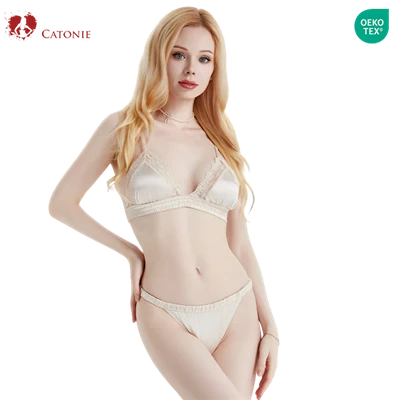
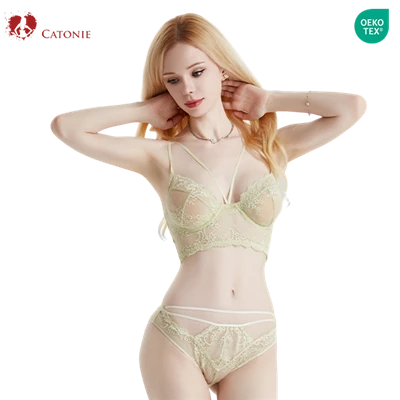
Elastic strappy lingerie sets stand out in the fashion lingerie market with their crossed straps, cutout details, and body-hugging designs. However, although these styles may look simple, their production requires careful attention to detail. Straps that are too loose may shift out of place, while overly tight straps can affect wearing comfort. Poorly finished connection points can also ruin the overall appearance. For lingerie brands planning to develop these products, choosing a factory that can handle complex structures and maintain consistent production quality is essential.

What Production Techniques Are Required for Elastic Strappy Lingerie Sets?
Compared with regular lingerie, elastic strappy designs usually involve more detailed strap structures. Some styles feature crossed, wrapped, or asymmetrical straps. During production, the bra straps, front decorative bands, and side straps on the panties all need to be positioned accurately. Neat strap arrangements and secure connections have a direct impact on the finished product.
- Elastic strap cutting: Different sections require different strap lengths. Accurate cutting helps prevent noticeable differences between the left and right sides.
- Cross-strap sewing: Areas where several straps meet need neat stitching to avoid bulky seams or uneven finishes.
- Secure connection points: Connections at the front, shoulders, and waist need to be firmly attached to reduce the risk of loose stitching or straps coming undone during wear.
- Elasticity control: Different body areas require different levels of stretch, so using the same elastic specification throughout the entire garment may not be suitable.
Production details become even more important for styles with numerous straps. The spacing, crossing sequence, and attachment positions must follow the design accurately. Otherwise, the finished product may have twisted straps or an uneven appearance.
What Fabrics Are Suitable for Elastic Strappy Lingerie Sets?
Choosing the right fabric helps create a balanced look between the straps and the main lingerie body. Some designs focus on a lightweight, sensual appearance and work well with lace and mesh. Everyday styles place greater emphasis on softness and stretch, making nylon and spandex suitable options. Rather than using too many materials, brands should focus on choosing fabrics that match the intended product style.
- Lace: Floral patterns and openwork details make lace suitable for elegant and romantic lingerie sets.
- Stretch mesh: Lightweight and sheer, mesh works well for cup panels, see-through details, and decorative sections.
- Nylon and spandex: These materials offer good stretch and body-hugging properties, making them suitable for lingerie that needs to fit closely.
For a more distinctive design, the main fabric and straps can use different materials or colors. However, differences in elasticity should not be overlooked. If the materials stretch differently, some areas may pull against each other and affect the overall fit.
What Styles Can Be Developed for Custom Elastic Strappy Lingerie?
Elastic strappy lingerie is not limited to one standard design. Crossed front straps, open-back details, waist wraps, and decorative hip straps can all become key features. When developing a collection, brands can experiment with strap placement and arrangement to create different styles while maintaining a consistent collection identity.
- Cross-front designs: Interwoven straps highlight the front neckline and work well with triangle cups or lace cups.
- Multi-strap shoulder designs: Additional shoulder straps create more visual detail around the shoulders and back.
- Open-back designs: Less fabric coverage on the back allows straps arranged in different directions to become decorative features.
- Side-waist strap designs: Decorative straps can be added to both sides of the panties, either as fixed details or with adjustable hardware.
- Asymmetrical strap designs: Different strap arrangements on the left and right sides create a more distinctive look for fashion-focused collections.
When developing a new style, brands should also consider how the bra and panties work together. For instance, if the bra features crossed straps at the front, similar strap details can be added to the sides of the panties. This creates a more coordinated set. There is no need to add too many decorations. Leaving some open space can make the main design features stand out more clearly.
What Order Details Should Be Considered When Customizing Elastic Strappy Lingerie Sets?
Once a product moves into order planning, colors, sizes, and style quantities need to be arranged in advance. Elastic strappy collections can include many design variations. If one collection contains different cup structures, panty cuts, and strap combinations, inventory management can become more complicated. Brands can identify their key styles first and then plan the proportions of basic and special colors instead of developing too many similar products at once. Size planning should cover not only bra band and cup sizes but also the waist and hip measurements of the panties. Brands preparing seasonal collections can also schedule color updates and new product launches ahead of time, making it easier to coordinate product development with sales plans.
Choosing an elastic strappy lingerie set factory means finding a production partner that can accurately turn design ideas into finished products through suitable fabrics, strap structures, and detailed workmanship. Whether the collection features simple crossed straps, lace cutouts, or decorative fashion designs, each style needs the right production approach. CATONIE provides OEM/ODM lingerie manufacturing services, developing products according to brand specifications and offering an updated selection of market-oriented styles. If you are planning a new elastic strappy lingerie collection, feel free to contact us to discuss your designs, fabric choices, and production requirements.