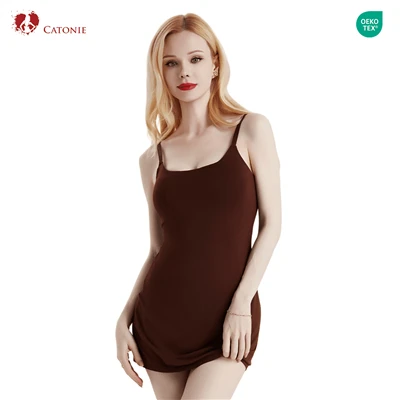
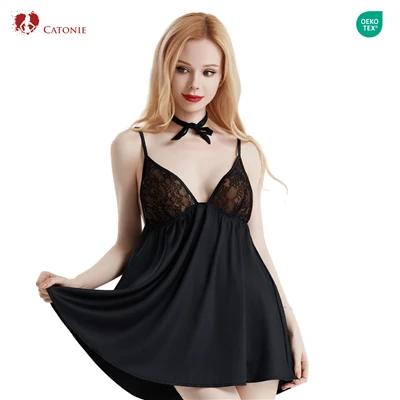
In the previous Blog, we introduced the business process of Catonie. The procedure for manufacturing high-end lace underwear is extremely complex, involving many production processes. Among them, choosing the right fabric is the most fundamental step to ensure quality. Material selection is not only about aesthetics, but also about comfort, health and sustainability. Today, let's talk about what we should pay attention to when choosing materials for lace lingerie.
The first and most important thing is to choose the fabric
Since underwear is in direct contact with the skin, the selection of materials must be very meticulous. Good fabric is the foundation for manufacturing high-end lace underwear. Commonly used fabrics for lace underwear include silk, cotton, nylon, polyester, etc. Through various processes such as warp knitting, embroidery, and crochet, transparent lace is formed. Among them, silk lace feels soft to the touch, has a natural luster, and is noble and luxurious. Cotton lace is skin-friendly, comfortable, naturally breathable and has low allergenicity. Synthetic fiber lace has excellent elasticity and wear resistance, is lightweight, sweat-wicking and fits the body shape well. The high-end lace lingerie fabrics we choose are often combinations of these several types of fabrics, making full use of the advantages of each fabric.
For instance, our product JDN-L0002 is made of high-quality lace fabric, featuring a high-elasticity combination of polyester and spandex. After professional testing, the fiber strength is 20% higher than that of ordinary lace, and it has excellent wear resistance. It is not prone to deformation or snagling even after multiple wears and washes. Meanwhile, the fabric has good breathability, which can quickly expel hot and humid air and keep the skin dry.


Secondly, it is also necessary to consider aspects such as whether there are harmful components, color fastness, moisture absorption, antistatic property, skin touch, elasticity and strength of the fabric.
Harmful components mainly refer to the harmful chemicals remaining in the fabric during the dyeing process, which are easily absorbed by the skin during wearing, causing skin diseases such as flushing, itching and dermatitis. Poor color fastness can easily cause dye molecules to fall off or even be absorbed by the skin during wearing, leading to diseases. Hygroscopicity mainly refers to whether sweat from the human body can be effectively absorbed. If it remains in a state of poor hygroscopicity for a long time, it is easy to cause bacterial infection. It has poor antistatic properties and a soft touch on the skin, which may cause discomfort such as skin itching and allergies during wearing. The elasticity and strength of the fabric affect its comfort and durability. When choosing high-quality lace lingerie fabrics, it is essential to pay attention to the above-mentioned issues.
Our Catonie product JDN-L0009 is made of high-quality cotton, nylon and spandex. It not only has a light transmittance of 60%, but also has a softness that has been professionally tested to reach level 4 (up to level 5), providing an excellent skin-fitting feel. Moreover, the overall elastic recovery rate is as high as 98%. After stretching, it can quickly rebound to its original state and maintain a good shape and fit even after long-term wearing. Whether in daily activities or during exercise, it can naturally stretch along with body movements, providing an unrestrained and free experience for the chest and body.