Abstract
Finding well-fitting lingerie presents a unique set of challenges for individuals with a petite body structure, which often extends beyond simple height considerations to matters of overall proportion. Standard-sized garments frequently result in fit issues such as gaping bra cups, slipping straps, and ill-fitting torso lengths in one-piece items. This disconnect arises because mass-market lingerie is typically designed for a standardized figure with longer vertical measurements. This guide offers a systematic examination of the specific proportional needs of a petite frame, including a shorter torso, narrower shoulders, and a different bust apex position. It provides a detailed framework for selecting flattering and comfortable lingerie for petite women by analyzing garment construction, style, and fabric choices. The analysis covers a range of items from daily bras to more specialized pieces like bodysuits, corsets, and bridal lingerie, empowering the reader with the knowledge to identify brands, styles, and features that ensure a harmonious, supportive, and aesthetically pleasing fit.
Key Takeaways
1. Prioritize demi-cup and balconette bras to eliminate cup gaping.
2. Measure your torso length for a perfect bodysuit or one-piece fit.
3. Choose high-cut bottoms to create the powerful illusion of longer legs.
4. Select lingerie for petite women featuring fully adjustable or centered straps.
5. Opt for smaller, delicate patterns that complement a more compact frame.
6. Explore custom options for a truly bespoke and flawless lingerie experience.
7. Look for shorter longline bras or "waspies" for a comfortable corset effect.
Understanding the Petite Predicament in Lingerie
The experience of shopping for lingerie when you have a petite frame can often feel like a lesson in frustration. You might find a bra in your correct band and cup size, say a 32B, only to discover a persistent gap between the top of the cup and your breast, creating a hollow space that shows through your clothes. Or perhaps you have found the perfect bodysuit, a cascade of lace and silk, but when you try it on, the fabric bunches awkwardly around your waist, the straps refuse to shorten enough, sliding perpetually off your shoulders. These are not isolated incidents; they are the common narrative for many women whose body proportions fall outside the fashion industry's standard block.
The term "petite" in the context of clothing, particularly intimate apparel, is frequently misunderstood. It is not merely a synonym for "small" or "thin." A person can be a size 14 petite, just as someone can be a size 2 with a longer torso. Pettiness is fundamentally a question of proportion. In the world of lingerie for petite women, it most often refers to three key characteristics: a shorter torso length, narrower shoulder width, and a shorter vertical distance from shoulder to bust point. Mainstream brands, in an effort to cater to the broadest possible market, design their garments based on a fit model who is typically taller, with longer vertical measurements. When these designs are simply graded down in size without adjusting the core proportions, the fit issues begin. A bra strap designed for a 5'8" frame will be too long for someone who is 5'2", even if they share the same band size. A bodysuit's waist will sit on the hips. The apex of a bra cup will be positioned too high.
Recognizing these proportional differences is the first step toward liberation from the ill-fitting garment. It shifts the problem from a perceived flaw in one's own body to a clear issue of design mismatch. The goal is not to force your body into lingerie that was not designed for it, but to develop the discerning eye of an expert, to learn the language of fit, cut, style, so you can select pieces that celebrate your unique frame. The feeling of a perfectly fitting garment, one that sits smoothly against the skin without digging, gaping, or slipping, is a profound one. It affects not just physical comfort but also our sense of self, our posture, our confidence. This phenomenon, known as "enclothed cognition," suggests that the clothes we wear have a systemic influence on our psychological processes (Adam & Galinsky, 2012). A well-fitting bra can make you stand taller, a beautiful set of lingerie can foster a deeper connection with your own body. This guide is dedicated to that pursuit, offering seven core secrets that will transform your relationship with lingerie, turning a frustrating search into a joyful discovery of styles that are, quite literally, made for you.
Table 1: Standard vs. Petite Proportional Fit Issues
|
Garment Feature |
Standard Fit Problem for Petites |
Ideal Petite-Friendly Feature |
|
Bra Straps |
Too long even when tightened; slip off narrow shoulders |
Fully adjustable straps; J-hooks for racerback conversion; centered strap placement |
|
Bra Cups |
Gaping at the top; apex of cup sits too high |
Demi-cup, balconette, or plunge styles; shorter cup height |
|
Torso Length |
Bunching fabric in bodysuits; misplaced waistline |
Shorter torso length; designated "petite" sizing; adjustable elements |
|
Band to Apex |
Nipple placement does not align with cup's fullest point |
Shorter cup height; styles designed for smaller frames like those from |
|
Rise of Briefs |
Standard "low-rise" fits like a mid-rise; proportions are off |
True low-rise cuts; high-waisted cuts for leg-lengthening effect |
|
Wire Shape |
Underwire pokes into the armpit or sits too low on the ribcage |
Wires with a shorter curve; petite-specific wire grading |
Secret 1: Mastering Measurements Beyond the Band and Cup
The foundation of any successful lingerie purchase lies in accurate measurements. For decades, the focus has been almost exclusively on two metrics: band size (the circumference of the ribcage) and cup size (the difference between the bust and band measurement). While these are undeniably important, for a petite individual, they represent only the beginning of the story. Relying on them alone is the primary reason so many off-the-rack purchases fail. To truly find lingerie that feels like a second skin, we must look at the vertical dimensions of the body, which are often overlooked in standard sizing. Think of it like architecture: you would never design a building considering only its width; its height is equally fundamental to its structure.
This is where you can take control. By understanding your own unique vertical proportions, you gain a powerful diagnostic tool. You can look at a garment online or on a hanger and predict, with a high degree of accuracy, whether it will work for your frame. It transforms you from a passive consumer hoping for the best into an informed expert making a calculated choice. These measurements are simple to take with a soft measuring tape and will become the bedrock of your lingerie-buying strategy.
The Significance of the Torso Length
The torso length is arguably the most important measurement for any petite person considering a one-piece garment. This includes bodysuits, teddies, one-piece swimsuits, and even some corsets or basques. A standard-sized bodysuit is drafted for a longer spine. On a shorter torso, this excess length has to go somewhere, resulting in unflattering bunching of fabric around the waist or a saggy appearance in the seat. The snaps at the gusset might pull uncomfortably, or the waist-defining details might sit somewhere around your high hip.
To measure your torso loop, stand up straight with your shoulders relaxed. Place the end of a soft measuring tape at the top of your shoulder, where a bra strap would naturally sit. Guide the tape down the front of your body, over the fullest part of one breast, down past your belly button, through your legs, and up your back to meet the starting point on your shoulder. This complete loop is your torso measurement. Once you have this number, you can compare it to the size charts of brands that provide it. Increasingly, specialized brands are offering this information. If a brand does not list it, you can often reach out to their customer service for the measurement of a specific size. A general rule of thumb is to look for brands that offer specific "petite" sizing in their one-pieces, as these have been drafted with a shorter torso in mind from the outset. Alternatively, styles with highly adjustable straps or significant stretch can sometimes accommodate a shorter torso, but a garment designed for your proportions will always provide a superior fit.
Understanding Shoulder-to-Bust Point (Apex) Measurement
Have you ever tried on a bra where the lace detailing or the seam of the cup seems to point somewhere above your actual nipple? This is a classic sign that the cup's vertical dimension is too long for your frame. The "bust point" or "apex" is the fullest, most projected part of your breast. In a well-fitting bra, the apex of the cup should align perfectly with your own bust point. When it does not, the bra fails to provide proper support, and the shape can be distorted.
To find your shoulder-to-apex measurement, stand in front of a mirror without a bra or wearing a very thin, unlined bra. Place the measuring tape at the top of your shoulder (the same starting point as the torso measurement) and let it fall straight down to your bust point. Note this number. This measurement is your secret weapon against gaping cups. It helps you understand why full-coverage cups, which have a large vertical height, are often problematic. They are simply too tall. Instead, you can now confidently seek out styles with a shorter cup height, such as a demi-cup or a balconette. When you see a bra with a vertical seam running up the cup, you can mentally check if that seam's length looks compatible with your measurement. This simple number unlocks a new level of discernment.
The Role of Strap Placement and Width
For many petite women, particularly those with a slender build, narrow shoulders are a defining feature. This anatomical reality is the source of the endlessly annoying slipping bra strap. No matter how much you tighten them, they seem determined to slide down your arms. This happens because standard bras are constructed with straps set wider apart to accommodate broader shoulders.
The solution lies in seeking out specific design features. First, always look for fully adjustable straps, where the slider can travel the entire length of thestrap, not just a small portion at the back. Second, look for bras with a "center-pull" strap design. This means the straps are set closer together at the back, creating a more vertical line of pull that is less likely to slip off narrow shoulders. Third, embrace the J-hook. This small but mighty piece of hardware, located on the back of one strap, allows you to connect the straps together, instantly converting the bra into a racerback style. This is a game-changer for strap security. Finally, consider the width of the straps themselves. While wider straps are often marketed for comfort and support, on a very small frame they can be overwhelming and more prone to slipping. A delicate, narrower strap can sometimes be more secure and proportional.
Table 2: Key Petite Measurements & Their Implications
|
Measurement |
How to Take It |
What It Affects |
Ideal Garment Solution |
|
Torso Length |
From the shoulder, down the front, through the legs, and up the back to the shoulder. |
Bodysuits, Teddies, One-Piece Swimsuits, Corsets |
Petite-sized one-pieces; two-piece sets; shorter "waspie" corsets |
|
Shoulder Width |
From the bony point of one shoulder across the back to the other shoulder point. |
Bra strap placement and security |
Center-pull straps; racerback or J-hook styles; narrower strap settings |
|
Bust Apex Height |
From the top of the shoulder straight down to the nipple. |
Cup shape, dart placement, and wire height |
Demi-cups; balconettes; bras with lower side wings; avoiding tall, full-coverage cups |
|
Underbust to Waist |
From directly under the bust line to the narrowest part of your natural waist. |
Fit of basques, longline bras, and high-waisted bottoms |
Shorter longline bras; "waspie" corsets; true high-waist designs that don't sit too high |
|
Cross-Chest Width |
From the front of one armpit crease to the other. |
The shape and width of the center gore (the piece between the cups). |
Bras with a narrow center gore; plunge styles that have a very low gore |
Secret 2: Demystifying Bra Styles for the Petite Frame
The world of bras is vast and varied, a universe of different cuts, functions, and aesthetics. For a person with a petite build, navigating this landscape can feel like a process of elimination, discarding style after style that simply does not conform to their body. The secret, however, is not to focus on what to avoid, but to understand which styles are inherently designed in a way that complements petite proportions. It is about actively seeking out the silhouettes that work in harmony with a shorter vertical line and a narrower frame. By learning the architectural principles of these specific bra types, you can curate a lingerie wardrobe that is not just functional but genuinely flattering.
This knowledge allows you to move beyond the basic T-shirt bra and explore more interesting and beautiful options. Many of the most elegant and visually appealing bra styles are, as it happens, perfectly suited to a petite figure. It is a matter of shifting your perspective and learning to recognize your allies on the lingerie rack.
The Power of the Demi-Cup and Balconette
Imagine a standard, full-coverage bra cup. It is designed to encase the entire breast, rising high up toward the collarbone. For a petite woman, especially one with a shorter shoulder-to-apex measurement, this height is precisely the problem. The top edge of the cup extends beyond the natural curve of the breast, creating that tell-tale hollow gap. The demi-cup bra is the perfect antidote. As its name suggests, a "demi" cup offers approximately half the coverage of a full cup. It cuts straight across the bust line, creating a horizontal emphasis. This lower profile means there is no excess fabric at the top to gape. It lifts and presents the breast tissue without trying to contain it in a cup that is too tall.
Similarly, the balconette bra is a petite woman's best friend. This style, which gained popularity in the 1950s, features cups that are cut low and wide-set straps. The primary function of a balconette is to create lift from the bottom of the cup, pushing the breasts up to create a rounded, shelf-like appearance. Like the demi-cup, its low-cut nature prevents gaping. Many luxury brands, like those featured on curated sites such as , specialize in these beautifully crafted balconette and demi styles, which often feature exquisite lace and embroidery that is properly scaled for the smaller canvas of the cup.
Plunge Bras for a Natural Lift
For petites who wish to create the illusion of cleavage or who enjoy wearing V-neck tops, the plunge bra is an exceptional choice. The defining feature of a plunge bra is its very low, narrow center gore-the small piece of fabric that connects the two cups. The cups themselves are angled inwards, gently guiding the breasts toward the center. This design creates a deep V-shape, making it invisible under low-cut clothing.
Unlike some heavily padded push-up bras, which can sometimes look and feel bulky on a small frame, a well-designed plunge bra achieves its effect through clever engineering rather than sheer volume. It works with your natural shape, enhancing it rather than completely remolding it. For petite women with a smaller bust, a lightly lined or even an unlined lace plunge bra can provide beautiful shaping and a hint of cleavage without feeling overwhelming. The low center gore also has the added benefit of being more comfortable for women with a close-set bust or a sensitive sternum.
Bralettes and Wireless Styles
The rise of the bralette has been a welcome development for many petite women. Free from the rigid structure of underwires and molded cups, bralettes offer a level of comfort and ease that is hard to match. For those with a smaller bust (typically in the A to C cup range), a bralette can provide all the support that is needed for daily wear. Their less structured nature means they are more forgiving of proportional variations. A bralette is less likely to have a gaping issue because it is designed to conform to the body's natural shape.
When choosing a bralette, look for features that provide some degree of support and shaping. A bralette with a wider band under the bust can offer a surprising amount of lift. Styles with adjustable straps are always preferable. Some bralettes feature a "soft cup" design with vertical seams, which can provide a more defined and less "flat" shape. The beauty of the bralette is often found in its aesthetic. They are frequently designed to be seen, with intricate lace backs or delicate strap details that can peek out from under a shirt. These bralette sets can be both a comfortable daily option and a form of sexy lingerie.
Avoiding the Pitfalls: Styles to Be Cautious Of
While the focus should be on positive choices, it is helpful to understand why certain styles are consistently problematic for petite frames. The most common culprit is the standard molded T-shirt bra. While prized for its smooth silhouette, its pre-formed, rigid cups are the number one cause of gaping. The cup maintains its shape whether a breast is filling it or not. If your breast shape or size does not perfectly match the mold, a gap is inevitable. A petite person is better served by a bra with soft cups or seamed cups that can mold to their body.
Overly padded push-up bras can also be a challenge. While the goal of creating volume is understandable, on a small frame, a bra with excessive padding can look disproportionate and feel cumbersome. It can create a very unnatural silhouette, where the bra is more prominent than the person wearing it. A better approach is to seek lift and shape through intelligent construction, as seen in a good balconette or plunge bra, rather than through bulky foam inserts. The key is to enhance, not to overwhelm.

Secret 3: The Art of Selecting Bottoms and One-Pieces
The principles of proportional dressing extend below the waist. The right choice of underwear or a one-piece garment can visually sculpt the body, creating longer lines and a more balanced silhouette. For petite women, this is a powerful tool. A few inches of fabric, cut in a particular way, can dramatically alter the perception of height and proportion. It is about understanding the geometry of style and using it to your advantage. From the leg-lengthening magic of a high-cut brief to the specific challenges of finding a well-fitting bodysuit, a discerning approach to these garments is transformative.
The goal is to create a seamless, harmonious line from top to bottom. Ill-fitting bottoms can disrupt this line, either by cutting into the body in the wrong place or by adding visual bulk where it is not wanted. A well-chosen piece, conversely, works with your body, enhancing your natural shape and providing a comfortable, confident foundation for your outerwear.
High-Cut and High-Waisted Briefs: The Illusion of Longer Legs
One of the most effective styling tricks for a petite frame is the high-cut leg opening. Popularized in the 1980s and now a staple of modern swimwear and lingerie design, the high-cut brief is cut to sit higher on the hip, exposing more of the upper thigh. This simple design choice has a profound optical effect: it makes the legs appear significantly longer. By raising the visual starting point of the leg, the eye is tricked into perceiving a longer line.
For petite women, this is a fantastic way to add visual height and create a more statuesque silhouette. When shopping for briefs, look for descriptions like "high-cut," "French cut," or "high-leg." The effect is even more pronounced when combined with a high-waisted design. A high-waisted brief sits at or just above the natural waist, defining the narrowest part of the torso. When a high waist is paired with a high-cut leg, the result is a powerful leg-lengthening combination that is both flattering and comfortable. It creates a smooth, unbroken line from the waist down, which is particularly effective under dresses and high-waisted trousers.
Thongs and Brazilian Cuts
For many, the primary purpose of underwear is to be invisible under clothing. Visible panty lines (VPL) can disrupt the smooth drape of a fitted skirt or a pair of tailored pants. The thong is the ultimate solution to this problem. By minimizing fabric at the back, it eliminates the possibility of VPL entirely. For petite women, there is an added proportional benefit. The lack of fabric creates a cleaner, less cluttered line, which can contribute to a sleeker overall appearance.
A Brazilian cut brief offers a happy medium between a thong and a traditional brief. It provides more coverage than a thong but less than a full-coverage brief, typically featuring a V-shape at the back that covers about half of the cheeks. This can be a very flattering cut, as it often has a slight lifting effect and avoids the "quad-butt" issue that can sometimes happen with briefs that cut straight across the cheek. When choosing thongs or Brazilian-cut underwear, pay attention to the rise. A low-rise style will sit on the hips, while a high-waisted thong can offer the same leg-lengthening benefits as a high-waisted brief.
The Challenge of Bodysuits and Teddies
Bodysuits and teddies are some of the most alluring and stylish pieces in the lingerie world, but they are also the most challenging for a petite frame. As discussed in the context of torso measurement, a standard-sized one-piece is almost guaranteed to be too long. This is where brand selection and attention to detail become paramount.
The gold standard is to find a brand that offers a dedicated "petite" range for their bodysuits. These have been designed from the ground up with a shorter torso in mind. If that is not an option, look for key adjustable features. Straps that are fully adjustable are non-negotiable. A bodysuit with a lace-up back or adjustable side panels can also offer a degree of vertical customisation. The gusset (the crotch area) should ideally have multiple snap settings, allowing you to shorten the overall length slightly. The fabric also plays a role; a bodysuit made from a very stretchy mesh or jersey will be more forgiving of a shorter torso than one made from a non-stretch woven silk or satin. A teddy, which is typically looser and more blousy than a bodysuit, can be a more forgiving option, but you should still pay attention to the strap length and the placement of any waist-defining features like a ribbon tie.
Jumpsuits and Babydolls
The category of lingerie extends into sleepwear and loungewear, with pieces like jumpsuits and babydolls. A lingerie jumpsuit presents the same torso-length challenges as a bodysuit and should be approached with the same criteria. Look for petite sizing or significant adjustability.
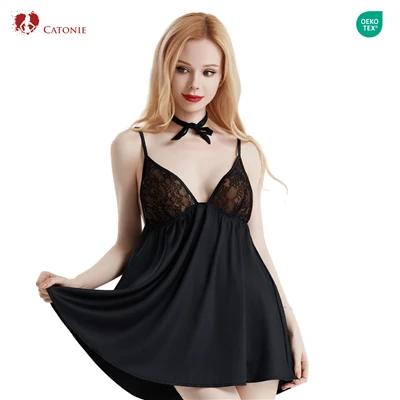
The babydoll, however, is often a wonderfully flattering option for petite women. A babydoll is a short, loose-fitting nightgown, typically with an empire waist that sits just below the bust, with a flowing skirt that ends around the upper to mid-thigh. This silhouette is forgiving and does not depend on a precise torso length. The empire waist creates a high waistline, which can make the lower body appear longer. The short length of the skirt shows off the legs. When selecting a babydoll, the main consideration is the length of the skirt. A style that is too long can overwhelm a petite frame. Look for styles that are specifically described as "short" or "mini," or check the garment length measurement if it is provided. A beautifully designed babydoll can be a comfortable, playful, and very sexy lingerie choice for a petite figure.
Secret 4: Leveraging Fabric, Pattern, and Embellishments
Beyond the fundamental structure of a garment-its cut and its style-lies a more subtle layer of design: the choice of fabric, the scale of the pattern, and the placement of decorative details. These elements are not mere afterthoughts; they are integral to the overall effect of a piece of lingerie. For the petite individual, they offer another opportunity to create flattering optical illusions and to ensure that a garment feels harmonious with their frame. An understanding of these visual principles allows you to refine your choices, selecting pieces that not only fit well but also enhance and celebrate your proportions.
Think of it as the difference between a good painting and a great one. The composition (the cut) might be sound, but it is the use of color, texture, and detail that brings it to life. In lingerie, these details can guide the eye, create points of interest, and contribute to a sense of balance and elegance.
The Role of Vertical Lines
The power of vertical lines to create an illusion of height is one of the oldest and most effective principles of fashion design. For a petite frame, this is a tool to be used liberally. The eye naturally follows lines, so a strong vertical element will draw the eye up and down the body, creating a sense of elongation.
In lingerie, vertical lines can be found in many forms. Look for fabrics with a vertical stripe pattern. This could be a classic pinstripe on a pair of pajama shorts or a more subtle shadow stripe in a woven silk chemise. Seams can also create powerful vertical lines. A bodysuit with princess seams running from the bust to the hip, or a corset with prominent vertical boning channels, will visually stretch the torso. Lace patterns can also incorporate vertical motifs. Look for lace with a trailing vine or a linear geometric design that moves up the body. Even a simple row of buttons down the front of a camisole can serve as a flattering vertical guide for the eye.
Strategic Sheerness and Cutouts
Sheer fabrics and strategic cutouts are hallmarks of erotic lingerie, but they also serve a valuable proportional purpose. By breaking up the solid mass of fabric, they create negative space, which can make a garment feel lighter and less overwhelming on a small frame. They create visual interest without adding any physical bulk.
Consider a bodysuit with sheer mesh panels along the sides. These panels visually narrow the waist and create a taller, more slender silhouette. A bra with a sheer top panel on the cup can reduce the visual weight of the bra, making it feel more delicate. Cutouts at the sternum, on the hips, or at the back can draw attention to specific parts of thebody and add a sense of edgy sophistication. The key is for these details to be well-placed and in proportion to the body. A cutout that is too large can look out of place, but a thoughtfully designed keyhole or a series of small slashes can be incredibly effective. These elements allow you to play with revealing and concealing, which is the essence of seductive design, while also serving a flattering function.
Scale of Patterns and Lace
The scale of any print or pattern is a vital consideration for a petite person. A large, bold floral print that might look wonderful on a taller person can easily overwhelm a smaller frame. The large motifs can appear to "swallow" the wearer, and the pattern's repeat may not be fully visible on a smaller garment, leading to a disjointed look.
The solution is to gravitate toward patterns and prints that are in scale with your body. This means looking for small, delicate florals (often called "ditsy" prints), small polka dots, or fine geometric patterns. The same principle applies to lace. A very large, heavy guipure lace can feel bulky. Instead, look for finer laces like Chantilly, Alençon, or modern leavers lace with smaller, more intricate floral or abstract motifs. The delicate nature of these finer laces is inherently more suited to a petite frame and contributes to an overall feeling of elegance and refinement. When a designer scales their patterns down for their petite range, it is a sign of thoughtful, high-quality design.
The Placement of Bows, Ruffles, and Details
Decorative embellishments like bows, ruffles, and appliqué are the jewelry of lingerie. They add a touch of romance, playfulness, or luxury. For these details to be effective, they must be placed correctly and be of an appropriate scale. A bow that is supposed to sit at the center gore of a bra will look strange if it is floating somewhere on the cup because the bra is too large. A ruffle on a pair of briefs that is too wide can visually shorten the leg line.
When assessing a garment, check the placement of these details. The bow should be at the gore or at the apex of the strap. Ruffles should be delicate and strategically placed to enhance a curve, not to add bulk. For example, a small ruffle along the leg line of a brief can be very flattering, but a large ruffle across the hips might not be. Appliqué or embroidery should be concentrated in areas you want to highlight, such as the center of a bra cup or the hip of a brief. As with patterns, the scale matters. A small, delicate satin bow is more appropriate for a petite frame than a large, floppy one. These small considerations make a significant difference in whether a piece looks like it was made for you or like you are wearing a piece made for someone else.
Secret 5: Exploring Niche and Specialized Brands
For many years, the lingerie market was dominated by a handful of major players who catered to a standardized "average" body type. This left anyone outside of that narrow definition-including petite, plus-size, and full-bust individuals-with limited and often frustrating options. Fortunately, the landscape of 2025 is vastly different. The rise of e-commerce and social media has enabled a new generation of independent, niche brands to flourish. These brands are often founded by women who experienced the same fit frustrations and decided to create the solutions themselves.
This shift represents a democratization of fashion, where specificity is celebrated rather than ignored. For the petite consumer, this is a golden age. There are now more brands than ever that are either exclusively dedicated to petite sizing or offer a more inclusive size range that accounts for proportional differences. The secret is knowing where to look and how to identify these brands.
The Rise of Petite-Specific Lingerie Brands
The most direct route to a perfect fit is to shop from brands that explicitly design for a petite frame. These companies do not simply grade down a standard pattern; they start with a petite fit model and draft their patterns accordingly. This means the straps are the right length, the torsos are shorter, the wires are the correct shape, and the cup apex is properly placed from the very beginning.
While some of these brands may be smaller and less well-known than mainstream giants, they are often where the most innovative and best-fitting designs can be found. Searching online for "petite lingerie brands" or "bras for small frames" can yield excellent results. Reading reviews from fellow petite women on blogs, forums, and social media can also lead you to discover hidden gems. Brands like the Australian-based , known for its delicate lace designs, cater well to a smaller frame, offering bralettes and underwire styles in sizes that often start at an XS or a 30 band, which are well-suited to a petite build. Exploring these niche markets is an investment in your comfort and confidence.
Custom and Made-to-Order Lingerie
For the ultimate in personalized fit, nothing compares to custom, made-to-order lingerie. This option moves beyond even petite-specific sizing to create a garment that is tailored to your exact measurements. This might sound like an unattainable luxury, but a growing number of online ateliers and independent designers are making custom lingerie more accessible than ever before.
The process typically involves taking a detailed set of measurements at home (often with the guidance of the designer via video or detailed instructions) and then having the piece crafted specifically for you. This is the ideal solution for anyone with a hard-to-fit size, such as a very small band with a larger cup (e.g., a 28E) or for those who have found that even petite-specific brands do not quite match their unique proportions. When you invest in custom underwear, you are not just buying a product; you are commissioning a piece of wearable art designed for your body alone. This can be a particularly wonderful option for special occasion pieces, like bridal lingerie, where a perfect fit is paramount.
Reading the Size Charts
Shopping from international brands opens up a world of new styles and options, but it also introduces the complexity of different sizing systems. A size "Small" in a Japanese brand may be significantly smaller than a "Small" from an American brand. A French bra size of 85C is not the same as a US 38C. Learning to navigate these differences is a key skill for the savvy petite shopper.
Always ignore the letter size (S, M, L) and go straight to the measurement chart. Pay close attention to the units being used (inches or centimeters) and convert them if necessary. Look for the key petite measurements we have discussed: torso length, bust apex, and underbust-to-waist, if they are provided. For bras, understand the different band sizing conventions. For example, French and Italian brands often use a system where the band size is a number like 80, 85, 90, which corresponds to your underbust measurement in centimeters, but with some variation. A US size 32 band is roughly equivalent to a European 70, a French/Spanish 85, and an Italian 1. There are many conversion charts available online, and it is wise to consult one before making an international purchase. This diligence prevents the disappointment of receiving a beautiful piece from overseas that is unwearably small or large.
Secret 6: The World of Sexy Lingerie Sets and Corsetry
The realm of "sexy" lingerie, with its intricate straps, delicate lace, and body-conscious designs, can sometimes feel intimidating. There might be a concern that these more revealing styles are only designed for a specific, statuesque body type. However, the opposite is often true. Many elements of erotic lingerie and corsetry are surprisingly well-suited to a petite frame, and when chosen with care, they can be incredibly empowering and flattering. The key is to apply the same principles of proportion, scale, and fit to these more specialized garments.
A well-fitting sexy lingerie set or a properly sized corset can be a powerful tool for self-expression and body confidence. It is about choosing designs that highlight your best features and work in harmony with your smaller scale, proving that seduction and style are not dependent on height, but on a confident embrace of one's own unique form.
Finding Flattering Sexy Lingerie Sets
The coordinating lingerie set-a matching bra and panties, often with a coordinating garter belt-is a classic for a reason. It creates a cohesive, intentional, and polished look. For a petite person, a matching set has the added benefit of creating an unbroken visual story, which can be more elongating than mixing and matching disparate pieces.
When choosing sexy lingerie sets, gravitate toward the bra styles we know work well for a petite frame: a lacy balconette set, a delicate plunge bra with a matching thong, or a soft bralette paired with a high-cut brief. The designs from brands like Bordelle, available at Catriona, often feature intricate strapping and are designed with a high degree of adjustability, making them an excellent choice for a variety of body types, including petites. Look for sets where the scale of the lace and the embellishments is consistent and delicate. A set that combines a demi-bra with a high-leg thong can be a particularly potent combination, offering lift, support, and a significant leg-lengthening effect.
Corsets for Petite Figures
The corset, with its dramatic waist-cinching power, is a garment with a long and storied history. For a petite person, a standard-length corset can be a nightmare of discomfort. A full-length "overbust" or "underbust" corset is designed for a longer torso. On a shorter body, the top edge will dig into the bust or armpits, while the bottom edge will press painfully into the tops of the thighs, making it impossible to sit down.
The solution is to seek out shorter styles of corsets. The "waspie" or "waist cincher" is the perfect choice. This is a shorter style of corset that focuses purely on the waist, typically extending only a few inches above and below the natural waistline. It provides that dramatic hourglass shape without interfering with the bust or hips. When shopping for any corset, the most important measurement is the "vertical front length." This tells you how long the corset is at its center front. Compare this measurement to your own underbust-to-lap measurement (measure from under your bust to the top of your thigh while sitting down) to ensure you will have enough room to sit comfortably. A well-fitting waspie can be a stunning addition to a lingerie wardrobe, worn either on its own or layered over a chemise.
Erotic Lingerie with a Petite Focus
The category of erotic lingerie, which includes items like cupless or "shelf" bras, open-back or "crotchless" panties, and body harnesses, is often designed with a high degree of adjustability, making it surprisingly friendly for petite figures.
A shelf bra, for example, which has an underwire but only a small "shelf" of fabric at the bottom of the cup, does not have a height that can gape. Its fit is dependent on the wire and the band, making it an easy fit for many petites. Many harnesses are made almost entirely of adjustable elastic straps, allowing you to tailor the fit perfectly to your torso length and width. Open-back or "peek-a-boo" briefs are often cut in a way that is flattering on many body types. The focus of these garments is less on traditional coverage and support and more on framing and revealing the body. This often means that the proportional issues of standard lingerie are less relevant. When exploring this category, look for high-quality materials and hardware, and prioritize pieces that offer maximum adjustability to ensure both a comfortable and a visually stunning fit.

Secret 7: Special Occasions: Bridal Lingerie and Swimsuits
Certain occasions demand a higher level of performance and a more perfect fit from our intimate apparel. Bridal lingerie must provide an invisible foundation under a once-in-a-lifetime gown while also being beautiful enough for the wedding night. Swimwear must withstand sun, salt, and chlorine while making us feel confident and secure on a crowded beach. For the petite woman, these high-stakes garments present their own unique set of challenges, but also opportunities to apply all the knowledge we have gathered.
Finding the right piece for these special moments is about a synthesis of function and form. It requires a careful consideration of the outerwear it will be worn with (or without) and a continued focus on the core principles of petite-friendly design: proportion, adjustability, and scale.
Choosing Bridal Lingerie
The first rule of bridal lingerie is that it must serve the dress. The neckline, back height, and fabric of your wedding gown will dictate the type of foundation garment you need. For a petite bride, a bustier or a short basque is often a superior choice to a full-length corset or bodysuit. A bustier is essentially a longline bra, extending down to the waist or high hip. It provides excellent support and shaping for the bust and smooths the torso without the potential length issues of a full bodysuit.
If your dress is backless, things become more challenging. Adhesive bras or cups can be an option, but they offer minimal support. A better choice might be to have a lingerie expert sew cups directly into the bodice of your dress, a common alteration that provides shape without the need for a separate bra. When it comes to the "for their eyes only" part of the bridal lingerie, all the principles of flattering petite styles apply. A delicate white lace balconette set, a silk teddy, or a custom-made piece can make the moment feel special. Many brands, like , offer dedicated bridal collections that feature these kinds of elegant and petite-friendly designs.
Swimsuits for a Petite Torso
The one-piece swimsuit is the ultimate test of torso length. For decades, petite women have been forced to choose between a suit that fits in the body but sags in the torso, or sizing down and having the suit pull uncomfortably at the shoulders and gusset. The growth of petite-specific swim collections has been a major breakthrough. Brands that offer their one-pieces in "petite" or "short torso" lengths are the first place to look. These suits, like the styles sometimes found in collections on , are drafted to eliminate that excess vertical length, resulting in a smooth, sleek fit.
If a petite-sized one-piece is not available, look for styles with features that allow for vertical adjustment. A halter-top one-piece that ties at the neck allows you to control the vertical tension. A suit with a lace-up back can also provide some flexibility. High-cut legs are just as effective in swimwear as they are in lingerie for creating the illusion of height.
Of course, the simplest solution to the one-piece problem is to opt for a two-piece. A bikini, by its nature, sidesteps the torso length issue entirely. This allows you to focus on finding a top and bottom that are individually flattering. You can mix and match sizes and styles to create your perfect combination: a balconette top to provide lift, paired with a high-waisted, high-cut bottom to lengthen the legs.
The Importance of Adjustability
In both bridal lingerie and swimwear, adjustability is your greatest asset. Look for it everywhere. Bra bands with multiple hook-and-eye settings. Fully adjustable straps. Lace-up details on corsets and bodysuits. Tie-side bikini bottoms, which allow for a perfect fit on the hips. Halter-neck tops that can be tightened or loosened. This focus on adjustability provides a crucial margin of error and allows you to fine-tune a garment's fit to your specific body. It is the final layer of security that ensures your lingerie and swimwear will be comfortable, supportive, and flattering, no matter the occasion.
Frequently Asked Questions (FAQ)
What is the best bra style for a petite woman with a small bust?
For petite women with smaller busts, the best styles are those that create shape and provide a gentle lift without overwhelming the frame. Demi-cup and balconette bras are excellent choices as their lower-cut cups prevent gaping and provide a nice, rounded shape. A lightly lined plunge bra is also a superb option for wearing with V-necks, as it can create a natural-looking cleavage by guiding the breasts toward the center. Unlined lace bralettes can also be a wonderful, comfortable choice that celebrates a natural silhouette.
Can a petite person wear a bodysuit?
Absolutely, but it requires careful selection. The main challenge is the torso length. The best option is to seek out brands that specifically offer bodysuits in "petite" sizing, as these are designed for a shorter torso. If that is not possible, look for bodysuits with fully adjustable straps, multiple snap settings at the gusset, and fabrics with significant stretch. A style with a very low back or side cutouts can also be more forgiving of minor length discrepancies.
Are there luxury lingerie brands for petite sizes?
Yes, the luxury market has become more inclusive. While many high-end European brands have historically catered to a taller figure, many now offer smaller band sizes (like 30 and 28) and styles that are inherently petite-friendly, such as balconettes and demi-cups. Furthermore, a number of contemporary and independent luxury brands focus on delicate, less-structured pieces that work beautifully on smaller frames. Exploring curated online boutiques like Catriona or brands like Fleur of England, Else, and Bordelle can reveal many luxurious options.
How do I stop my bra straps from slipping off my narrow shoulders?
This is a very common issue for petite women. The first step is to ensure your straps are fully tightened. If they still slip, look for two key features in your next bra purchase: a "J-hook" or a "center-pull" design. A J-hook is a small hook on the back of a strap that allows you to clip the two straps together into a racerback, which makes slipping impossible. Center-pull straps are set closer together in the back, which helps them stay put on narrow shoulders.
What does "petite" mean in bra sizing? Does it just mean a small band and cup?
No, "petite" in lingerie is about proportion, not just size. While many petite women do wear a smaller band size (e.g., 32, 30, or 28), a person can be petite and wear a larger cup size (e.g., a 30F). The "petite" aspect refers to other measurements, such as having a shorter torso, narrower shoulders, or a shorter distance between the shoulder and the bust point. This is why a standard 32B might gape on a petite person, while a petite-specific 32B would fit perfectly.
A Final Thought on Confidence and Fit
The journey to finding lingerie that fits and flatters a petite frame is, at its heart, an act of self-knowledge. It is about moving past the frustration of the fitting room and arming yourself with an understanding of your own unique proportions. It is about learning the language of garment construction, of cut, scale, and line. When you know that a demi-cup is your ally, that a high-cut brief is a tool for elongation, or that torso length is the key to a perfect bodysuit, you are no longer at the mercy of a market that was not designed for you. Instead, you become the curator of your own collection, able to select pieces with confidence and precision.
This knowledge is empowering. It fosters a more positive and compassionate relationship with your body. The confidence that comes from wearing something that feels truly comfortable and looks genuinely beautiful is not trivial. It is a quiet, intimate form of self-expression that radiates outward, affecting how you carry yourself throughout the day. May these secrets guide you to a lingerie drawer filled not with compromises, but with pieces you absolutely love.
References
Adam, H., & Galinsky, A. D. (2012). Enclothed cognition. Journal of Experimental Social Psychology, 48(4), 918–925.
Ashdown, S. P. (2007). Sizing in clothing: Developing effective sizing systems for ready-to-wear clothing. Woodhead Publishing.
Holzman, P. (2010). The psychology of clothing: Secret signals we send to others. The Fashion Psychologist.
Koo, H., & Kim, M. (2020). The effect of self-objectification on enclothed cognition and fashion consciousness. Fashion and Textiles, 7(1).
Le Pechoux, B., & Little, T. J. (2001). A study of the US women's petite apparel market. Journal of Fashion Marketing and Management, 5(4), 295–306.
Park, J., & an, S. (2020). A study on the bra-wearing practices of women in their 20s and 30s based on their breast type. Fashion and Textiles, 7(1).
Peirson-Smith, A. (2014). Fashioning the body: The intimate spectacle of lingerie. Critical Studies in Fashion & Beauty, 5(2), 265–286.
Steele, V. (2005). The corset: A cultural history. Yale University Press.