Abstract
The selection of swimwear represents a complex intersection of personal expression, cultural norms, and functional design. An examination of navy bathers provides a compelling case study in the enduring appeal of a specific color within fashion. The article investigates the multifaceted significance of the color navy, exploring its psychological underpinnings of confidence plus authority its historical trajectory within apparel. A systematic analysis is presented of seven distinct silhouettes of women's navy swimwear, ranging from the classic one-piece maillot to contemporary long-sleeve designs. Each style is deconstructed in terms of its structural form, suitability for various body types, plus its potential for versatile styling. Further inquiry delves into the material science of swimwear fabrics, comparing the properties of nylon, polyester, spandex, plus emergent blends. The discourse also provides a methodological framework for achieving an optimal fit through accurate self-measurement plus an understanding of garment construction. The objective is to equip the reader with a nuanced, comprehensive understanding of navy bathers, moving beyond transient trends to appreciate the garment's place as a staple of sophisticated swimwear wardrobes.
Key Takeaways
1. Select a navy bather silhouette that aligns with your functional needs plus personal aesthetic.
2. Understand fabric composition to choose swimwear that offers durability, comfort, plus color retention.
3. Take accurate body measurements to ensure a supportive plus flattering fit for your chosen style.
4. Properly care for your navy swimwear to significantly extend its lifespan plus vibrant color.
5. Explore different textures like ribbed or seersucker finishes to add dimension to your swimwear.
6. Use a navy blue swimsuit as a versatile base for creating multiple beachside or resort outfits.
7. Consider the psychological effect of navy blue to boost your confidence at the pool or beach.
The Enduring Allure of Navy: A Chromatic Exploration
The decision to choose a particular color for an article of clothing, especially one as revealing as swimwear, is rarely a simple matter of preference. It is an act laden with meaning, drawing from a deep well of cultural associations, psychological responses, plus aesthetic principles. Navy blue, a color both profound plus unassuming, holds a unique position in the world of fashion, particularly in the realm of swimwear. To understand the persistent appeal of navy bathers, one must first explore the very character of the color itself. It is a hue that speaks of depth, stability, plus a quiet confidence that transcends the fleeting whims of seasonal trends. Its power lies not in its ability to shout for attention, but in its capacity to command respect through its understated elegance. A navy blue swimsuit does not merely cover the body; it frames it with a sense of purpose plus poise.
The Psychology of Navy Blue: Confidence, Serenity, Authority
Colors possess an ability to evoke emotional plus psychological responses, a phenomenon well-documented in the field of color psychology (Wexner, 1954). Navy blue is consistently associated with qualities of trustworthiness, competence, plus stability. Think for a moment about the contexts in which you most often encounter navy blue. It is the color of professional uniforms, from naval officers to airline pilots, where it is used to convey authority, seriousness, plus reliability. It is a cornerstone of corporate attire, chosen for its ability to project an image of dependability without the severity of black.
When these associations are transferred to the context of swimwear, the effect is quite profound. Wearing navy bathers can subconsciously imbue the wearer with a sense of composure plus self-assurance. In an environment like a beach or pool, where one might feel particularly exposed or vulnerable, the choice of a navy blue swimsuit can act as a form of psychological armor. It provides a feeling of being put-together plus dignified. The color's depth creates a visual anchor, drawing the eye without being jarring. Unlike brighter, more exuberant colors that might feel playful or provocative, navy offers a sense of serene sophistication. It suggests a person who is comfortable in their own skin, whose confidence is internal rather than sought from external validation. The choice of navy is an intentional one, reflecting a mature aesthetic that values timeless style over momentary fads.
A Brief History of Navy in Fashion and Swimwear
The story of navy blue in fashion is intrinsically linked to its maritime origins. The name itself derives from the dark blue uniforms worn by officers in the British Royal Navy since the mid-18th century. The color was chosen for its practicality; it was dark enough to hide dirt plus stains, yet distinguishable from the black worn by lower-ranking seamen. Its association with the discipline, tradition, plus global reach of the navy gave the color an air of prestige plus authority that fashion was quick to adopt.
By the early 20th century, as seaside holidays became more accessible, the first modern swimsuits began to emerge. Early "bathers" were cumbersome, often made of wool, designed more for modesty than for actual swimming. Colors were typically dark, with navy, black, plus deep reds being common choices, partly for modesty plus partly due to the limitations of dye technology. As the century progressed, swimwear evolved dramatically. The social revolutions of the 1920s saw hemlines rise on land plus in the water. Designers like Coco Chanel championed the use of navy blue in womenswear, promoting it as a chic, versatile alternative to black. She famously incorporated nautical themes-stripes, sailor collars, plus the color navy-into her collections, cementing its status as a symbol of effortless, resort-style elegance.
The development of new synthetic fabrics like nylon after World War II revolutionized swimwear design, allowing for lighter, more form-fitting, plus faster-drying garments. Throughout the 1950s plus 1960s, a period that saw the birth of the bikini, navy remained a popular choice. It provided a sophisticated canvas for the new, more daring silhouettes. A navy bikini could appear glamorous plus classic, while a neon one might seem merely trendy. The color has maintained its status as a perennial favorite ever since, appearing season after season in collections from high fashion houses to mainstream brands. Its history gives it a weight plus a narrative that few other colors can claim. To wear navy bathers is to participate in a long tradition of nautical chic plus timeless style.
Why Navy Bathers are a Universally Flattering Choice
The reputation of navy bathers as a universally flattering option is not simply a matter of opinion; it is grounded in the principles of visual perception. The secret lies in the color's relationship with light plus shadow. As a dark, saturated hue, navy blue is exceptionally effective at absorbing light. On the human form, an effect of creating a smoother, more continuous silhouette is produced. Lighter or brighter colors tend to reflect more light, which can call attention to every curve plus contour, sometimes in ways a wearer might not prefer. Navy, in contrast, has a subtle sculpting effect.
Imagine two identical swimsuits, one in bright yellow plus one in deep navy. The yellow suit will create strong highlights where light hits it directly plus deep shadows in its folds, a high-contrast situation that can visually break up the body's lines. The navy bather, however, will exhibit a much more gradual transition from light to shadow. The result is a more unified, elongated appearance. The dark blue swimwear minimizes visual disruption, allowing the shape of the swimsuit's cut plus the wearer's own form to take center stage.
Furthermore, navy blue possesses a unique chromatic versatility. It complements a wider range of skin tones than perhaps any other color. On fair skin, navy provides a crisp, elegant contrast without the harshness that black can sometimes impart. On medium or olive skin tones, it brings out warm, golden undertones. On dark skin, navy creates a rich, deep, plus incredibly sophisticated look. Its ability to harmonize with virtually any complexion makes it an exceptionally inclusive choice. The selection of navy bathers is, therefore, a strategic one, leveraging the physics of light plus the art of color theory to create a look that is both elegant plus forgiving.
Comparing Seven Foundational Styles of Navy Bathers
Choosing the right swimwear involves balancing aesthetics, comfort, plus function. A navy blue swimsuit offers a classic foundation, but the silhouette you choose defines the final impression. Below is a comparison of seven foundational styles to help guide your selection process.
|
Style |
Best For |
Coverage Level |
Primary Vibe |
|
Classic Maillot |
Virtually all body types; creating a long, lean line. |
Moderate to Full |
Timeless, Elegant, Sophisticated |
|
High-Waisted Bikini |
Defining the waist; offering tummy coverage. |
Medium |
Retro, Glamorous, Playful |
|
Sporty Tankini |
Active beach days; those desiring torso coverage. |
Moderate to Full |
Functional, Athletic, Practical |
|
Triangle Bikini |
Adjustable fit; smaller to medium busts. |
Minimal to Medium |
Classic, Youthful, Minimalist |
|
Bandeau/Strapless |
Avoiding tan lines; highlighting shoulders. |
Minimal to Medium |
Chic, Modern, Sun-loving |
|
Cut-Out One-Piece |
Highlighting specific features like the waist or back. |
Varies (Minimal to Moderate) |
Bold, Architectural, Fashion-forward |
|
Long-Sleeve Suit |
Sun protection; water sports like surfing or paddleboarding. |
Full (Arms/Torso) |
Sporty, Protective, Stylish |
Style 1: The Classic Maillot - Timeless Elegance Redefined
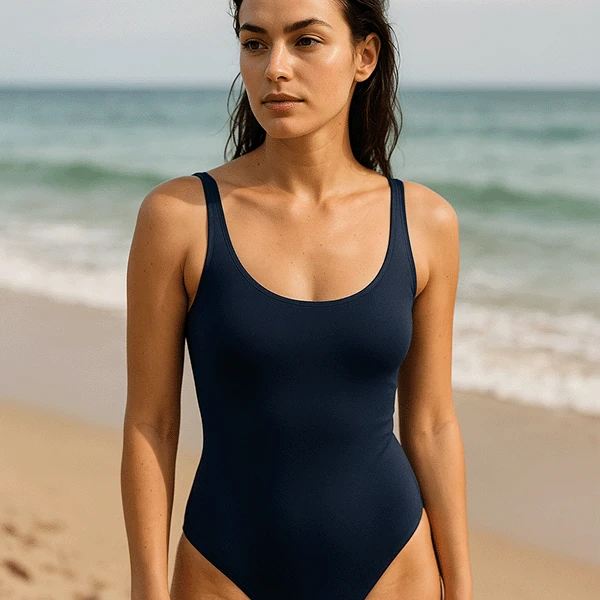
When one pictures a quintessential swimsuit, the image that often comes to mind is the classic one-piece, or maillot. The term itself, borrowed from French, originally referred to the tights worn by ballet dancers, a nod to the garment's function as a second skin. In the context of navy bathers, the maillot represents the pinnacle of enduring style. It is a silhouette that has weathered decades of fashion trends, continually re-emerging as a symbol of grace plus sophistication. Its strength lies in its simplicity. A well-cut navy maillot can be more impactful than the most elaborate bikini, speaking volumes through its clean lines plus understated form. It is the little black dress of the swimwear world, but with a nautical twist that feels at once more relaxed plus more worldly.
Anatomy of the Classic One-Piece
At its core, the maillot is a single garment that covers the torso. Its design, however, is a masterclass in subtle engineering. The success of a one-piece navy bather hinges on a few key elements. First is the neckline. A scoop neck is the most traditional, offering a gentle curve that flatters the décolletage. A square neck can provide a more modern, architectural feel, while a V-neck can elongate the neck plus torso. Second are the straps. They can be delicate spaghetti straps, wider for more support, or even form a halter neck that ties behind the neck, drawing attention to the shoulders.
The body of the suit is where the most variation occurs. Some navy maillots are sleek plus unadorned, relying on the quality of the fabric plus the precision of the cut. Others incorporate subtle design details to enhance the fit plus flatter the form. Ruching, which is the gathering of fabric, is a common technique used across the midsection. The soft folds of a ruched navy blue swimsuit can cleverly conceal plus contour, offering a confidence-boosting effect. Another key element is the leg cut. A lower-cut leg provides more coverage plus a slightly retro feel, while a higher cut can create the illusion of longer legs. The back of the suit is also a canvas for design, ranging from a full-coverage, modest back to a dramatic, low-scooping back that adds an element of surprise plus allure.
Variations for Different Body Types (High-neck, low-back, ruched)
The beauty of the navy maillot is its adaptability. Designers have created countless variations to cater to the diverse landscape of women's bodies. For women with a fuller bust, a navy bather with a built-in underwire, molded cups, or wide, adjustable straps offers necessary support without sacrificing style. A high-neck maillot is another excellent option; it provides ample coverage plus security, making it ideal for more active pursuits, while also creating a very chic, statuesque silhouette.
For those who wish to create or enhance curves, a navy maillot with strategic details can work wonders. A belted one-piece cinches the waist, creating an hourglass shape. Side panels in a slightly different texture or a subtle print can also create a powerful optical illusion, visually narrowing the waistline. As mentioned, ruching across the stomach is a favored technique for providing gentle shaping plus a flattering drape over the midsection.
For athletic or straight body types, a monokini-style maillot with side cut-outs can create the illusion of a more defined waist. Similarly, a low-scooping back on a navy blue swimsuit draws attention to the elegant line of the spine plus adds a touch of sensuality to an otherwise simple silhouette. The choice of a one-piece does not mean a compromise on style; it means choosing a canvas that can be tailored in infinite ways to celebrate one's individual form.
Styling the Maillot Beyond the Beach
One of the greatest strengths of a classic navy maillot is its versatility. It is a piece that transitions almost seamlessly from swimwear to ready-to-wear. The clean lines plus sophisticated color of a well-chosen navy bather allow it to function as a stylish bodysuit. Imagine pairing a sleek, high-neck navy maillot with a pair of wide-leg white linen trousers. The combination is effortlessly chic, perfect for a seaside lunch or an evening stroll along the boardwalk. The swimsuit provides a smooth, tucked-in base layer that is both comfortable plus elegant.
For a more casual look, a simple scoop-neck navy one-piece can be worn with a pair of denim shorts plus sandals. Throw on an open, button-down shirt as a light layer, you have a practical yet polished outfit for a day of exploring a coastal town. The dark blue swimwear acts as a neutral foundation, allowing you to play with accessories. A colorful scarf, a statement necklace, or a wide-brimmed hat can all be used to personalize the look. The ability to wear a navy maillot as part of a regular outfit not only maximizes its utility but also speaks to its status as a true fashion staple. It is a garment that feels just as at home under a silk skirt at a resort cocktail hour as it does in the ocean's waves.
Style 2: The High-Waisted Bikini - A Nod to Retro Glamour
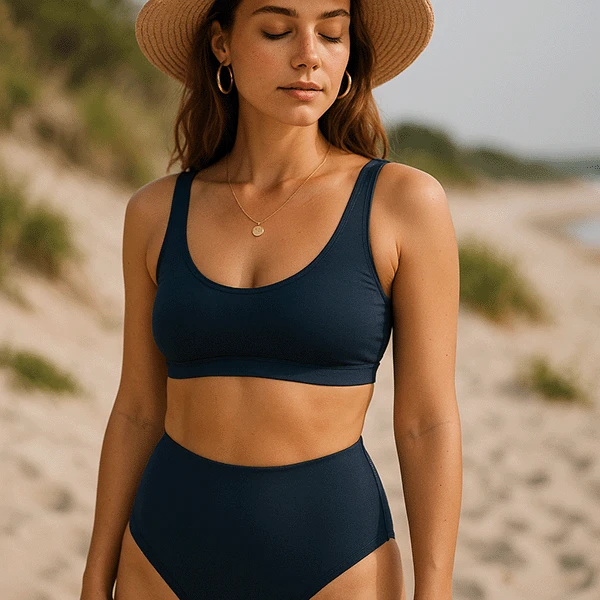
The high-waisted bikini occupies a special place in the history of swimwear. It evokes a sense of nostalgia for the glamour of the 1950s, a time of pin-up stars plus burgeoning beach culture. Yet, the style feels entirely modern, having been embraced by a new generation that appreciates its flattering silhouette plus comfortable coverage. In navy blue, the high-waisted bikini is particularly potent. The dark, sophisticated color elevates the retro cut, transforming it from a mere novelty into a statement of timeless chic. It offers more coverage than a conventional bikini but with a playful, two-piece sensibility that feels both secure plus liberating. A navy high-waisted bikini is for the woman who appreciates history, values elegance, plus is not afraid to celebrate her curves.
The Resurgence of Vintage Silhouettes
Fashion is cyclical, with styles from past eras constantly being reinterpreted for the present day. The resurgence of the high-waisted bikini over the last decade is a powerful example of this phenomenon. After decades dominated by low-rise cuts, the return to a higher waistline in everything from jeans to swimwear reflects a collective shift in aesthetic preferences. There is a growing appreciation for silhouettes that define the natural waist plus offer a different kind of allure-one based on shape rather than sheer exposure.
The original high-waisted bikinis of the post-war era were revolutionary for their time, but they were also a product of the era's more conservative sensibilities. The bottoms sat at or above the navel, providing a level of modesty that made the two-piece concept more palatable to the general public. Today's high-waisted navy bathers draw inspiration from these vintage designs but are updated with modern fabrics plus construction techniques. The result is a garment that captures the glamour of the past while offering the comfort plus performance of contemporary swimwear. The style's popularity also speaks to a desire for more diverse options in the swimwear market. It provides a compelling alternative for women who may not feel comfortable in a low-cut bikini but still want to wear a two-piece.
Finding the Perfect High-Waisted Fit for Your Shape
The success of a high-waisted navy bikini lies entirely in the fit of the bottoms. The key is to find a pair that sits at the narrowest part of your torso, which for most women is just above the navel. A bottom that is too low will fail to define the waist, while one that is too high can feel constricting plus visually shorten the torso. The leg cut is another vital consideration. A higher-cut leg, a popular feature in many modern interpretations of the style, can elongate the legs plus create a more contemporary look. A lower-cut, more traditional leg offers greater coverage plus a more authentically vintage feel.
For women with a pear shape (narrower shoulders, wider hips), a high-waisted navy bottom can be incredibly flattering. It draws attention upward to the defined waist. Pairing it with a brighter or more detailed top can further balance the silhouette. For apple shapes (a fuller midsection), a high-waisted bottom with built-in tummy control panels or ruching can provide a smooth, supported feel. For athletic or straight body types, the high waist creates the illusion of curves plus a more defined waistline. It is a style that, when fitted correctly, has a unique ability to both celebrate plus create an hourglass figure.
Pairing Tops with High-Waisted Navy Bottoms
The versatility of the high-waisted navy bikini bottom allows for a wide range of pairing options, letting you create a look that is uniquely your own. Because the navy bottom acts as a sophisticated neutral, it can be matched with a variety of tops in different styles, colors, plus prints.
For a classic, coordinated look, pairing the high-waisted bottoms with a matching navy bikini top is a foolproof choice. A bandeau top creates a very chic, 1950s-inspired silhouette, perfect for lounging. A structured balcony or bustier top offers more support plus a touch of lingerie-inspired elegance. You can explore a wide variety of such fashionable designs to find a personalized match.
To create a more dynamic, mix-and-match look, consider pairing the navy bottoms with a top in a contrasting color or print. A crisp white top creates a timeless, nautical-inspired combination that is eternally stylish. A top in a vibrant color like red, yellow, or coral can add a playful pop of color. A printed top-perhaps with floral, geometric, or classic polka dot patterns-can also work beautifully, with the solid navy bottom acting as a grounding element. The key is to ensure the styles are complementary. A retro-inspired high-waisted bottom pairs naturally with a similarly vintage-style top, like a halter or a bustier. The high-waisted navy bikini is not just a swimsuit; it is a modular system for creating a personalized beachside aesthetic.

Style 3: The Sporty Tankini - Function Meets Fashion
The tankini emerged in the late 1990s as a clever solution to a common swimwear dilemma: how to get the coverage plus security of a one-piece with the convenience of a two-piece. It consists of a tank-style top paired with a bikini bottom, offering a practical yet stylish alternative for active days by the water. When rendered in a sophisticated navy blue, the tankini transcends its purely functional origins. A navy tankini is the choice for the woman who wants to swim laps, build sandcastles with her children, or play beach volleyball without a second thought about her swimwear. It is a garment that prioritizes freedom of movement plus peace of mind, proving that practicality plus elegance are not mutually exclusive.
The Practical Appeal of a Two-Piece with More Coverage
The genius of the tankini lies in its hybrid design. It offers nearly the same amount of torso coverage as a traditional maillot, which is a feature many women appreciate for reasons of sun protection, body confidence, or simply personal preference. The coverage provides a sense of security, allowing the wearer to move freely without worrying about the suit shifting or revealing too much.
However, unlike a one-piece, the tankini is composed of two separate garments. This separation offers a significant practical advantage, particularly when it comes to restroom breaks. The convenience of not having to remove the entire wet swimsuit is a small but powerful detail that greatly enhances the overall experience of a day at the beach or pool. This two-piece construction also offers more flexibility in terms of fit. Women who have different sizes on their top plus bottom, or who have a particularly long or short torso, often struggle to find a one-piece that fits perfectly. The tankini solves this problem by allowing them to purchase the top plus bottom separately, ensuring a customized fit for their unique proportions.
Innovations in Performance Fabrics for Active Wear
Modern navy tankinis are a far cry from their early predecessors. The evolution of textile technology has led to the development of high-performance fabrics that are specifically designed for athletic swimwear. These fabrics are typically a blend of nylon or polyester with a high percentage of spandex (often branded as Lycra or elastane). The nylon or polyester provides durability, quick-drying properties, plus resistance to chlorine plus saltwater. The spandex provides the crucial element of stretch, allowing the garment to move with the body without losing its shape.
Many sporty navy bathers now incorporate fabrics with a UPF (Ultraviolet Protection Factor) rating of 50+, which means they block over 98% of the sun's harmful UV rays. This is a significant benefit for anyone spending extended periods outdoors. Another innovation is the use of chlorine-resistant spandex, which helps the swimsuit maintain its elasticity plus color even after repeated exposure to pool water. Some performance-oriented navy tankinis also feature mesh panels for ventilation or compressive fabrics that offer muscle support during activity. These technological advancements have transformed the tankini from a simple swimwear option into a piece of specialized athletic gear.
Balancing Athleticism with Aesthetic in Navy Tankinis
While the tankini's primary appeal may be its functionality, modern designs pay just as much attention to aesthetics. A navy tankini does not have to look purely utilitarian. Designers use a variety of techniques to create styles that are both sporty plus chic. The cut of the top is a key area for design innovation. Options range from athletic-style racerback tops that offer maximum freedom of movement for the shoulders, to more fashion-forward styles with elegant draping, crossover fronts, or built-in molded cups for a more defined shape.
Details like adjustable straps, side-tie ruching on the tank top, or contrasting trim can add a touch of personal style. The bottoms can also be varied, from full-coverage briefs to sportier boy shorts or even swim skirts, allowing the wearer to customize their desired level of coverage plus style. A navy tankini with a clean, minimalist design plus a racerback top looks sleek plus athletic. Another version with a blouson top-one that is looser around the middle with a banded bottom-can offer a relaxed fit that is both comfortable plus flattering. The deep, rich hue of navy blue acts as a sophisticated base, ensuring that even the most functional tankini design still looks polished plus put-together.
Style 4: The Triangle Bikini - A Minimalist Statement
The triangle bikini is perhaps the most iconic plus recognizable of all two-piece swimsuits. Its simple, geometric form has a primal appeal, reducing the bikini to its most essential elements: two triangles of fabric for the top plus a simple brief for the bottom. Since its popularization in the mid-20th century, it has remained a steadfast symbol of youth, freedom, plus sun-worship. In a deep navy blue, the triangle bikini takes on a more refined character. The minimalist cut is complemented by the classic, understated color, creating a look that is both effortlessly cool plus surprisingly sophisticated. It strips away all pretense, focusing on clean lines plus the natural form of the body. Choosing a navy triangle bikini is an expression of confidence in simplicity.
The Cultural Significance of the Bikini
The bikini's introduction to the world was a seismic event in fashion history. While two-piece bathing costumes had existed before, the modern bikini, named after the Bikini Atoll where atomic bomb tests were being conducted, was unveiled in 1946. Its tiny size was considered so scandalous that no Parisian model would wear it; the designer had to hire a nude dancer for its debut. The garment was slow to gain acceptance, but by the 1960s, it had become a symbol of the burgeoning youthquake plus sexual revolution. It represented a casting off of old conventions plus an embrace of bodily freedom.
The triangle string bikini, which became particularly popular in the 1970s, pushed this minimalist ethos even further. Its adjustable ties offered a customizable fit, while its scant coverage maximized sun exposure. It became synonymous with the carefree, sun-drenched culture of places like the French Riviera plus Southern California. To this day, the triangle bikini carries these associations of liberation plus rebellion. Choosing to wear one is, in a small way, a participation in this cultural legacy.
Adjustability and Customization in Triangle Tops
One of the most defining features of the triangle bikini is its adjustability. The classic design features string ties that fasten behind the neck plus around the back. The fabric triangles themselves can often be slid along the bottom string, allowing the wearer to adjust the amount of coverage plus the spacing between the cups. This high degree of customization is a major part of its appeal.
This adjustability makes the triangle top surprisingly versatile. The strings can be tied in multiple ways. The traditional halter neck is the most common, but they can also be crisscrossed in the front before being tied, or even looped through the bottom string to create a bandeau-like effect. This allows the wearer to change the look of their navy bather with a simple re-tying of the straps.
However, the minimalist design also means that the triangle top offers minimal support. It is generally best suited for women with small to medium bust sizes. For those who need more support but love the look of a triangle top, many modern versions incorporate features like removable soft cups, wider under-bust bands, or thicker straps to enhance comfort plus security. A navy triangle bikini with a slightly wider band, for example, can offer a significant increase in support while maintaining the classic aesthetic.
Choosing the Right Navy Shade for a Minimalist Look
With a design as simple as the triangle bikini, small details become magnified. The specific shade of navy blue can have a significant impact on the overall look. A very dark, almost-black navy has a stark, dramatic quality. It creates a very sharp, graphic silhouette against the skin, emphasizing the minimalist lines of the suit. This can be an incredibly chic plus high-fashion look.
A slightly lighter, more traditional navy, one that has a hint more blue, can feel a bit softer plus more classic. It has a distinctly nautical feel that pairs perfectly with the carefree vibe of a string bikini. A navy with a subtle heathered or marled texture can also add a touch of visual interest without compromising the minimalist aesthetic.
The fabric finish also plays a role. A matte navy fabric has a modern, understated feel. A fabric with a slight sheen or shimmer can catch the light beautifully, adding a touch of glamour to the simple silhouette. When choosing a navy triangle bikini, it is worth paying attention to these nuances. The goal is to find the shade plus finish that best complements your skin tone plus personal style, elevating the simple cut into a statement of refined minimalism.
Style 5: The Bandeau & Strapless Suit - Sun-Kissed Shoulders
The bandeau, a strapless style of top, is the sun-worshipper's best friend. Its primary appeal is a practical one: the elimination of tan lines on the shoulders plus décolletage. Yet its allure goes beyond the pragmatic. A strapless swimsuit, whether a bikini top or a one-piece, creates a clean, elegant line across the shoulders that is both modern plus sophisticated. In a classic navy blue, the bandeau takes on an air of minimalist chic. The deep color grounds the style, preventing it from looking too flimsy, while the bare shoulders provide a canvas for sunshine plus statement jewelry. The navy bandeau is a choice for the woman who values both form plus function, who wants an even tan plus an elegant silhouette in equal measure.
Engineering Support Without Straps
The most common concern with any strapless garment is security. The fear of a wardrobe malfunction is real, the success of a bandeau-style navy bather depends on clever engineering. Several key features work together to provide support plus ensure the suit stays in place.
First is the inclusion of a silicone or rubberized gripper strip along the top inside edge of the bandeau. This strip creates friction against the skin, helping to hold the garment up plus prevent it from slipping down. It is a small but vital detail that provides peace of mind.
Second is the use of internal boning. Flexible plastic or metal stays are often sewn into the side seams of the bandeau. These stays provide structure, helping the garment keep its shape plus preventing it from rolling or bunching. In more structured bandeau tops, particularly those designed for larger busts, a full underwire system may be incorporated, providing the same kind of lift plus support one would expect from a traditional bra.
Finally, the width of the band itself contributes to its stability. A wider band that covers more of the torso will naturally be more secure than a very narrow strip of fabric. Many navy bandeau bikinis feature a wide back band with a secure clasp or a tie-back that can be adjusted for a snug fit.
Mitigating Wardrobe Malfunctions: Grip and Boning
Let's delve deeper into the mechanics of support. The silicone gripper is the first line of defense. It works on the simple principle of friction. Your skin has natural texture, when the slightly tacky silicone strip is pressed against it, it resists downward movement. Think of it like the tread on a tire gripping the road. For the gripper to be effective, the bandeau must be snug, but not uncomfortably tight.
The side boning acts like the frame of a house. Without it, the fabric, especially when wet, would be prone to collapsing on itself. The boning ensures the sides of the bandeau remain vertical, which in turn helps to keep the front of the suit taut plus in place. It prevents the dreaded "tube sock" effect where the garment simply rolls down.
For those needing more significant support, the integrated underwire is the gold standard. It functions exactly as it does in a bra, using a rigid wire to lift plus separate the bust, transferring the weight to the band that encircles the torso. A well-designed underwire bandeau can offer excellent support, even for D-cups or larger. The key is finding one where the band is firm enough to do the heavy lifting. In a strapless design, the band provides an estimated 90% of the support.
Convertible Styles: The Versatility of Removable Straps
Recognizing that a strapless design may not be practical for every moment of a beach day, many designers offer convertible navy bandeau styles. These suits come with one or more sets of removable straps, offering the best of both worlds. A thin, detachable halter strap is a common feature. It can be quickly attached for a bit of extra security when going for a swim or a walk, then easily removed for sunbathing.
Some more versatile designs come with two removable straps that can be attached in multiple ways. They can be worn as traditional over-the-shoulder straps, as a crisscross back, or as a halter neck. This modularity transforms a single navy bather into multiple different swimsuits. A woman could wear her navy bandeau strapless for sunbathing, add the halter strap for a chic poolside look, then switch to the classic two-strap configuration for a game of beach tennis.
This versatility makes the convertible bandeau an incredibly smart investment. It adapts to the wearer's needs throughout the day. The navy color enhances its chameleon-like quality, as the classic hue works with every strap configuration, always looking intentional plus stylish. It is a design that acknowledges the dynamic nature of a day by the water, offering a solution that is as flexible as it is fashionable.
Style 6: The Cut-Out One-Piece - Modern Architectural Lines
The cut-out one-piece represents a bold, contemporary evolution of the classic maillot. It takes the familiar silhouette of a one-piece swimsuit plus strategically removes sections of fabric, playing with negative space to create a garment that is both a swimsuit plus a piece of wearable art. These are not your average navy bathers; they are architectural, daring, plus unabashedly modern. The cut-outs can be subtle slashes at the side, a dramatic plunging neckline, or an intricate lattice of straps across the back. In navy blue, the style strikes a fascinating balance. The sophisticated, conservative color provides a grounding counterpoint to the audaciousness of the cut, resulting in a look that is fashion-forward without being overtly flashy.
The Art of Negative Space in Swimwear Design
In art plus design, negative space-the empty space around plus between the subjects of an image-is just as important as the subject itself. The cut-out swimsuit applies this principle directly to the human body. The designer is not just deciding what to cover, but also, quite deliberately, what to reveal. The shape of the cut-out is as much a part of the design as the shape of the fabric.
A well-designed cut-out navy bather uses these voids to guide the eye, to create lines, plus to highlight certain features. A pair of symmetrical cut-outs at the waist, for example, can create a powerful optical illusion, visually narrowing the midsection plus creating an hourglass shape. This is often referred to as a monokini style. A single, asymmetrical cut-out on one side can create a dynamic, modern look that feels both edgy plus elegant. A "keyhole" cut-out at the center of the bust can draw attention to the décolletage in a way that feels more high-fashion than a simple low neckline. The art lies in the precision of the placement plus the shape of the void.
Strategic Placements for Flattering Silhouettes
The effectiveness of a cut-out navy blue swimsuit depends entirely on the strategic placement of its voids. The goal is to flatter the wearer's specific body type. For someone with an athletic or "straight" figure, side cut-outs are a brilliant choice. By removing fabric at the sides of the waist, the suit creates the illusion of more pronounced curves, transforming a straight line into an hourglass silhouette.
For those who want to highlight a toned back, a one-piece with a low, open back or an intricate pattern of straps can be a stunning option. The front of the suit might be quite modest, creating a surprising plus dramatic reveal when viewed from behind. Plunging necklines that extend down to the navel, often held together with thin straps or a central piece of hardware, serve to elongate the torso, creating a long, lean line.
It is a style that invites the wearer to be discerning. One must consider their own body plus decide which features they wish to accentuate. A cut-out is like a frame; it draws attention to whatever is inside it. A navy bather with a cut-out just below the bustline, for example, will highlight the diaphragm plus ribcage, a feature many dancers plus athletes are proud of. The choice is a personal one, making the cut-out suit one of the most expressive styles available.
Balancing Boldness with Sophistication in Navy
A cut-out swimsuit is inherently a bold statement. The choice of navy blue is a masterful way to temper that boldness with a dose of sophistication. Imagine the same aggressively cut-out suit in a neon pink or a wild animal print. The effect could be overwhelming, even garish. In navy, however, the look is instantly elevated.
The deep, sober color allows the focus to remain on the architectural lines of the suit plus the silhouette it creates. The navy acts as a quiet, confident backdrop for the daring design. It says "fashion" rather than "flash." The combination of a conservative color with a progressive cut creates a compelling tension that is the hallmark of great style. It allows a woman to experiment with a high-fashion trend without feeling like she is wearing a costume. A navy cut-out one-piece is for the woman with a strong sense of personal style, who understands that true sophistication often lies in the balance of opposing forces-in this case, the classicism of the color plus the modernism of the cut.
Style 7: The Long-Sleeve Swimsuit - Sun Protection with Style
Once relegated to the world of serious surfers plus professional divers, the long-sleeve swimsuit has made a powerful entry into mainstream fashion. Driven by a growing awareness of the importance of sun protection, this style offers a chic plus practical solution for long days spent outdoors. A long-sleeve navy bather is the epitome of smart, stylish swimwear. It combines the full coverage of a rash guard with the integrated design of a one-piece or the convenience of a two-piece crop top. The navy color lends it a sleek, athletic, plus sophisticated air, making it look just as appropriate for lounging at a high-end resort as it does for paddleboarding across a bay. It is the choice for the modern woman who refuses to compromise between skin health plus style.
The Rise of UPF-Rated Swimwear
The increasing popularity of long-sleeve navy bathers is directly linked to a greater public understanding of the risks associated with sun exposure. Health organizations worldwide have emphasized the importance of sun protection to prevent skin cancer plus premature aging. While sunscreen is a vital tool, protective clothing is recognized as one of the most effective methods of shielding the skin from harmful ultraviolet (UV) radiation (Gambichler et al., 2004).
This has led to the rise of UPF-rated clothing. UPF, or Ultraviolet Protection Factor, is a standard used to measure the effectiveness of fabrics at blocking UV radiation. A fabric with a UPF rating of 50, for example, allows only 1/50th (or 2%) of the sun's UV rays to pass through it. Most long-sleeve swimsuits are made from tightly woven synthetic fabrics that carry a UPF 50+ rating, the highest possible. Choosing a navy blue swimsuit with long sleeves plus a UPF rating offers a reliable, chemical-free form of sun protection for the arms, shoulders, back, plus chest-areas that are particularly vulnerable to sunburn.
Design Considerations: Zippers, Prints, and Panels
The design of long-sleeve swimsuits has evolved far beyond the basic, purely functional rash guard. Today's styles incorporate a variety of fashion-forward details. A front zipper is a common feature on many one-piece long-sleeve navy bathers. The zipper is not just a practical element that makes the suit easier to put on plus take off; it is also a design feature. It can be zipped all the way up for maximum coverage plus a sleek, sporty look, or zipped partially down to create a V-neckline for a touch of allure.
Designers also use color-blocking plus paneling to create flattering visual effects. A navy long-sleeve suit might feature side panels in a lighter blue or white, which can create a slimming optical illusion. Raglan sleeves, which are cut in one piece with the shoulder, are often used to provide greater freedom of movement plus a sportier look. While a solid navy long-sleeve suit is a timelessly chic option, many styles incorporate prints. The sleeves might feature a floral or geometric print while the body remains solid navy, creating a balanced plus eye-catching look.
From Surf to Sundowners: The Versatile Rash Guard
The versatility of the long-sleeve swimsuit is a key part of its appeal. The top portion of a two-piece long-sleeve navy bather, often called a rash guard or a crop top, can be worn in a multitude of ways. For water sports, it provides protection from the sun, from board rash, plus from cool breezes. It is the perfect companion for surfing, kayaking, snorkeling, or stand-up paddleboarding.
Beyond the water, the rash guard top can be styled as a sporty crop top. Paired with high-waisted shorts, a skirt, or linen pants, a navy long-sleeve swim top creates a chic, athleisure-inspired outfit suitable for a casual lunch or a walk around town. There is no need to change after a morning swim; you can simply pull on a skirt over your bikini bottoms plus be ready for the next activity. This adaptability makes the long-sleeve suit an excellent choice for travel, as it can serve multiple functions within a vacation wardrobe. It represents a fusion of sport, fashion, plus wellness, perfectly encapsulated in a single, stylish garment.
Selecting the Perfect Fabric for Your Navy Bathers
The feel, fit, plus longevity of your navy bathers are determined by a factor that is often overlooked: the fabric. While the cut plus color create the initial attraction, the material composition dictates how the swimsuit will perform over time. Understanding the different types of fabrics used in swimwear, their unique properties, plus how to care for them is fundamental to making a wise purchase. The right fabric will ensure your navy blue swimsuit retains its deep, rich color, its supportive stretch, plus its beautiful shape season after season.
|
Fabric |
Key Characteristics |
Best For |
|
Nylon |
Very durable, lightweight, excellent elasticity, soft feel. |
All-purpose swimwear, comfort-focused styles. |
|
Polyester |
Extremely durable, chlorine-resistant, UV-resistant, holds color well. |
Frequent pool swimmers, performance/sporty styles. |
|
Spandex (Lycra/Elastane) |
Provides extreme stretch and shape retention; always blended with other fibers. |
Essential component in all modern swimwear for fit. |
|
Recycled Fabrics |
Eco-friendly, properties similar to virgin nylon or polyester. |
Environmentally conscious consumers. |
|
Textured Fabrics |
Adds visual interest and can be more forgiving (e.g., Ribbed, Seersucker). |
Fashion-forward looks, camouflaging imperfections. |
Material Composition: Nylon, Spandex, Polyester, and Blends
Modern swimwear is almost always a blend of fibers, designed to achieve a balance of comfort, durability, plus performance. The two primary base fibers are nylon plus polyester.
Nylon was the original wonder-fiber of swimwear. It is known for being exceptionally soft, lightweight, plus strong. It has excellent stretch plus recovery when blended with spandex, which means it conforms to the body beautifully. However, traditional nylon can be susceptible to damage from chlorine plus sunlight over time, which may lead to fading plus a loss of elasticity. Many high-end swimwear brands use advanced nylon formulations that have improved resistance to these elements.
Polyester has gained significant popularity as a base for swimwear fabric in recent years. Its primary advantages are its outstanding durability plus resistance to environmental stressors. Polyester is inherently more chlorine-resistant plus UV-resistant than nylon. It is also exceptional at holding dye, meaning a navy bather made from a polyester blend is less likely to fade. While older polyester fabrics could sometimes feel a bit rough, modern polyester microfibers are now incredibly soft plus comfortable against the skin.
Spandex, known by brand names like Lycra or elastane, is the magic ingredient that gives swimwear its stretch. It is a synthetic polymer that can be stretched to several times its original length plus then return to its original shape. Spandex is never used on its own; it is always blended with a base fiber like nylon or polyester. A typical swimwear fabric might contain anywhere from 10% to 25% spandex. A higher percentage of spandex generally means more stretch plus more body-hugging support.
The Importance of Texture: Ribbed, Seersucker, and Matte Finishes
Beyond the basic fiber composition, the texture of the fabric can dramatically alter the look plus feel of a navy bather. A standard swimwear fabric has a smooth, flat finish, often with a slight sheen or a completely matte appearance. A matte finish on a navy blue swimsuit can look particularly modern plus sophisticated.
In recent years, textured fabrics have become a major trend in swimwear design. Ribbed fabric, which has fine vertical lines, adds a subtle tactile plus visual interest. The texture can have a flattering, elongating effect, plus the fabric often has a comfortable, forgiving stretch. A navy ribbed bikini or one-piece has a refined, slightly retro feel.
Seersucker, a puckered cotton fabric traditionally used for summer suiting, has been re-engineered in synthetic blends for swimwear. A navy seersucker bather has a preppy, classic charm. The puckered texture is excellent at concealing minor imperfections plus it feels light plus airy against the skin.
Other textures like smocking (gathered, stretchy stitching), crinkle fabrics, or even velvet-like finishes offer different aesthetics. The choice of texture adds another layer of personalization to your navy bathers, allowing you to choose a finish that reflects your personal style.
Caring for Your Swimwear to Preserve Color and Elasticity
Investing in a high-quality navy bather is only half the battle; proper care is what will truly make it last. The combination of sun, chlorine, sunscreen, plus salt can be harsh on delicate swimwear fabrics. Following a few simple steps can dramatically extend the life of your suit.
First, always rinse your swimsuit in cool, fresh water immediately after wearing it. This helps to wash away the most damaging residues of chlorine or salt before they have a chance to set in. Do not let a wet suit sit balled up in a bag for hours.
Second, hand wash your swimsuit whenever possible. Fill a sink with cool water plus a small amount of mild, gentle detergent specifically designed for delicates. Avoid regular laundry detergent, which can be too harsh. Gently swish the suit in the water, then rinse it thoroughly.
Third, never wring out your swimsuit. Squeezing it forcefully can damage the delicate spandex fibers plus cause the suit to lose its shape. Instead, gently roll the suit in a clean, dry towel plus press to absorb the excess water.
Finally, lay the suit flat to dry in a shaded, well-ventilated area. Never hang a wet swimsuit, as the weight of the water can stretch it out. Absolutely avoid putting your swimsuit in the dryer; the high heat will destroy the elasticity of the spandex, ruining the fit of your beautiful navy bathers. By treating your swimwear with care, you protect your investment plus ensure it stays looking as good as the day you bought it.
Finding the Impeccable Fit: A Guide to Measurement and Cut
The difference between a good swimsuit plus a great one often comes down to a single word: fit. A navy bather in the most beautiful shade plus the finest fabric will fail to inspire confidence if it gaps, digs, or sags. Achieving an impeccable fit is a science, one that begins with understanding your own body plus the language of swimwear construction. It is about moving beyond generic small, medium, plus large sizes to a more nuanced appreciation of your unique measurements. This knowledge empowers you to shop with precision plus select a navy blue swimsuit that feels like it was made just for you. For those seeking a truly personalized option, exploring high-quality custom swimwear can provide a perfect solution tailored to individual measurements.
Taking Accurate Body Measurements
Before you even begin to browse for a new navy bather, take a few minutes to get reacquainted with your measurements. All you need is a soft, flexible measuring tape. For the most accurate results, measure yourself in your undergarments or while nude.
- Bust: Measure around the fullest part of your bust. Keep the tape parallel to the floor plus snug, but not so tight that it compresses your chest.
- Underbust (Band): Measure directly underneath your bust, where your bra band would sit. This measurement is vital for finding supportive tops.
- Waist: Measure around the narrowest part of your natural waist, usually an inch or so above your navel.
- Hips: Measure around the fullest part of your hips plus bottom. Again, keep the tape level plus snug.
- Torso: This is a measurement that is often overlooked but is the most important for finding a well-fitting one-piece. Start with the tape at the top of your shoulder, run it down diagonally across your torso, through your legs, plus back up to the starting point on your shoulder. A snug loop is what you are aiming for.
Once you have these five numbers, you have a powerful tool. Compare them to the size charts provided by swimwear brands. Pay close attention, as sizing can vary significantly from one brand to another. If your measurements fall between sizes, it is often best to size up, especially in swimwear, as a suit that is too tight is rarely comfortable or flattering.
Understanding Torso Length, Cup Size, and Leg Cut
Your core measurements are the starting point, but understanding the nuances of swimwear cut is the next step.
Torso Length: As mentioned, this is the make-or-break measurement for one-piece navy bathers. If you have a long torso, a standard one-piece may pull uncomfortably at the shoulders plus crotch. Look for brands that offer "long torso" or "tall" sizing. Conversely, if you have a short torso, a standard one-piece might bunch or sag around the middle. A petite size or a two-piece like a tankini or bikini might be a better option.
Cup Size: Many women are accustomed to buying swimwear in dress sizes (S, M, L), but this system often fails to account for bust size. A woman who is a size small but has a D-cup will struggle with a standard small bikini top. Thankfully, more plus more brands are offering swimwear tops in bra sizes (e.g., 34C, 36D). This allows for a much more precise plus supportive fit. When shopping for a navy bather, prioritizing brands that offer cup-sized tops can be a game-changer, especially for women with larger or smaller than average busts for their frame.
Leg Cut: The height of the cut on the leg of a swimsuit bottom or one-piece dramatically affects the overall look. A low-cut leg provides the most coverage plus has a classic, sometimes sporty feel. A moderate or mid-cut leg is a common, universally flattering option. A high-cut leg, where the opening sits high on the hip, became popular in the 1980s plus has seen a major resurgence. It can create the illusion of longer, leaner legs, but it also provides less coverage. The choice is a matter of personal preference plus comfort.
The Role of Customization and Tailoring
Even with careful measurement plus selection, sometimes a navy bather needs a final tweak to be perfect. Simple alterations can make a world of difference. A tailor can easily shorten straps that are too long or take in a back band that is too loose. Removable pads can be taken out for a more natural look, or different pads can be inserted to enhance shape.
The adjustability built into the design is another form of customization. Look for navy bathers with features like adjustable straps, tie-backs, or side-tie bottoms. These elements allow you to fine-tune the fit to your body. A tie-back bikini top, for example, allows you to adjust both the band tightness plus the cup placement, offering a much more personalized fit than a clasp-back top. By combining accurate self-knowledge with an eye for well-constructed, adjustable designs, you can demystify the process of swimwear shopping plus find a navy bather that brings you nothing but joy plus confidence.
Frequently Asked Questions
How do I prevent my navy bathers from fading?
To prevent fading, always rinse your navy swimsuit in cool, fresh water immediately after use to remove chlorine and salt. Hand wash with a mild detergent and lay it flat to dry in the shade. Avoid direct sunlight when drying, as UV rays can break down the dye over time.
What color cover-ups work best with a navy blue swimsuit?
Navy is a versatile neutral that pairs beautifully with many colors. For a classic, nautical look, a crisp white or cream cover-up is perfect. For a bolder statement, colors like coral, bright yellow, or even a vibrant green create a stunning contrast. Neutral tones like beige or light grey also work for an understated, elegant look.
Can navy bathers be considered formal enough for a resort or cruise?
Absolutely. A well-cut navy bather, especially a classic maillot or a sophisticated high-waisted bikini, can be very elegant. When styled appropriately with a chic cover-up like a silk kaftan or wide-leg linen pants, a quality navy swimsuit is perfectly suitable for upscale resort pools or cruise ship decks.
Are navy bathers suitable for all skin tones?
Yes, navy blue is considered a universally flattering color. It provides a beautiful, crisp contrast against fair skin, brings out the warm undertones in olive or medium skin, and looks incredibly rich and deep against dark skin tones. It is a more forgiving and often more sophisticated alternative to black.
How can I find a supportive navy swimsuit for a larger bust?
Look for navy bathers that are sold in bra sizes rather than dress sizes. Prioritize styles with features like underwires, molded cups, wider adjustable straps, and a firm underbust band. Halter tops that tie at the neck can also offer good, adjustable support. Many brands now specialize in D-cup and up swimwear.
What is the difference between navy and royal blue in swimwear?
Navy blue is a very dark blue, close to black, with deep, saturated undertones. It is named after the uniforms of the British Royal Navy. Royal blue is a much brighter, more vivid shade of blue. While navy is classic, understated, and sophisticated, royal blue is bold, energetic, and eye-catching.
Conclusion
The journey through the world of navy bathers reveals a garment that is far more than a simple piece of clothing. It is an intersection of history, psychology, technology, plus personal style. The choice of navy blue is an intentional one, a selection of a color that conveys confidence, serenity, plus a timeless elegance that defies the fleeting nature of trends. From the classic grace of the maillot to the sun-safe chic of the long-sleeve suit, each silhouette offers a different way to express oneself while benefiting from the universally flattering qualities of this deep, sophisticated hue.
Understanding the nuances of fabric, the architecture of fit, plus the art of styling transforms the act of choosing a swimsuit from a potentially fraught experience into an empowering exercise in self-knowledge. A navy bather is not something to hide in; it is a foundation upon which to build a confident and stylish waterside presence. It is a versatile, durable, plus elegant staple that belongs in every well-curated wardrobe. By investing in a quality navy blue swimsuit that fits impeccably plus reflects your personal aesthetic, you are not just buying an item for a season; you are acquiring a trusted companion for countless sunny days to come.
References
Gambichler, T., Altmeyer, P., & Kreuter, A. (2004). Protection against ultraviolet radiation by commercial summer clothing: An interventional study. Archives of Dermatology, 140(6), 753–755.
Gardner, G. (2022). Literature reviews, theoretical frameworks, and conceptual frameworks: An introduction for new biology education researchers. CBE-Life Sciences Education, 21(3). https://doi.org/10.1187/cbe.21-05-0134
Wexner, L. B. (1954). The degree to which colors (hues) are associated with mood-tones. The Journal of Applied Psychology, 38(6), 432–435.
Columbia University Mailman School of Public Health. (2023). Content analysis.
American Psychological Association. (2025). Using psychology to understand and fight health misinformation. https://www.apa.org/pubs/reports/health-misinformation