Abstract
This article provides a comprehensive examination of open bust lingerie, moving beyond surface-level descriptions to explore its historical evolution, psychological implications, and stylistic diversity. It positions the garment within a broader context of fashion, self-expression, and the philosophy of embodiment. The analysis dissects seven distinct styles, including the classic shelf bra, cupless corsets, and modern caged designs, evaluating each for its unique construction, material composition, and potential for personal expression. The discussion integrates perspectives from material science, fashion history, and psychology to illuminate the relationship between the wearer and the garment. It serves as a detailed 2025 buyer's guide, offering practical knowledge on fitting, material selection, and garment care. The objective is to equip the reader with a nuanced understanding, enabling informed choices that align with personal aesthetics and desires for confidence. This exploration treats open bust lingerie not merely as apparel but as a complex object of design and a tool for articulating identity.
Key Takeaways
1. Understand that different styles, like shelf bras or cupless corsets, offer unique aesthetics.
2. Prioritize accurate measurements for both band and frame to ensure a perfect fit.
3. Explore materials like silk or mesh for desired comfort and sensory experience.
4. Consider how to style open bust lingerie with other garments for cohesive looks.
5. Properly care for delicate fabrics to extend the life of your lingerie pieces.
6. Embrace open bust lingerie as a powerful tool for self-expression and confidence.
7. Think of a complete look by pairing items to create stunning sexy lingerie sets.
Understanding the Allure: A Philosophical and Historical Perspective
To begin an inquiry into a garment as specific as open bust lingerie, one must first pose a fundamental question: what is the purpose of clothing that intentionally reveals what it is structurally expected to conceal? The answer is not simple; it resides at the intersection of aesthetics, psychology, and the very language of fashion. The garment becomes a statement, a piece of rhetoric spoken through fabric and form. It challenges the purely functional narrative of underwear, which is often centered on support or modesty, and introduces a vocabulary of presentation, framing, and deliberate exposure.
The Semiotics of Exposure: What Does 'Open' Signify?
In the semiotics of clothing, every element carries meaning. A button, a seam, a collar-they all contribute to the message a garment conveys. The "open" nature of an open bust design is perhaps one of the most potent signifiers in the world of intimate apparel. It is an act of framing. Think of how a museum curator uses a frame to draw the eye to the most significant parts of a painting, separating it from the surrounding wall and elevating its importance. In a similar way, an open bust bra or corset uses its structure-the band, the straps, the underwire-to frame the body. It does not cover, but rather, it presents.
This act of presentation subverts the conventional logic of a bra. A standard bra's function is often concealment and shaping under other clothes. The open bust design, by contrast, is often intended for an audience, even if that audience is simply the self. It operates on a principle of suggestion and revelation, a dynamic tension that is central to the concept of eroticism. The garment highlights anatomy by its very absence in key areas, a paradox that engages the mind as much as the eye. It asks the observer, and the wearer, to contemplate the relationship between the covered and the uncovered, the structure and the form it contains.
A Brief History: From Hidden Structures to Celebrated Forms
The conceptual origins of open bust lingerie are not a sudden 20th-century invention but an evolution of historical undergarments. The corsets of the 17th and 18th centuries, for example, were engineered to create a specific silhouette, often pushing the bust upwards and outwards, creating a "shelf" effect even with fabric coverage. The function was to shape the body to fit the fashion of the time (Davis, 1997). The structure was paramount; the body was molded by it.
The transition toward the modern open bust concept began as lingerie moved from being purely structural and hidden to being an object of beauty and desire in its own right. During the early 20th century, as social mores shifted, lingerie started to incorporate more delicate fabrics like silk and lace. The burlesque and vaudeville stages of the 1920s and 30s played a significant role, with performers using elaborate, custom-made costumes that often featured revealing elements to captivate audiences. These were the precursors to what we now recognize as erotic lingerie. The post-war period, particularly the sexual revolution of the 1960s, saw a commercial explosion of adventurous lingerie styles. Designers began to experiment with form in a way that celebrated the natural body rather than rigidly reshaping it. The open bust design emerged from this context as a confident expression of sexuality, moving from the stage to the private wardrobe.
The Psychology of Confidence and Vulnerability
Wearing a piece of open bust lingerie can be a profound psychological experience. It involves a deliberate engagement with themes of confidence, vulnerability, and self-image. The theory of "enclothed cognition" suggests that the clothes we wear can systematically influence our psychological processes (Adam & Galinsky, 2012). When a person chooses to wear a garment that is so explicitly non-functional and aesthetically focused, they are engaging in an act of self-curation.
For some, it can be an empowering reclamation of their own body and sexuality. In a world where bodies are often subject to external judgment, choosing to wear something that celebrates rather than conceals can be a powerful statement of ownership. It is a choice made for oneself, a way of exploring and appreciating one's own form. The vulnerability of exposure is transformed into the confidence of presentation. The garment's structure provides a sense of being "held" and adorned, while the openness allows for a direct connection with one's own skin and shape. It fosters a moment of self-contemplation, a dialogue between the inner self and the physical body. Have you ever considered how a single piece of clothing could alter your perception of yourself, even if no one else sees it? It is this internal shift that lies at the heart of the appeal of such intimate apparel.
Style 1: The Classic Shelf Bra
The shelf bra is perhaps the most archetypal form of open bust lingerie. Its name is descriptive of its function: to create a "shelf" that lifts and supports the bust from below, without providing any coverage over the top. It is a study in engineering, using structural principles to achieve a purely aesthetic effect.
Defining the Shelf Bra: Support Without Full Coverage
A shelf bra, also known as a balconette bra in its most extreme form, consists of an underwire and a partial cup structure that typically covers only the bottom portion of the bust. The underwire is the critical component, providing the lift and creating the foundational shape. The band secures the structure to the torso, and the straps offer additional lift and stability. Unlike a full-cup or demi-cup bra, its primary goal is not containment or shaping for outerwear. Instead, its purpose is elevation and presentation. The resulting silhouette is lifted and rounded, a deliberate and dramatic presentation of the natural form. The design isolates the function of support from the function of coverage, a deconstruction of the traditional bra.
Materials and Construction: Lace, Satin, and Underwire
The construction of a quality shelf bra is a testament to the art of lingerie design. The underwire must be strong yet flexible, encased in a soft channel to prevent discomfort. The band is often made from a firm power mesh or satin with minimal stretch to provide a secure anchor. The "cup" portion, though minimal, is where designers often express their creativity. It might be crafted from delicate Chantilly lace, rich satin, or embroidered tulle. The choice of material is not merely decorative. A satin shelf bra offers a smooth, reflective surface that contrasts with the skin, while a lace version provides textural complexity and a sense of classic romance. The straps may be simple elastic or feature decorative elements like ribbon or small jewels. Every component works in concert to create a garment that is both structurally sound and aesthetically pleasing.
Styling the Shelf Bra: Pairing with High-Waisted Bottoms and Garter Belts
A shelf bra is rarely worn in isolation; it is the centerpiece of a curated ensemble. To create a balanced and visually coherent look, it is often paired with other lingerie pieces that complement its style. A high-waisted panty or thong is a classic choice. The high waistline elongates the torso and creates a continuous line that draws the eye upward toward the bra itself. This pairing evokes a vintage, pin-up-inspired aesthetic that is timelessly appealing.
For a more elaborate look, a garter belt is an excellent addition. The vertical lines of the garter straps create a sense of symmetry and further frame the body. When selecting a garter belt, consider matching the material or color to the shelf bra to create a cohesive sexy lingerie set. A black lace shelf bra paired with a matching black lace garter belt and high-waisted briefs creates a powerful, unified statement. The final touch, of course, is a pair of sheer stockings, which completes the ensemble and adds another layer of texture and allure.

Style 2: The Cupless Corset and Bustier
Moving from the focused support of a shelf bra, we encounter the cupless corset or bustier. This garment extends the principles of framing and shaping to the entire torso, combining waist-cinching with the open bust design. It is a piece with a rich history, adapted for a modern sensibility.
|
Feature |
Shelf Bra |
Cupless Corset/Bustier |
|
Primary Function |
Bust lift and presentation |
Torso shaping and bust framing |
|
Coverage Area |
Lower bust and torso band |
Entire torso, from hips to bust |
|
Key Structural Element |
Underwire |
Boning and lacing/hook-and-eye |
|
Common Materials |
Lace, Satin, Mesh |
Brocade, Satin, Leather, Coutil |
|
Styling |
Paired with panties, garter belts |
Can be a standalone piece or layered |
Cinching the Waist, Framing the Bust: The Dual Function
The defining characteristic of a cupless corset is its dual functionality. First, it is a shaping garment. Through a combination of rigid materials and a fastening system (traditionally lacing, but often hook-and-eye closures in modern bustiers), it cinches the waist, smooths the midsection, and creates an hourglass silhouette. This is the heritage it inherits from historical corsetry. Second, it incorporates the open bust design. Instead of having integrated cups, the structure rises to just below the bust line, or it may have underwire channels without any cup fabric. This design lifts and supports the bust from the foundation of the torso itself. The entire garment works as a system to sculpt the body and frame the bust, creating a dramatic and highly defined shape. The effect is one powerful, continuous line from hip to bust.
Boning and Structure: A Comparison of Materials (Steel vs. Plastic)
The soul of a corset or bustier lies in its boning. Boning provides the vertical structure that prevents the fabric from bunching and enables the waist-cinching capability. The quality and type of boning are paramount to the garment's function and comfort.
- Steel Boning: This is the traditional and highest-quality option. There are two main types: flat steel bones, which are very rigid and used for structure at the front and back, and spiral steel bones, which are flexible in two directions and allow for more freedom of movement at the sides of the torso. Steel-boned corsets offer significant shaping power and conform to the wearer's body over time. They are an investment in a piece of genuine shapewear.
- Plastic Boning: Also known as "featherweight" boning, this is a more common and affordable option found in many fashion bustiers and lighter lingerie pieces. Plastic bones are lightweight and flexible, but they do not offer the same level of support or shaping as steel. They are prone to bending or warping with body heat and wear, which can create uncomfortable pressure points. While suitable for a decorative piece or light-smoothing bustier, they cannot replicate the function of a true corset.
When choosing a cupless corset, consider its intended purpose. For significant waist reduction and a dramatic silhouette, a steel-boned corset is the superior choice. For a lighter, more decorative piece that hints at the corset shape without intense constriction, a plastic-boned bustier may suffice.
Integrating a Cupless Corset into Outerwear
One of the most exciting developments in fashion in 2025 is the continued blurring of lines between underwear and outerwear. The cupless corset, with its architectural beauty, is perfectly suited for this trend. A well-crafted cupless bustier can be layered over a simple, high-quality white button-down shirt. The corset cinches the waist of the shirt, creating a striking contrast between the soft, classic shirting fabric and the rigid, structured lingerie. The open bust design of the corset frames the fabric of the shirt, adding an unexpected layer of detail.
For a bolder look, a cupless corset can be worn over a simple, form-fitting black dress or even a sleek jumpsuit. It acts as a statement accessory, a piece of wearable architecture that transforms the entire outfit. The key is to choose a corset made from a material that reads as luxurious, such as satin, brocade, or even high-quality vegan leather. When styled thoughtfully, the cupless corset becomes a powerful tool of self-expression, bringing the drama and artistry of erotic lingerie into the realm of high fashion.
Style 3: The Caged Bra and Harness
The caged bra and its more extensive cousin, the harness, represent a distinctly modern and architectural approach to open bust lingerie. These pieces move away from traditional notions of lace and softness, instead embracing geometric lines, straps, and a bold, graphic aesthetic. They are less about lifting and more about delineating space on the body.
Architectural Lines: The Rise of Strappy and Geometric Designs
A caged bra uses a network of straps to create a "cage" or frame around the bust. These straps can be arranged in a multitude of patterns: parallel horizontal lines, crisscrossing diagonals, or complex geometric shapes that radiate from a central point. There is often a standard bra band and underwire to provide a foundation, but the "cup" is formed by these negative spaces. The visual effect is graphic and bold. It directs the eye along its lines and plays with the concepts of concealment and revelation in a very structured way.
This style rose to prominence in the 2010s, influenced by subcultures like punk and goth, as well as by high-fashion designers who began to experiment with deconstructed and architectural forms. The appeal lies in its modernity and its departure from conventional femininity. It offers a different kind of sensuality, one that is rooted in strength, structure, and graphic impact. A harness extends this concept, with straps that may wrap around the neck, torso, or waist, creating an even more elaborate and integrated framework on the body.
Materiality: Elastic, Leather, and Chain Elements
The materials used in caged lingerie are central to its aesthetic.
- Elastic: The most common material is soft, plush-backed elastic. Its stretch allows the garment to fit snugly and comfortably against the body, adapting to curves and movement. The width of the elastic can vary, from delicate, thin straps to wide, bold bands, each creating a different visual weight.
- Leather (or Vegan Leather): For a more assertive and fetish-inspired aesthetic, leather is a popular choice. Leather harnesses and caged bras have a rigidity and presence that elastic lacks. They feel more like a piece of armor or adornment. The contrast of the smooth, strong leather against soft skin is a powerful sensory experience.
- Chain: Some designs incorporate fine metal chains, which add a delicate, jewelry-like quality. The chains can drape across the body, adding movement and a glint of light. They offer a more refined and luxurious take on the caged aesthetic, blending the hardness of metal with the softness of the body.
The choice of material fundamentally changes the character of the piece, from a soft and sporty elastic cage to a commanding leather harness.
Layering Techniques for Caged Lingerie
The graphic nature of caged bras and harnesses makes them exceptionally well-suited for layering. They are designed to be seen. One of the most popular ways to style a caged bra is to let it "peek" out from under a low-cut top or a slightly unbuttoned shirt. The straps create an intriguing detail that adds an edge to an otherwise simple outfit.
A caged bra can also be worn over another garment. For example, placing a black caged bra over a simple, brightly colored bralette or camisole creates a striking color-blocked effect. The caged bra acts as an overlay, adding a layer of graphic complexity. Harnesses, in particular, are powerful layering pieces. A simple torso harness can be worn over a t-shirt, a dress, or even a sweater to instantly add structure and a fashion-forward edge. The key is to think of the caged piece not as underwear, but as an accessory, a "body-jewelry" that can be used to customize and elevate your wardrobe. This approach fully realizes the potential of this style of open bust lingerie as a versatile and expressive fashion item.

Style 4: The Open-Tipped Teddy and Bodysuit
The teddy or bodysuit is an all-in-one garment that combines the top and bottom halves of a lingerie set into a single, seamless piece. When this silhouette incorporates an open bust design, it creates a powerful statement of unbroken lines and deliberate revelation. It is a garment that speaks to both elegance and audacity.
The All-in-One Garment: A Seamless Silhouette
A teddy or bodysuit traces the contours of the torso, from the shoulders down to the hips. Unlike a bra and panty set, there is no visual break at the waist. This creates a long, lean, and uninterrupted silhouette that can be incredibly flattering. The open-tipped or cupless feature is integrated directly into this continuous form. The structure of the bodysuit itself-the tension from the shoulder straps and the fit around the torso-provides a subtle lift and framework for the bust. The result is a garment that feels both complete and daringly incomplete. It is a canvas that uses the wearer's body to finish its design. This seamlessness makes the open bust feature feel particularly intentional and integrated, a core part of the garment's identity rather than a modification.
Fabric Choices: Sheer Mesh, Stretch Lace, and Jersey
The fabric of an open-bust bodysuit is critical to its effect. Because it covers a large area of the body, the material's texture, transparency, and feel are paramount.
- Sheer Mesh: This is a very popular choice. Sheer mesh offers a tantalizing "now you see me, now you don't" quality. It veils the body without fully concealing it, creating a soft-focus effect. It is lightweight, breathable, and has excellent stretch, allowing it to cling to the body's curves comfortably.
- Stretch Lace: A bodysuit made entirely of stretch lace is a classic expression of romantic and erotic lingerie. The intricate patterns of the lace play across the skin, creating a beautiful and complex visual texture. Modern stretch laces combine this beauty with comfort and flexibility, making them ideal for a form-fitting garment like a bodysuit.
- Jersey: For a more opaque and comfortable option, a soft modal or microfiber jersey can be used. While it doesn't offer transparency, the focus shifts to the garment's cut and the open bust detail. A jersey bodysuit can feel incredibly soft and luxurious against the skin, making it a comfortable choice for longer wear. Often, designers will combine materials, using jersey for the main body and adding panels of lace or mesh for visual interest.
Occasions and Wearability: From Bedroom to Boudoir Photoshoots
The open-bust bodysuit is a versatile piece within the realm of intimate apparel. It is a quintessential choice for private, romantic occasions, offering a complete and impactful look in a single garment. Its dramatic silhouette also makes it a favorite for boudoir photography. The seamless lines photograph beautifully, and the open bust feature creates a focal point that is both elegant and provocative.
Beyond the bedroom, some bold fashion enthusiasts integrate open-bust bodysuits into their festival or clubwear. A bodysuit with an interesting back detail or neckline can be paired with high-waisted jeans or a skirt, with the open bust feature cleverly layered or left as a daring statement, depending on the context. This pushes the boundaries of the garment, treating it as a piece of body-conscious fashion. The adaptability of the open bust teddy makes it a staple for anyone looking to explore the more expressive side of their wardrobe.
Style 5: The Quarter-Cup Bra
If the shelf bra is a statement of bold presentation, the quarter-cup bra is its more subtle, minimalist cousin. It is a garment that explores the very edge of what constitutes a "cup," using minimal material to create maximum impact. It is an exercise in precision and nuance.
A Study in Subtlety: Minimal Coverage, Maximum Impact
A quarter-cup bra, as its name implies, features a cup that covers roughly the lower quarter of the bust. It is even more minimal than a standard shelf bra. The coverage is just enough to provide a defined lower curve and to anchor the underwire. The effect is less about dramatic lift and more about a subtle, teasing hint of a cup structure. It is the lingerie equivalent of a quiet whisper rather than a loud declaration. This subtlety is its power. It creates a tension between the familiar shape of a bra and the surprising lack of substance, drawing the eye and sparking curiosity. It is a design for those who appreciate minimalism and the power of suggestion.
Fit and Sizing Considerations for Quarter-Cup Designs
Because a quarter-cup bra offers so little coverage, a precise fit is absolutely essential. There is no room for error. The two most important measurements are the band and the underwire.
- The Band: The band must be snug and secure, sitting parallel to the floor. It is providing almost all of the support and anchoring the entire garment. If the band is too loose, the front will sag, and the underwires will not sit correctly.
- The Underwire: The underwire must perfectly trace the root of the bust. It should sit flat against the ribcage, without digging in or floating away from the body. The width and shape of the underwire are critical. If it is too narrow, it will pinch breast tissue; if it is too wide, it will poke into the underarm.
When purchasing a quarter-cup bra, pay close attention to the sizing guide. It may be helpful to take fresh measurements. Because there is no cup fabric to mask a poor fit, any issue with the underwire or band will be immediately apparent. For those with unique proportions, exploring brands that offer custom underwear can be a valuable solution, ensuring the frame is perfectly tailored to your body.
Creating a Cohesive Sexy Lingerie Set
The minimalist nature of a quarter-cup bra invites thoughtful pairing to create a complete and intentional look. Because the bra itself is so spare, the choice of matching underwear can define the overall mood of the ensemble.
- For a Modern, Minimalist Look: Pair a simple, unadorned quarter-cup bra with a matching G-string or a sleek, high-cut thong. Choose a smooth fabric like microfiber or satin to maintain a clean, uncluttered aesthetic.
- For a Romantic, Delicate Look: Select a quarter-cup bra made of fine lace and pair it with a matching lace panty, perhaps a bikini cut or a Brazilian brief. The continuity of the lace pattern across both pieces creates a harmonious and romantic feel.
- For a Bold, Provocative Look: Combine the quarter-cup bra with a strappy panty that echoes the lines of the bra. Or, add a garter belt and stockings to build a more complex, layered, and traditionally erotic ensemble.
The key is to think about how the pieces relate to one another. By carefully selecting the components, you can transform a simple quarter-cup bra into the foundation of a truly stunning sexy lingerie set, tailored to your personal style.
|
Style Element |
Quarter-Cup Bra |
Shelf Bra |
|
Cup Coverage |
Minimal (~25% of the lower bust) |
Partial (~50% of the lower bust) |
|
Primary Effect |
Subtle framing and suggestion |
Significant lift and presentation |
|
Visual Impact |
Understated, minimalist, teasing |
Dramatic, bold, architectural |
|
Fit Reliance |
Extremely high reliance on band/wire fit |
High reliance on band/wire fit |
|
Best For |
Wearers seeking a subtle, minimalist design |
Wearers seeking a bold, supportive lift |
Style 6: The Peek-a-Boo Babydoll
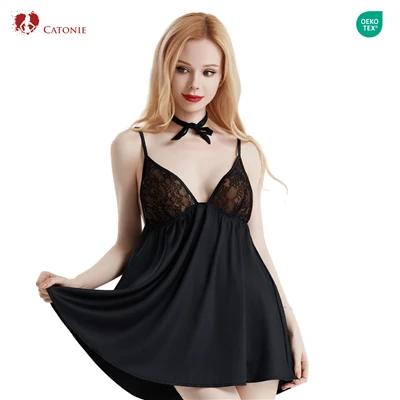
The babydoll is a classic lingerie silhouette, known for its empire waist and short, flowing skirt. It combines innocence with allure. The "peek-a-boo" or open bust version of this garment introduces a surprising and provocative element to an otherwise sweet and playful design.
Flowing Silhouettes: The Intersection of Comfort and Provocation
A traditional babydoll features a fitted bust section and a loose, A-line skirt that typically ends around the upper to mid-thigh. This silhouette is comfortable and forgiving, skimming over the waist and hips. The open bust babydoll retains this comfortable, flowing body but replaces the standard cup structure. It might feature a lace-trimmed frame, underwires with no fabric, or simply openings in the cup area.
This juxtaposition is what makes the style so compelling. The soft, flowing skirt suggests a certain coyness and playfulness, while the open bust is unabashedly direct and sensual. It is a garment of contrasts: comfort and provocation, concealment and revelation. The movement of the sheer fabric of the skirt creates a dynamic quality, while the static frame of the open bust provides a focal point. It is a design that engages with multiple facets of sensuality at once.
Fabric Dynamics: Chiffon, Tulle, and Silk
The choice of fabric for the skirt of a babydoll is crucial to its character. The material needs to be lightweight and have beautiful drape to create the signature flowing effect.
- Chiffon: This is a classic choice. Chiffon is a sheer, lightweight plain-woven fabric that is soft and has a gentle, flowing quality. It moves beautifully and offers a soft, romantic sheerness.
- Tulle: Tulle is a very fine, lightweight netting. It is stiffer than chiffon, which gives the skirt more volume and a "fluffier" appearance. It creates a more playful, almost balletic silhouette.
- Silk Charmeuse: For the ultimate in luxury, a silk charmeuse babydoll is unparalleled. Silk has a unique combination of softness, lightness, and a lustrous sheen. It feels incredible against the skin and drapes in a liquid-like way that is both elegant and sensual.
The bust portion is often made of a contrasting or complementary material, such as stretch lace or satin, to provide structure and decorative detail.
The Role of Babydolls in Bridal Lingerie Traditions
The babydoll, particularly in shades of white, ivory, and pale blue, has become a staple of modern bridal lingerie. Its combination of sweetness and sensuality makes it a popular choice for the wedding night or honeymoon. The open bust version adds a contemporary and daring twist to this tradition. It allows a bride to feel both romantic and powerfully confident. A white lace and tulle open bust babydoll can feel angelic yet provocative, a perfect expression of the celebratory and intimate nature of a honeymoon. The inclusion of such a piece in a bridal trousseau reflects a modern understanding of bridal lingerie as something that is not just for a partner, but also a way for the bride to celebrate her own body and sexuality at a significant moment in her life. This evolution shows how even traditional categories like bridal lingerie are embracing more diverse and expressive forms.

Style 7: The Convertible and Multi-Way Open Bra
In a world that values versatility and smart design, the convertible multi-way open bra is the lingerie equivalent of a modular system. It takes the concept of an open bust design and adds a layer of adaptability, allowing a single garment to be worn in multiple configurations. It is a testament to innovation in lingerie engineering.
Innovation in Design: Adaptability for Different Outfits
The core idea behind a convertible bra is that its straps can be detached and reconfigured. A multi-way open bust bra applies this principle to a cupless or shelf bra frame. This allows the wearer to adapt the bra to suit different necklines and clothing styles, even when the bra itself is part of the visual statement. For example, the straps could be configured in a classic over-the-shoulder style, a crisscross back (racerback), a halter neck, or even removed entirely if the band provides sufficient support (creating a strapless shelf bra). This adaptability makes it an incredibly practical and valuable piece in a lingerie wardrobe, especially for those who enjoy layering lingerie with outerwear.
Mechanisms of Conversion: Detachable Straps and Adjustable Bands
The functionality of a convertible bra depends on a few key design elements.
- Detachable Straps: The straps are not permanently sewn onto the bra. Instead, they attach with small, discreet hooks or clasps. These hooks connect to fabric loops located at various points on the bra-typically at the top of the frame in the front and at multiple positions along the band in the back.
- Multiple Attachment Points: A well-designed convertible bra will have several of these fabric loops. Having loops at the center and sides of the back band, for instance, allows for a standard, wide-set, or racerback configuration.
- Specialty Straps: Some convertible bras come with a set of different straps, such as a longer strap specifically for creating a halter neck or a clear strap for a more invisible look under certain tops.
The engineering must be precise. The hooks need to be secure enough to not come undone, yet easy enough to manipulate. The straps themselves need to be high quality to withstand the tension of various configurations.
Maximizing the Wardrobe Potential of a Single Piece
A convertible open bust bra offers exceptional value because it can be styled in so many ways. Imagine you have a top with a deep V-neck. You could configure the straps to plunge along with the neckline. If you are wearing a top with cut-out shoulders, you could remove the straps for a strapless shelf bra effect. For a racerback tank top, you can cross the straps in the back, ensuring they remain hidden while still providing support.
This versatility extends to its use as a fashion element. A black convertible open bust bra could be worn as a halter neck under a blazer for a bold evening look. The same bra could be worn strapless under a bandeau top, with just the underwire frame peeking out. The ability to change its form means that one bra can serve the function of many, making it a smart and sustainable choice for the conscious consumer. It encourages creativity and invites the wearer to experiment, to see their lingerie not as a static object but as a dynamic component of their personal style.
Navigating Your Purchase: A 2025 Buyer's Compass
Choosing a piece of open bust lingerie is a personal journey. It involves understanding not just the styles, but also the materials, the fit, and how to care for these delicate garments. This compass will guide you through the practical considerations, ensuring your choice is one you will cherish.
Material Matters: A Deep Dive into Fabrics and Feel
The fabric of a lingerie piece is its most intimate quality. It is the material that rests against your skin, so its feel, breathability, and stretch are of utmost importance. Let us think more deeply about the common options.
- Lace: Lace is not a single entity. Chantilly lace is incredibly fine and delicate, with a soft, romantic feel. Leavers lace is a higher-end variety, known for its complex patterns and durability. Stretch lace, the most common in modern lingerie, incorporates elastane for a body-hugging fit. When choosing lace, consider its texture. Is it soft, or does it feel scratchy? A high-quality lace will be soft to the touch.
- Satin: Satin is a weave, not a fiber. It can be made from silk (the most luxurious), polyester, or nylon. What defines it is its glossy surface and dull back. The appeal of satin is its smooth, fluid feel against the skin and its beautiful sheen. It has an opulent, classic quality.
- Mesh/Tulle: These net-like fabrics are prized for their sheerness and breathability. Power mesh is a stronger, more supportive version used in bra bands and control panels. Softer mesh and tulle are used for decorative overlays and sheer panels. They offer a modern, sporty, and lightweight feel.
- Silk: The queen of fabrics. Silk is a natural protein fiber that is hypoallergenic, breathable, and a natural temperature regulator. It feels incredibly smooth and soft. A silk lingerie piece is an investment in unparalleled comfort and luxury.
- Microfiber: This is a synthetic fiber, typically a blend of polyester and polyamide, that is known for its extreme softness, durability, and moisture-wicking properties. It is often used for seamless garments and provides a modern, practical, and comfortable option.
Consider the experience you want. Are you seeking the opulent glide of satin, the delicate romance of lace, or the breathable second-skin feel of microfiber?
Finding the Perfect Fit: Measurement and Sizing Nuances
An ill-fitting piece of lingerie, especially an open bust style, is a tragedy. Fit is everything. Because there is no cup to hide imperfections, the frame must fit perfectly. Here is a simple process to guide you:
1. Measure Your Band Size: Using a soft measuring tape, measure around your ribcage, directly under your bust. The tape should be snug and level. If the number is even, add 4 inches. If it's odd, add 5 inches. This is a traditional starting point for your band size (e.g., 29 inches + 5 = 34 band). Some modern brands use the raw measurement, so always check the brand's specific guide.
2. Understand the Frame: Even with an open bust, the wire determines the "cup" size. The wire should encircle your breast root without resting on any breast tissue. If you know your standard bra size (e.g., 34C), you can use that as a starting point. The "C" cup in this case refers to the volume the wire is designed to contain, even if there is no fabric.
3. Check the Fit Points: When you try on the bra, check these points. The center gore (the part between the wires) should lie flat against your sternum. The band should be snug on the loosest hook (so you can tighten it as it stretches). The underwires should not poke or dig in. There should be no "spillage" over the top or sides of the frame.
Do not be discouraged if it takes a few tries. Bodies are unique, and sizing can vary between brands. Patience is key to finding a fit that feels like it was made for you.
Care and Longevity of Delicate Garments
These are not ordinary clothes; they are delicate constructions of fine materials. To ensure they last, they require gentle care.
- Hand Washing is Best: The agitation and heat of a washing machine can destroy delicate laces, bend underwires, and degrade elastic. Fill a basin with cool water and a small amount of gentle lingerie wash. Submerge the garment, gently swirl it, and let it soak for about 20 minutes.
- Rinse Carefully: Drain the soapy water and rinse the garment under cool running water until the water runs clear. Do not wring or twist the garment, as this can damage the fibers and shape.
- Press, Don't Squeeze: Gently press the excess water out of the garment by pressing it between two clean, dry towels.
- Air Dry Flat or on a Hanger: Lay the garment flat on a towel or use a small lingerie hanger to air dry. Never put lingerie in the dryer. The high heat will break down the elastic, melt delicate synthetics, and can cause shrinkage.
Treating your lingerie with care is an act of respect for the craftsmanship of the piece and an investment in its future. A well-cared-for piece of open bust lingerie can bring you confidence and joy for years to come.
Frequently Asked Questions (FAQ)
What is the purpose of open bust lingerie?
The primary purpose of open bust lingerie is aesthetic and sensual. Rather than providing coverage or conventional support, it is designed to frame, highlight, and present the bust. It functions as a tool for self-expression, confidence-building, and enhancing intimacy by playing with the dynamic of revelation and concealment.
How do I choose the right size for an open bust bra?
Choosing the right size is crucial and depends on two main components: the band and the underwire. Measure your underbust for the band size. For the frame/wire size, use your regular bra cup size as a starting point. The wire should comfortably encircle the root of your breast without digging in or gaping. Always refer to the specific brand's sizing chart, as there is no universal standard.
Can open bust lingerie be worn under regular clothes?
While most open bust styles are designed for private wear, some, like caged bras or harnesses, are explicitly intended for layering with outerwear. They can be worn under low-cut tops or over shirts to create a bold, fashion-forward look. More traditional shelf bras or cupless corsets are generally not smooth enough to be invisible under tight-fitting clothing.
What materials are most comfortable for sensitive skin?
For sensitive skin, natural fibers are often the best choice. Silk is an excellent option as it is hypoallergenic and very smooth. High-quality cotton or bamboo jersey are also soft and breathable. When choosing synthetic materials, look for soft-backed lace or plush-backed elastic to minimize irritation.
How is open bust lingerie different from a regular bra?
A regular bra is primarily a functional garment designed for support, shaping, and coverage under clothing. Open bust lingerie de-emphasizes or entirely removes the function of coverage. Its main purpose is aesthetic, focusing on framing the bust and creating a sensual, provocative visual effect.
Are there open bust options for larger bust sizes?
Yes. Many brands now offer open bust lingerie in a wide range of sizes, including for larger busts. For those with a fuller bust, look for styles with wider bands, stronger underwires, and more robust construction to ensure the frame can provide adequate lift and a comfortable, secure fit.
What is the difference between a shelf bra and a quarter-cup bra?
The main difference is the amount of coverage. A shelf bra typically covers the lower half of the bust, providing significant lift and creating a "shelf." A quarter-cup bra is more minimal, covering only the very bottom portion of the bust, offering a more subtle framing effect with less lift.
Conclusion
The journey through the world of open bust lingerie reveals a landscape far richer and more complex than one might initially assume. It is a category of dress that challenges us to think about the purpose of clothing itself. We have seen how these garments operate as frames, as architectural structures, and as statements of personal philosophy. From the historical echoes in the cupless corset to the modern, graphic lines of the caged bra, each style offers a unique vocabulary for self-expression.
Understanding the nuances of material, the precision of fit, and the art of styling transforms the act of choosing lingerie from a simple purchase into a thoughtful and empowering process. A piece of open bust lingerie is not merely an object of provocation; it can be a source of confidence, a tool for self-exploration, and a celebration of the body in its myriad forms. Whether your preference leans toward the romanticism of lace, the luxury of silk, or the boldness of leather, there is a design that can articulate your unique sense of self. The ultimate allure of these garments lies not in what they reveal, but in the confidence they inspire in the wearer.
References
Adam, H., & Galinsky, A. D. (2012). Enclothed cognition. Journal of Experimental Social Psychology, 48(4), 918–925.
American Psychological Association. (n.d.). In-text citations. APA Style. Retrieved October 27, 2025, from
Amsberry, D. (2025). APA quick citation guide: In-text citation. Penn State University Libraries. https://guides.libraries.psu.edu/apaquickguide/intext
Davis, F. (1997). Fashion, culture, and identity. University of Chicago Press.
Patton, E. M. (2019). In-text citations - APA style (7th ed.). Lone Star College.
Purdue University. (n.d.). In-text citations: The basics. Purdue Online Writing Lab. Retrieved October 27, 2025, from https://owl.purdue.edu/owl/research_and_citation/apa_style/apa_formatting_and_style_guide/in_text_citations_the_basics.html
Schachte, M. (2025). Citations: In-text - APA style & citation 7th edition. Central Penn College.
Steele, V. (2001). The corset: A cultural history. Yale University Press.
University of Nevada, Reno Libraries. (n.d.). APA citation guide (7th edition): In-text citation. University of Nevada, Reno.