Abstract
This comprehensive guide presents an in-depth analysis for selecting the ideal plus size kimono robe in 2025. It moves beyond superficial style advice to establish a framework of seven critical factors, empowering the consumer to make an informed and personally resonant choice. The analysis begins with the foundational principles of fit, deconstructing how silhouette, drape, and specific measurements create comfort and confidence for a fuller figure. It then proceeds to a detailed examination of fabrics, evaluating materials such as satin, cotton, and lace based on their sensory properties, functional applications, and maintenance requirements. The guide further explores the aesthetic and functional implications of design elements like sleeve length, overall garment length, color, and pattern. By situating the plus size kimono robe within various contexts-from intimate loungewear to versatile outerwear-the article illuminates its multifaceted role in a modern wardrobe. Ultimately, this work provides a structured, empathetic, and analytically rigorous approach to choosing a garment that supports both aesthetic expression and personal well-being.
Key Takeaways
1. Prioritize fit by taking your own measurements, not just relying on size labels.
2. Select fabrics based on the intended use, such as cotton for breathability or satin for luxury.
3. Consider sleeve and hem length to ensure the robe complements your body proportions.
4. Use color and pattern to express your personal style and suit different occasions.
5. A quality plus size kimono robe can be styled for lounging, sleep, or even as outerwear.
6. Inspect seams and construction details to assess the garment's long-term durability.
7. Follow specific care instructions for each fabric to maintain the robe's beauty and longevity.
The Kimono Robe: A Tapestry of History and Modern Empowerment
To select a garment is to engage in an act of self-definition. The choice is not merely about covering the body but about how one wishes to inhabit the world, even within the private sanctuary of one's home. The kimono robe, with its long and storied history, offers a particularly rich field for this kind of exploration. Originating in Japan as the kosode during the Heian period (794-1185), the T-shaped garment was a universal article of clothing, its form remaining largely unchanged for centuries (Dalby, 2001). Its beauty lay not in conforming to the body's curves but in providing a flat, expansive canvas for exquisite textiles and intricate designs. When this garment entered the Western consciousness, it underwent a transformation, evolving from a formal national dress into a symbol of relaxed, artistic, and often sensual leisure.
For the plus-size individual, the modern kimono robe represents something more profound. In a fashion landscape that has often prioritized a narrow set of bodily norms, the fluid, accommodating silhouette of the kimono offers a form of sartorial liberation. It does not constrict or demand a certain shape; rather, it drapes and flows, celebrating movement and offering a personalized sense of comfort and grace. The selection of a plus size kimono robe, therefore, becomes an exercise in agency. It is a decision to embrace a garment that values ease and elegance in equal measure, a garment that can be both a quiet comfort and a bold statement. This guide is constructed to honor the depth of that decision, moving beyond simple recommendations to provide a framework for choosing a piece that feels not just worn, but truly inhabited.
Factor 1: Mastering the Fit - Beyond the Label
The pursuit of a perfect fit in clothing is often a frustrating endeavor, particularly when navigating the inconsistent and frequently inadequate sizing standards of the fashion industry. For the plus-size consumer, this challenge is magnified. The term "one size fits all" is a fallacy, and even graded sizing can fail to account for the beautiful diversity of fuller figures. A truly well-fitting plus size kimono robe does not merely "cover"; it enhances, it comforts, and it instills a sense of effortless grace. Achieving this requires a more nuanced approach than simply choosing a label. It demands an understanding of one's own unique proportions and how the geometry of the garment interacts with them.
Understanding Your Proportions
Before you even begin browsing, the most empowering step you can take is to arm yourself with your own measurements. This act transforms you from a passive recipient of a brand's sizing ideas into an active, informed participant in the selection process. Use a soft measuring tape for the most accurate results.
- Shoulder Width: Measure from the bony point of one shoulder across your back to the bony point of the other. The shoulder seam of a plus size kimono robe should ideally sit at or just slightly beyond this point. If the seam is too far in, it can pull and restrict arm movement; too far out, and the garment may look overwhelming.
- Bust: Measure around the fullest part of your bust, keeping the tape parallel to the floor. The front panels of the robe should be able to overlap generously without straining or gaping open when you move. A gap of at least 8-12 inches (20-30 cm) of overlap is a good benchmark for modesty and comfort.
- Waist: Measure around your natural waist, the narrowest part of your torso. While a kimono robe is not a fitted garment, knowing this measurement helps you visualize where the sash will sit and how the fabric will drape around your midsection.
- Hips: Measure around the fullest part of your hips and bottom. This is a critical measurement for a plus size kimono robe. The garment must have enough circumference at the hem to allow you to walk and sit comfortably without the panels pulling apart at the bottom.
Armed with these numbers, you can now compare them to a brand's size chart with a critical eye. Do not assume a "2X" from one brand is the same as another. Look at the actual garment measurements if they are provided, as they tell a more truthful story than the labeled size.
The Importance of Silhouette and Drape
Beyond raw numbers, the "fit" of a plus size kimono robe is an experiential quality, a feeling of how the fabric moves with you. This is the concept of drape, which is determined by the cut of the garment and the nature of the fabric itself (a topic we will explore in depth in the next section).
For a fuller figure, the classic T-shape of a kimono is inherently forgiving. However, subtle variations in the cut can make a significant difference.
- The Cut of the Body: Some robes are cut as a simple rectangle, while others may have a slight A-line shape, flaring out gently from the underarm to the hem. An A-line cut can provide more generous room for the hips and create a more fluid, flowing movement, which is often very flattering.
- The Armhole (Miyatsukuchi): In traditional kimonos, the armhole is deep and open. In modern robes, this can vary. A deeper, more open armhole provides more room and a feeling of unrestricted movement, which is excellent for lounging. A higher, more tailored armhole might be found on robes designed to be worn as outerwear, offering a more structured look. For maximum comfort in a plus size kimono robe, a generous armhole is almost always preferable.
Consider your body shape. If you have broader shoulders and a fuller bust (an apple or inverted triangle shape), you will want to ensure the robe has ample room across the back and chest. If you carry more weight in your hips and thighs (a pear shape), your primary focus will be on the hip circumference and ensuring the panels have enough sweep to not cling or pull. For an hourglass figure, the sash becomes key to highlighting your waist, so the overall volume of the robe is a matter of personal preference.
Factor 2: The Language of Fabric - Material Matters
The fabric of a plus size kimono robe is its soul. It is the primary vehicle for color and pattern, but more importantly, it dictates the garment's feel, its drape, its breathability, and its purpose. To touch a fabric is to have an immediate, sensory experience; a cool, slick satin feels entirely different from a soft, brushed cotton. Understanding the properties of different materials is not a merely technical exercise; it is the key to choosing a robe that aligns with your desires, whether they be for opulent sensuality, everyday comfort, or practical elegance. The textile's character determines how the robe will fall over your curves, how it will regulate your temperature, and how it will serve you across different moments of your life.
A Comparative Analysis of Common Robe Fabrics
Each material offers a unique combination of qualities. The ideal choice depends entirely on your personal priorities and how you envision using your robe. Let's examine the most common options in a structured way.
|
Fabric |
Key Characteristics |
Feel & Drape |
Breathability |
Best For |
Considerations |
|
Satin (Polyester) |
High sheen, smooth surface, affordable, widely available. |
Cool, slick, liquid-like drape that glides over the body. |
Low. Can trap heat and moisture, making it less ideal for warm climates or sleeping. |
Visual appeal, layering over erotic lingerie, special occasions, bridal parties. |
Can be slippery, prone to static, and may show water spots. Quality can vary greatly. |
|
Silk |
Natural protein fiber, lustrous, strong, hypoallergenic, temperature-regulating. |
Unmatched softness, lightweight, drapes beautifully with a subtle shimmer. |
High. Breathes well, keeping you cool in summer and warm in winter. |
Ultimate luxury, investment pieces, sensitive skin, year-round comfort. |
Expensive, requires delicate care (hand wash or dry clean), can be fragile. |
|
Cotton |
Natural plant fiber, soft, absorbent, durable. Comes in many weaves (voile, flannel, jersey). |
Varies by weave: Voile is airy and crisp; Flannel is soft and fuzzy; Jersey is stretchy and casual. |
Very High. Excellent for absorbing moisture and allowing airflow. |
Everyday lounging, post-bath, warm climates, as a cover-up for swimsuits. |
Can wrinkle easily, may not feel as "luxurious" as satin or silk. |
|
Lace |
Decorative openwork fabric, ranges from soft and stretchy to structured and intricate. |
Can be soft or scratchy depending on quality. Creates texture and visual interest. |
High. The open structure allows for maximum airflow. |
Layering over sexy lingerie sets, bridal lingerie, creating a sensual or romantic look. |
Can be delicate and snag easily. Often used as trim rather than for the whole garment. |
|
Viscose/Rayon |
Semi-synthetic fiber made from wood pulp, often called "artificial silk." |
Soft, smooth, and drapes very well, similar to silk but heavier. |
Moderate to High. More breathable than polyester. |
A budget-friendly alternative to silk, offering good drape and comfort. |
Can wrinkle easily and may shrink if not washed carefully. Weaker when wet. |
Deeper Dive into Fabric Choices
- Satin vs. Silk: This is the most common point of confusion. Think of "satin" as a type of weave, not a raw material. The satin weave creates a glossy, smooth surface. Most affordable satin robes are made from polyester fibers. Silk is a natural fiber produced by silkworms. A silk robe can be woven in a satin weave (charmeuse), which gives it that classic shine, but its underlying properties-breathability, temperature regulation-are far superior to polyester. When you invest in a silk plus size kimono robe, you are paying for its remarkable comfort and natural performance. A polyester satin robe is an investment in a specific aesthetic at a more accessible price point.
- The World of Cotton: Do not underestimate the versatility of cotton. A lightweight cotton voile or lawn robe is a godsend in humid climates or for those who tend to sleep warm. It feels crisp and clean against the skin. A cotton jersey knit offers the comfort of your favorite t-shirt, perfect for casual morning routines. And a brushed cotton flannel plus size kimono robe is the epitome of cozy warmth on a cold winter evening.
- The Role of Blends: Many modern robes use fabric blends to achieve the best of multiple worlds. A silk-cotton blend can offer the softness of silk with the added durability and easier care of cotton. A touch of elastane (spandex) in a cotton or viscose jersey provides stretch and shape retention, ensuring the robe moves with you without becoming misshapen. When looking at a blend, pay attention to the percentages; the dominant fiber will dictate the primary characteristics of the fabric. A robe that is 95% polyester and 5% spandex will behave much like pure polyester.
Choosing your fabric is choosing the character of your robe. Imagine the moment you'll wear it most. Is it for a languid Sunday morning with a cup of coffee? A lightweight cotton or soft viscose might be your answer. Is it part of a carefully planned seductive ensemble? A lustrous satin or a delicate lace plus size kimono robe would be the perfect choice. Your body, your comfort, and your narrative should guide your hand.
Factor 3: The Art of the Sleeve and Length - Proportions and Purpose
The fundamental T-shaped structure of the kimono is defined by its body and its sleeves. In the modern plus size kimono robe, the specific dimensions and styling of these two elements are not arbitrary details; they are crucial components that shape the garment's overall aesthetic, its functionality, and its proportional relationship with your body. The sweep of a floor-length hem communicates a different kind of elegance than the playful flick of a thigh-high cut. The volume of a traditional bell sleeve creates a dramatic silhouette, while a more tailored sleeve offers practicality. Understanding how to manipulate these variables of length and sleeve style allows you to select a robe that is not only beautiful but also perfectly suited to its intended purpose and uniquely flattering to your form.
Decoding Sleeve Styles
The sleeve (sode) of a traditional kimono is a defining feature, often long and flowing. Modern interpretations offer a range of styles, each with its own character.
- Traditional Wide Sleeve: This style is closest to the Japanese original, with a deep, wide sleeve that hangs elegantly. On a plus size kimono robe, this can be incredibly graceful, creating a sense of drama and fluidity. The volume in the sleeves can help balance fuller hips or a larger bust, contributing to a harmonious overall silhouette. It is the quintessential choice for a luxurious, lounging-focused robe.
- Bell Sleeve: A variation of the wide sleeve, the bell sleeve is more fitted at the shoulder and flares out dramatically towards the wrist. This style adds a touch of bohemian or romantic flair and creates beautiful movement as you walk. It serves a similar proportional balancing function as the traditional sleeve.
- Three-Quarter Length Sleeve: This is a highly practical and universally flattering option. The sleeve ends around the mid-forearm, keeping it out of the way during daily activities like making breakfast or applying makeup. For many, this length is also elegant, as it exposes the wrist and allows for the display of bracelets. On a plus size kimono robe, a three-quarter sleeve can prevent the garment from feeling overwhelming, especially if the robe is made from a bulky or heavily patterned fabric.
- Tailored or Straight Sleeve: Less common in traditional robe styles but sometimes seen in kimono-inspired jackets or outerwear, this sleeve has a closer fit, similar to that of a conventional coat or blouse. While it offers maximum practicality, it can sacrifice some of the characteristic flow and ease that defines the kimono robe aesthetic.
When choosing a sleeve, think about function first. Will you be primarily relaxing, or will you be active around the house? Then, consider aesthetics. Do you prefer dramatic fluidity or understated practicality?
Choosing the Right Length
The length of the hem is perhaps the most significant factor in determining the robe's formality and versatility.
- Short (Mid-Thigh Length): This is a youthful, playful, and often sexy length. It is the perfect choice for pairing with intricate sexy lingerie sets or for wearing in warmer weather. A short plus size kimono robe is also an excellent option if you are petite, as it will not overwhelm your frame. It functions beautifully as a lightweight covering that offers a touch of modesty without being cumbersome. Many bridal lingerie sets for getting ready on the wedding day feature this length for its practicality and photogenic quality.
- Midi or Duster Length (Calf to Ankle): This length has seen a surge in popularity for its incredible versatility. It offers more coverage and a greater sense of elegance than a short robe, making it suitable for greeting an unexpected guest or enjoying a morning on the patio. The midi-length plus size kimono robe is also the most likely candidate to be worn as outerwear. Styled over jeans and a simple top or a slip dress, it becomes a chic, lightweight jacket that adds color and personality to an outfit.
- Full or Floor Length: This is the most dramatic and formal length, evoking old-Hollywood glamour and supreme luxury. A floor-length plus size kimono robe in a flowing fabric like silk or satin creates a truly stunning silhouette. It is the ultimate statement piece for indulgent self-care rituals, romantic evenings, or any moment when you want to feel exceptionally elegant and enveloped in comfort. Due to its length, it is best suited for indoor wear to prevent the hem from dragging.
Your height is a key consideration here. If you are tall, you can carry any length with ease. If you are on the shorter side, you might feel that a floor-length robe is too much fabric. However, a well-proportioned full-length robe in a lightweight, fluid fabric can actually create a long, vertical line that is elongating. The key is to avoid overly bulky fabrics in longer lengths if you are petite.
Ultimately, the interplay of sleeve and length defines the robe's personality. A short robe with dramatic bell sleeves has a fun, bohemian vibe. A floor-length robe with simple three-quarter sleeves is a picture of refined, minimalist elegance. By consciously choosing these elements, you are composing the final piece, tailoring its form to your life and your style.

Factor 4: Color, Pattern, and Embellishment - Expressing Your Narrative
A garment is a canvas, and the colors, patterns, and embellishments applied to it are the brushstrokes that create its story. In the context of a plus size kimono robe, these visual elements are powerful tools for self-expression. They can influence mood, evoke a particular aesthetic, and communicate a personal narrative without a single word being spoken. The choice between a solid, serene blue and a vibrant, chaotic floral is not merely a matter of taste; it is a choice between different ways of being and feeling. The addition of delicate lace trim or intricate embroidery further refines this narrative, adding layers of meaning and texture. To select the visual language of your robe is to curate the atmosphere you wish to create for yourself, turning a simple piece of clothing into a deeply personal artifact.
The Psychology of Color
Color has a well-documented psychological impact, capable of calming, energizing, or soothing the mind (Wexner, 1954). When choosing the color of a garment meant for comfort and personal time, this effect is particularly relevant.
- Cool Tones (Blues, Greens, Violets): These colors are generally associated with calmness, serenity, and tranquility. A plus size kimono robe in a soft powder blue, a deep forest green, or a gentle lavender can be a wonderful companion for relaxation, meditation, or unwinding after a long day. They create a peaceful and restorative visual environment.
- Warm Tones (Reds, Oranges, Yellows): These hues are linked to energy, passion, and warmth. A bold red robe can feel powerful and sensual, making it a fantastic choice for a piece intended to be part of a sexy lingerie set. A soft peach or coral can feel cheerful and uplifting, perfect for starting the day with a sense of optimism.
- Neutrals (Black, White, Gray, Beige): Neutrals offer a canvas of sophistication and timelessness. A classic black satin robe is the epitome of chic sensuality. A crisp white cotton or lace robe feels clean, fresh, and is a perennial favorite for bridal lingerie. Gray and beige tones offer an understated, minimalist elegance that is both modern and calming.
The Language of Pattern
Patterns transform the surface of the fabric, giving it rhythm and voice. From the traditional to the abstract, each pattern style tells a different story.
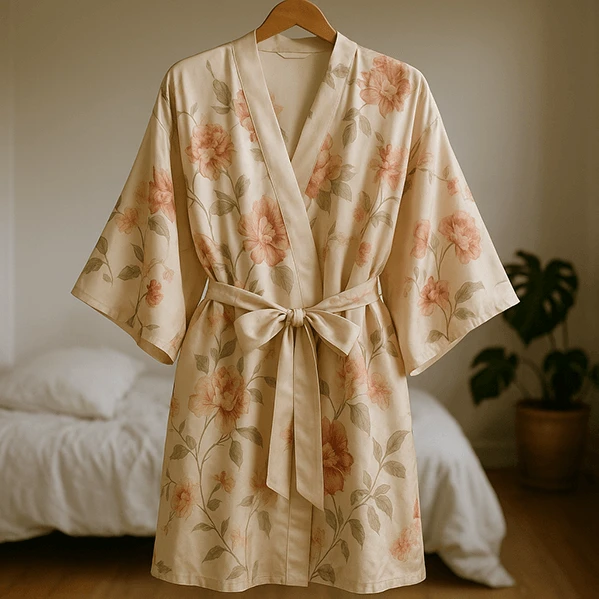
- Florals: Perhaps the most classic pattern for a kimono robe, florals can range from delicate, ditsy prints to large-scale, dramatic botanicals. Small prints tend to feel more sweet and traditional, while large, bold florals make a confident and artistic statement. The style of the floral-be it a realistic rendering or a stylized interpretation-also shapes its character.
- Traditional Japanese Motifs: Patterns featuring cranes (tsuru), cherry blossoms (sakura), chrysanthemums (kiku), or flowing water (ryusui) connect the robe to its cultural heritage. These motifs are rich with symbolism; cranes represent longevity and good fortune, while cherry blossoms symbolize the beautiful, transient nature of life (Ada, 2011). Choosing a plus size kimono robe with these patterns is a nod to its history and a way to wear a piece of art.
- Geometric and Abstract: Stripes, polka dots, chevrons, or non-representational abstract patterns lend a modern and graphic feel to the robe. These can feel bold, playful, or artistic, depending on the scale and color palette. For those who prefer a less traditional or romantic look, geometric patterns are an excellent way to express a contemporary aesthetic.
- Animal Prints: Leopard, zebra, or snake prints introduce an element of wildness and confident glamour. An animal print plus size kimono robe is an unapologetically bold choice, perfect for moments when you want to feel powerful and untamed.
The Finishing Touch: Embellishments
Embellishments are the final details that elevate a robe from simple to special. They add texture, refinement, and a focal point for the eye.
- Lace Trim: The addition of lace, whether at the cuffs, the hem, or along the front opening, instantly adds a layer of romanticism or sensuality. A black satin robe with black eyelash lace trim is a classic choice for erotic lingerie, while a white cotton robe with delicate white lace feels sweet and bridal.
- Embroidery: Embroidered details, whether a simple monogram or an elaborate design on the back, add a sense of luxury and craftsmanship. The texture of the thread against the base fabric creates a rich tactile and visual experience.
- Fringe and Tassels: Often found on bohemian-style robes, fringe or tassels on the sleeves or hem add playful movement and a textural element.
- Contrast Piping: A simple line of contrast-colored piping along the edges of the robe can provide a sharp, tailored look, defining the garment's shape and adding a touch of classic pajama-style elegance.
When selecting these visual elements, consider them as a whole. A large-scale floral in bold, warm colors creates a very different feeling from the same floral in soft, cool pastels. A simple black robe is transformed by the addition of intricate lace. This is your opportunity to compose a piece that reflects not just your taste, but your desired state of mind.
Factor 5: Occasion and Versatility - From Boudoir to Brunch
A plus size kimono robe is one of the most versatile garments one can own, a true chameleon capable of adapting to a vast range of contexts and moods. Its identity is not fixed; it is defined by the wearer's intent and the environment it occupies. The same fundamental garment can be a shield of comfort in the quiet moments of dawn, a whisper of seduction in the intimacy of the bedroom, a practical and chic cover at the water's edge, or even a bold statement piece in a public setting. Understanding this versatility is key to maximizing the value and enjoyment of your robe. It encourages you to think of it not as a single-purpose item, but as a flexible component of your broader wardrobe and life. By pairing it with different garments and accessories, you unlock its full potential.
The Sanctuary: Lounging and Self-Care
This is the robe's native habitat. For quiet mornings with a book, for evenings spent unwinding, or for those days dedicated entirely to rest and recuperation, the robe is a symbol of self-care. In this context, comfort is paramount.
- Fabric Choice: Soft, breathable materials like cotton jersey, brushed flannel, viscose, or a silk-cotton blend are ideal. They feel gentle against the skin and manage temperature and moisture, ensuring you remain comfortable for extended periods.
- Styling: There is no styling required here. The beauty of the lounging robe is its simplicity. It is a garment worn for yourself, a personal luxury that requires no audience.
- Example: A midi-length plus size kimono robe in a soft, brushed cotton with a calming floral print, worn over simple pajamas or just on its own, creates the perfect uniform for a restful weekend at home.
The Boudoir: Sensuality and Intimacy
The kimono robe has long been a staple of sensual attire, its reveal-and-conceal nature making it a powerful tool of seduction. It acts as the perfect frame for whatever lies beneath, building anticipation and adding a layer of elegance to intimate moments.
- Fabric Choice: This is where luxurious and tactile fabrics shine. Polyester satin, pure silk charmeuse, and sheer lace or chiffon are the primary choices. The way these fabrics glide over the skin and catch the light is integral to their appeal.
- Styling: A plus size kimono robe in this context is rarely worn alone. It is the perfect companion to a wide array of other pieces.
- Over Sexy Lingerie Sets: A black lace robe layered over a matching black bra and panty set is a timelessly powerful look. A brightly colored satin robe can provide a stunning contrast to black lingerie.
- With Erotic Lingerie: For more daring ensembles, a sheer or strategically opaque robe can be paired with more provocative items like open-cup bras, crotchless panties, or intricate harnesses, adding a touch of mystique.
- As Bridal Lingerie: A white or ivory silk or satin robe, perhaps with lace trim, is an essential part of the modern bridal trousseau. It is perfect for the wedding morning preparations and for the romantic nights of the honeymoon that follow. Many brides choose a short, playful length for this purpose.
- With Corsets: The softness of a kimono robe can provide a beautiful textural contrast to the structured rigidity of a corset or bustier.
The Resort: Waterside and Vacation Style
The robe's utility extends far beyond the home. Its easy, throw-on nature makes it an exceptionally chic and practical cover-up for the beach or pool.
- Fabric Choice: Lightweight, quick-drying, and breathable fabrics are essential. Cotton voile is the absolute champion here. Its slightly crisp texture doesn't cling when damp, and it provides just enough coverage from the sun while remaining airy and cool. Lightweight viscose or linen blends are also excellent choices.
- Styling: Worn open over swimsuits, the plus size kimono robe adds a layer of sophistication to your resort wear. It provides a bit of coverage for a walk to the bar or snack shack, protecting your skin from the sun without requiring a full change of clothes. A brightly patterned or colored robe can beautifully complement a solid-colored swimsuit.
- Example: A vibrant, tropical-print cotton voile duster-length kimono robe worn over a simple black one-piece swimsuit, paired with sandals and sunglasses, creates a polished and effortless vacation look.
The World: Kimono as Outerwear
In recent years, the duster-length kimono has confidently stepped out of the house and onto the street. Treated as a lightweight, unstructured jacket, it adds a dose of color, pattern, and bohemian flair to everyday outfits.
- Fabric Choice: Fabrics with a bit of weight and opacity work best, such as a heavier crepe, viscose, or a non-sheer satin. This helps the garment read as intentional outerwear rather than loungewear.
- Styling: The key is to balance the robe's volume with more fitted pieces underneath.
- With Jumpsuits or Dresses: A solid-colored jumpsuit or a simple slip dress looks instantly more dynamic with a patterned kimono robe layered over it.
- With Jeans and a Top: This is the easiest way to wear the look. Pair a duster-length plus size kimono robe with fitted jeans and a simple t-shirt or camisole. The robe becomes the statement piece that elevates the entire outfit.
- Example: A midi-length kimono in a dark, moody floral print worn over black skinny jeans, a black camisole, and ankle boots creates a chic, artistic ensemble perfect for a gallery visit or a casual dinner.
By considering these different potential uses, you can choose a plus size kimono robe that will serve you in multiple facets of your life, making it a truly valuable and beloved piece in your collection. You might even find that one is not enough, and that building a small collection-one for comfort, one for seduction, one for the beach-is the ultimate expression of this garment's wonderful versatility.

Factor 6: Construction and Durability - Investing in Quality
In a world of fast fashion, where garments are often designed for a fleeting season, there is a deep satisfaction in choosing an item built to last. The quality of a plus size kimono robe is not determined by its price tag or brand name alone, but by the tangible details of its construction. These are the elements that ensure the robe will withstand repeated wear and washing, maintaining its shape, beauty, and integrity over time. Learning to recognize the hallmarks of quality craftsmanship is an act of consumer empowerment. It allows you to look beyond the surface appeal of a fabric or pattern and assess the true, long-term value of a garment. An investment in a well-made robe is an investment in enduring comfort and style.
Seams: The Skeleton of the Garment
The seams are the internal framework of the robe. How they are finished reveals a great deal about the level of care taken during production.
- French Seams (The Gold Standard): A French seam is a mark of high-quality construction. It is, in essence, a seam that is sewn twice, encasing the raw edge of the fabric within the seam itself. From the outside, it looks like a neat, simple seam. From the inside, it is equally clean and tidy, with no visible raw edges. This is particularly important for sheer or lightweight fabrics like silk, chiffon, or lace, as it prevents fraying and provides a durable, beautiful finish that feels smooth against the skin. When you see a French seam on a plus size kimono robe, you can be confident that the maker prioritized quality.
- Serged or Overlocked Seams: This is the most common type of seam finishing in mass-market clothing. It uses a special machine to sew the seam and finish the raw edge with a web of thread simultaneously. While a neatly executed serged seam is perfectly functional and acceptable, especially on opaque fabrics like cotton jersey or flannel, it is generally considered a less refined and less durable finish than a French seam. On sheer fabrics, a serged edge can be visible from the outside and may feel slightly rough against the skin.
- Bound Seams: Another high-quality finish, a bound seam involves encasing the raw edge in a separate strip of lightweight fabric (often called Hong Kong finishing). This creates a very clean, durable, and often decorative interior finish. It is labor-intensive and typically found only on high-end or couture garments.
- What to Look For: Turn the robe inside out. Are the raw edges of the fabric exposed and likely to fray? Or are they neatly enclosed within a French seam or a clean serged edge? Pull gently on the seams. Do they feel strong and secure, or do the stitches look loose and weak?
The Sash and Belt Loops: Functional Details
The sash or belt (known as an obi in traditional Japanese dress) is essential to the function of the robe. Its quality, and the quality of the loops that hold it, are critical.
- The Sash: A quality sash should be made from the same fabric as the robe itself. It should be wide enough to feel substantial and long enough to tie securely in a bow or knot without feeling skimpy. A flimsy, narrow sash can twist, wrinkle, and fail to keep the robe closed effectively. Look for a sash that is constructed from a double layer of fabric and stitched all the way around for stability.
- Belt Loops: The small loops at the side seams that hold the sash in place can be a major point of failure on poorly made robes.
- Thread Chain Loops: These are the most common but also the most fragile type. They consist of a simple chain of thread, which can easily break with a snag or a sharp pull.
- Fabric Loops: A far more durable option is a small loop made from a folded strip of the garment's fabric. These should be securely stitched into the side seam at both the top and bottom of the loop.
- Placement: The loops should be positioned at your natural waist to ensure the robe closes in the most flattering way. On a well-designed plus size kimono robe, the placement of these loops should be thoughtfully considered.
Other Hallmarks of Quality
- Pattern Matching: On a patterned robe, look at the seams, especially at the front opening and across the back. In a high-quality garment, the manufacturer will have taken the time and used extra fabric to ensure the pattern matches up across the seam lines. This is a subtle but clear indicator of meticulous craftsmanship.
- Reinforced Corners: Check the corners at the top of the front opening and the ends of the sash. These are high-stress areas that can be reinforced with extra stitching to prevent them from fraying or tearing over time.
- Hem Finish: Look at how the hem and the sleeve cuffs are finished. Are they neatly turned and stitched with an even, consistent stitch length? A sloppy, uneven, or puckered hem is a sign of rushed production.
By taking a few moments to inspect these construction details, you can make a much more accurate judgment about the longevity of a plus size kimono robe. A well-made garment is a pleasure to wear not just for its initial beauty, but for its ability to remain beautiful and functional for years to come.
Factor 7: Care and Longevity - Preserving Your Garment
The relationship with a beloved garment does not end at the point of purchase; it is a continuing dialogue that unfolds through wear, care, and maintenance. To properly care for your plus size kimono robe is to honor the craftsmanship that went into it and the materials from which it is made. Proper laundering and storage are not tedious chores but acts of preservation that ensure the robe's color remains vibrant, its fabric retains its intended texture, and its seams hold fast. Different fibers have different needs, and understanding these specific requirements is the final, crucial step in securing a long and happy life for your chosen piece. A robe that is well cared for will reward you with enduring comfort and beauty, becoming a trusted companion in your moments of leisure for years to come.
A Fabric-Specific Guide to Garment Care
Always begin by reading the care label on the garment. The manufacturer provides the most specific instructions for their particular product. However, understanding the general principles of fabric care is an invaluable skill.
Caring for Silk
Silk is a strong natural protein fiber, but it is also delicate and requires gentle handling.
- Washing: Hand washing is the safest method. Use a basin of cool to lukewarm water and a small amount of a gentle, pH-neutral detergent specifically designed for delicates or silk. Submerge the robe, gently swish it for a few minutes, and let it soak for no longer than 30 minutes. Avoid harsh scrubbing.
- Rinsing: Rinse thoroughly in cool, clean water. You can add a few tablespoons of distilled white vinegar to the final rinse to help remove any soap residue and restore the silk's natural luster.
- Drying: Never wring or twist silk, as this can damage the fibers. Gently squeeze out the excess water. The best method is to lay the robe flat on a clean, dry towel, roll the towel up to absorb more moisture, and then lay it flat on another dry towel or hang it on a padded hanger away from direct sunlight or heat. Direct sun can cause the colors to fade and can yellow white silk.
- Ironing: Iron on a low setting ("silk" setting) while the garment is still slightly damp, and always iron on the reverse side to protect the sheen.
Caring for Satin (Polyester)
Polyester satin is far more robust than silk but still benefits from careful handling to maintain its smooth, glossy finish.
- Washing: Many satin robes can be machine washed on a delicate cycle with cool water. To prevent snags, it is highly recommended to place the robe in a mesh laundry bag. Use a standard, gentle detergent.
- Drying: It is best to hang dry a satin robe or tumble dry on the lowest possible heat setting. High heat can damage the polyester fibers, cause static, and may even lead to shrinkage over time.
- Ironing: If needed, iron on a low heat setting on the reverse side of the fabric. High heat can melt the fibers.
Caring for Cotton
Cotton is a durable and relatively low-maintenance fabric.
- Washing: Most cotton robes can be machine washed in cool or warm water. Be aware that bright or dark colors may bleed during the first few washes, so wash them with similar colors.
- Drying: Cotton can be tumble dried on a medium heat setting. However, be aware that high heat can cause some shrinkage, especially in 100% cotton garments. To minimize shrinking and wrinkling, you can tumble dry on low for a short time and then hang it to finish air-drying.
- Ironing: Iron on a medium to high setting, using steam to help release wrinkles.
Caring for Lace and Embellished Robes
Lace and other embellishments like embroidery or beading are inherently delicate.
- Washing: Hand washing is always the safest and most recommended method. Use cool water and a gentle detergent. If the care label permits machine washing, use a delicate cycle, cool water, and always place the garment in a mesh laundry bag to protect it from snagging on the machine or other clothes.
- Drying: Always hang or lay flat to dry. The heat and tumbling action of a dryer can destroy delicate lace, melt beads, or cause embroidery to pucker and shrink.
General Tips for Longevity
- Storage: Hang your plus size kimono robe on a padded or wooden hanger to help it maintain its shape. Avoid thin wire hangers, which can cause stretching and shoulder bumps. For long-term storage, a breathable cotton garment bag is preferable to a plastic one, which can trap moisture.
- Stain Treatment: Address stains as quickly as possible. Blot, don't rub. Use a stain remover appropriate for the specific fabric type, and test it on an inconspicuous inner seam first.
- Rotation: If you have more than one robe, rotating them allows the fibers of each one to rest and recover between wears, which can extend their overall lifespan.
By integrating these simple practices into your routine, you are not just cleaning a piece of clothing; you are actively participating in the preservation of its beauty and function. This mindful approach to care transforms a simple consumer good into a cherished personal possession.
Frequently Asked Questions (FAQ)
What is the main difference between a kimono robe and a standard bathrobe?
The primary differences lie in the cut, fabric, and intended purpose. A standard bathrobe is typically made of thick, absorbent material like terry cloth or cotton waffle weave, designed specifically for drying off after a bath or shower. It often has a shawl collar. A plus size kimono robe, on the other hand, is defined by its T-shaped silhouette with wide sleeves and is usually made from more decorative fabrics like satin, silk, or printed cotton. While it can be worn after bathing, its purpose is broader, encompassing lounging, fashion, and sensual wear.
How can I prevent my satin or silk plus size kimono robe from slipping open?
This is a common issue with slick fabrics. The best solution is to ensure the robe has an internal tie. This is a set of smaller ties, usually thin ribbons, located on the inside of the robe at waist level. You tie these first to secure one front panel to the opposite side seam, which holds the robe in place before you even tie the main outer sash. If your robe doesn't have these, a tailor can add them easily, or you can do it yourself with a needle and thread.
I'm plus-size and also petite (short). Will a long kimono robe overwhelm my frame?
Not necessarily! The key is proportion. If you are petite, look for a plus size kimono robe that is not excessively voluminous. A style with a slightly less dramatic sleeve or a more streamlined cut can be very flattering. When choosing a long robe, opt for lightweight, fluid fabrics like silk, viscose, or cotton voile that drape close to the body rather than bulky fabrics that add mass. A vertical pattern, like a subtle stripe, can also create an elongating effect. Ultimately, a full-length robe can look wonderfully elegant on a shorter frame if the proportions are right.
Can I wear a plus size kimono robe as outerwear?
Absolutely. This has become a very popular and chic styling choice. The most suitable styles for outerwear are duster-length (calf or ankle) robes in opaque fabrics like crepe, a heavier satin, or printed viscose. To make it clear you are wearing it as a fashion piece, pair it with structured street clothes like fitted jeans, trousers, a simple dress, or a jumpsuit. Adding accessories like a belt, jewelry, and stylish shoes will complete the look and signal that your outfit is intentional.
What are the best fabrics for a plus size kimono robe in a hot and humid climate?
In hot weather, breathability is your top priority. Natural fibers are your best friend. The number one choice is lightweight cotton, specifically cotton voile, lawn, or gauze, which are incredibly airy and feel wonderful against the skin. Linen and linen blends are also excellent for their cooling properties, though they do wrinkle more. Silk, being a natural temperature-regulator, is another fantastic luxury option. You should generally avoid polyester satin, as it does not breathe well and can trap heat and sweat, leading to discomfort.
A Final Thought on Adornment and Self
The act of choosing a plus size kimono robe is, at its heart, an act of claiming space-both literally and figuratively. It is the selection of a garment that flows and yields, that offers comfort without constriction, and that allows for a personal and expressive form of elegance. The journey through understanding fit, fabric, and form is not just a practical guide to a better purchase. It is an invitation to think more deeply about how we adorn ourselves and the role our clothing plays in our emotional and sensory lives. A well-chosen robe can be a source of daily pleasure, a small but significant ritual that affirms one's right to comfort, beauty, and self-possession. It is a garment that does not demand the body conform to it, but rather, beautifully conforms to the body, celebrating its unique landscape with grace and fluidity.
References
Ada, K. (2011). The social life of the Japanese kimono: The politics of clothing and identity in the late Tokugawa and early Meiji periods. The University of British Columbia.
Dalby, L. C. (2001). Kimono: Fashioning culture. University of Washington Press.
The Bra Genie. (n.d.-a). Plus size bras. Retrieved May 15, 2025, from https://thebragenie.com/collections/plus-size-bras
The Bra Genie. (n.d.-b). Plus size lingerie. Retrieved May 15, 2025
The Bra Genie. (n.d.-c). Sexy lingerie. Retrieved May 15, 2025
V&A Museum. (n.d.). Kimono: Kyoto to catwalk. Victoria and Albert Museum. Retrieved May 15, 2025, from
Wexner, L. B. (1954). The degree to which colors are associated with mood-tones. Journal of Applied Psychology, 38(6), 432–435.