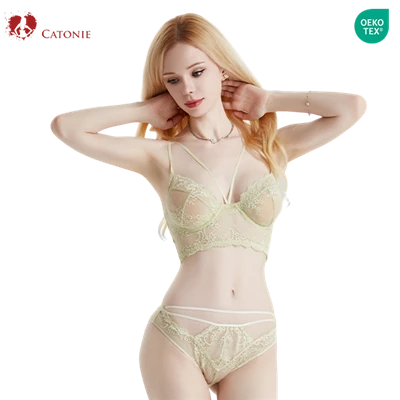
Seamless lace bras look delicate and lightweight, but developing them requires careful fabric selection. The lace needs to retain its attractive pattern, while the underlying fabric must provide enough stretch and resist deformation during heat bonding or lamination. Some fabrics feel comfortable on their own but wrinkle easily once made into a bra. Others have beautiful lace patterns but stiff edges that can cause friction during extended wear. For brands developing their own lingerie collections, customizing a lace bra is not simply about choosing an attractive fabric. Different materials and manufacturing processes need to work together.

Which Fabrics Are Suitable for Custom Seamless Lace Bras?
A seamless lace bra is rarely made from a single layer of lace. The decorative outer layer, skin-contact lining, and stretch areas may require different materials. When selecting fabrics, brands should consider where each material will be used, then check its texture, thickness, and stretch performance.
- Nylon and spandex blends: Suitable for the main body and areas that need to fit closely against the body. These fabrics usually have a smooth surface and good elasticity. During development, check the spandex content and recovery performance to prevent the bra from becoming loose after repeated wear.
- Stretch lace: Ideal for cup decoration, side panels, and sheer design details. It offers plenty of pattern options, but the lace should retain its shape when stretched and have edges that feel comfortable against the skin.
- Stretch mesh: Lightweight and suitable for creating sheer details alongside lace. Check whether the mesh openings are even and whether the fabric returns to its original shape after stretching.
- Soft microfiber: Can be used in skin-contact areas or inner layers. Its fine, smooth texture works well for everyday styles that need a softer feel against the skin.
Do Seamless Lace Bra Fabrics Need to Be Suitable for Heat Bonding?
This is an important point to consider. Heat pressing, bonding, and edge-finishing processes commonly used in seamless bras can affect fabric heat resistance, surface structure, and elasticity. Not every lace fabric is suitable for direct heat pressing, and simply bonding two fabrics together does not guarantee a smooth finish. Some materials may shrink under heat, certain patterns may develop pressure marks, and some fabric combinations may separate after repeated stretching. During material selection, test the lace and base fabric together to confirm that the temperature, pressure, and processing time are suitable before finalizing the production method.
How Do You Check the Quality of Seamless Lace Bra Fabrics?
When fabric samples arrive, checking the color and pattern is only part of the process. Brands also need to see whether the material changes after processing and everyday use. This is particularly important for basic styles intended for long-term sales, where fabric consistency between production batches matters. A newly finished sample may look attractive, but that does not guarantee it will maintain the same appearance after several washes. Pay attention to the following details during product development:
- Stretch and recovery: Test both horizontal and vertical stretch, then check whether the fabric returns to its original shape after being released.
- Performance after heat pressing: Check whether the edges remain smooth and whether the material becomes stiff, wrinkled, discolored, or poorly bonded.
- Washing performance: Look for shrinkage, color fading, and pattern distortion. Check whether the fabric still feels comfortable after washing.
- Skin comfort: During fitting, pay attention to friction caused by lace edges, bonded areas, and inner layers.
These checks should be included in the sample testing process. Have fit testers walk around, raise their arms, and bend over, then check whether the bra shifts out of position. This can reveal problems that are difficult to notice when examining flat fabric alone. Once the material combination is approved, keep fabric samples and processing records for reference when placing repeat orders.
How Do You Choose Fabrics and Production Methods for Custom Seamless Lace Bras?
Brands with finalized designs or technical packs can organize their lace patterns, fabric compositions, target colors, size ranges, and construction requirements before discussing an OEM order. If the style is still under development, ODM services can provide an opportunity to explore material combinations and garment construction. For specialty lace patterns or new materials, confirm minimum order quantities, material lead times, and processing limitations early to avoid production delays after the design has been finalized.
CATONIE has provided lingerie OEM manufacturing services since 2013 and has gradually expanded into ODM product development, with an R&D center in Dongguan. Brands can share design concepts, reference samples, or technical documents to discuss fabric matching, sample development, and bulk production requirements. If you are looking for a custom seamless lace bra manufacturer, contact CATONIE with your product designs and order requirements to discuss a lace bra development plan that fits your brand positioning.
When customizing seamless lace bras, the key is making sure the material combination works with the garment structure and manufacturing processes. Nylon and spandex provide an elastic foundation, lace creates the decorative look, while mesh and soft linings support different design requirements. Brands can start with a core style, complete heat-bonding tests, fitting checks, and washing tests, then move forward with bulk production. With the right fabric combination, the finished product can retain its delicate lace appearance while delivering a more consistent and comfortable wearing experience.