In custom-made bikini swimsuits, the choice of fabric directly determines the wearing experience, stability, and overall quality. Many people believe that swimsuit design and fit are the most important, but in reality, the fabric is the foundation. If the fabric lacks elasticity, has high water absorption, or poor durability, even the best fit will struggle to maintain comfort and aesthetics for a long time. Therefore, understanding the characteristics and applicable scenarios of different fabrics is crucial for making the right choice during the customization process.
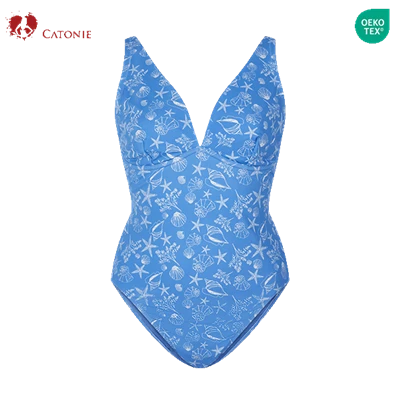
Swimsuits are a special category of clothing, requiring prolonged contact with the water environment and enduring multiple challenges such as sunlight, seawater, pool chlorine, and stretching friction. High-quality fabrics must not only possess high elasticity and good resilience but also offer UV resistance, chlorine resistance, and quick-drying properties. Different fabrics vary significantly in performance and price; a comprehensive assessment should be made based on budget, frequency of use, and target market positioning during customization.
Lycra
Lycra is a highly elastic fiber material commonly used in high-quality swimsuit production.
It has strong elastic recovery capabilities and is not easily deformed after stretching.
It conforms to the body's curves, improving wearing comfort.
Maintains structural stability even after prolonged use
Suitable for high-support and form-fitting designs.
Lycra is often blended with other fibers to enhance overall elasticity, making it a common choice for custom swimwear.
Nylon's high durability
Nylon is a widely used basic fabric in the swimwear industry.
Highly abrasion-resistant and durable.
Lightweight yet structurally stable.
Quick-drying performance superior to ordinary fibers.
Relatively affordable, offering high value for money.
Nylon fabric is suitable for everyday wear or high-frequency use and is a fundamental material for many brands.
Polyester's good chlorine resistance
Chlorine resistance is crucial in pool environments.
Resistant to fading after prolonged contact with pool water.
Stable fabric structure, not easily loosened.
Strong UV resistance.
Suitable for sporty bikini designs.
Polyester fabric is particularly suitable for frequent swimmers or water sports enthusiasts due to its outstanding stability.
Blended fabrics offer comprehensive advantages
Blended fabrics combine the advantages of multiple fibers.
Combining the advantages of nylon and Lycra.
Improving the balance between elasticity and durability.
Optimizing the feel and skin-friendly comfort.
Customizable blend ratios to meet specific needs.
Blended fabrics are frequently used in high-end custom designs because they can balance multiple performance indicators.
UV-resistant fabric
Strong UV radiation at the beach makes sun protection crucial.
The fabric undergoes special treatment to enhance sun protection.
Reduces sun damage to the skin.
Safer for extended outdoor activities.
Maintains colorfastness.
UV protection is an increasingly important trend in high-end bikini customization.
High-density fabric
High-density structure enhances swimwear stability.
High fabric weave density.
Low light transmittance, preventing embarrassing situations.
Stronger support, less prone to sagging.
Enhancing overall texture and thickness.
High-density fabrics are often used in high-end custom designs or plus-size designs to enhance the fit.
Quick-drying fabric
Quick-drying performance affects wearing comfort.
Absorbs water and quickly wicks it away.
Reduces dampness and improves comfort.
Reduces the risk of bacterial growth.
Suitable for extended water activities.
Quick-drying function allows the swimsuit to dry faster after leaving the water.
Soft, Skin-Friendly Fabric
The feel against the skin directly affects the wearing experience.
Smooth surface reduces friction.
Suitable for sensitive skin.
Reduces pressure when wearing.
Enhances overall comfort.
Soft fabrics are typically used in close-fitting linings or high-end styles.
Elasticity and Rebound Test
The rebound effect needs to be tested when selecting fabrics.
Observe whether it recovers quickly after stretching.
Check for permanent deformation.
Perform stability tests with multiple stretches.
Confirm that the structural strength meets the standards.
The testing process effectively determines whether the fabric meets customization standards.
Custom Fabric Pairing Suggestions
Different styles are suitable for different fabric combinations.
Sporty bikinis are suitable for high-elasticity blends.
Sexy styles can choose lightweight, high-elasticity fabrics. Plus-size designs require high-support structural materials.
High-end customization can combine UV-resistant and high-density materials.
Fabric selection needs to be comprehensively considered in conjunction with design requirements.
In custom bikini swimwear, the choice of fabric directly determines product quality and user experience. Lycra, nylon, polyester, and blended materials each have their advantages and are suitable for different scenarios and needs. High-end customization often combines the advantages of multiple materials to create products that combine elasticity, durability, and comfort. Meanwhile, UV resistance and quick-drying functions are increasingly becoming important standards. Choosing the right fabric not only improves wearing stability but also extends the swimwear's lifespan. Only by controlling the quality at the fabric level can a custom bikini truly realize its value and meet personalized and high-quality demands.