Many people experience frequent bra strap slippage when wearing a bra, especially when walking, raising their arms, or bending over. This problem affects the wearing experience and requires constant readjustment, which is inconvenient. Many people directly assume the size is wrong, but in reality, the cause of strap slippage is not singular. Besides sizing issues, it may also be related to shoulder shape characteristics, the structural design of the bra, and overall weight distribution. In some cases, even if the size seems correct, if the fit between the straps and the body is insufficient, slippage can still occur. Therefore, determining whether strap slippage is a size issue requires a multi-dimensional analysis rather than attributing it to a single cause.
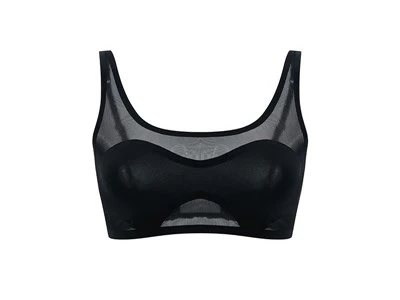
Inappropriate Strap Length or Adjustment Condition
The tightness of the strap itself is a key factor affecting stability.
- Straps that are too long can easily slip: insufficient tension makes them prone to displacement during activity.
- Uneven strap adjustment affects fit: differences in height between left and right sides can also cause instability.
Properly adjusting strap length is a fundamental solution.
Insufficient Underbust Support Leads to Upward Movement
Overall structural imbalance can affect strap performance.
- An underband that is too loose loses its anchoring ability: the bra easily rides up, causing the straps to slip off.
- Insufficient support increases the burden on the straps: pressure concentrated on the straps makes them more likely to loosen.
A stable underbust can reduce strap slippage.
Mismatch Between Shoulder Shape and Bra Design
Different shoulder shapes require different bra fits. People have significantly different shoulder shapes. Some have narrow shoulders, while others have flatter or more sloped shoulder lines. If the strap spacing and attachment point design of a bra do not match these characteristics, strap slippage is likely. For example, a person with narrow shoulders wearing a bra with widely spaced straps may find the straps lack sufficient anchoring support, making them prone to sliding outward during daily activities. If the structural design is inconsistent with the shoulder shape, even if the size itself is appropriate, unfocused pressure points can lead to reduced stability and repeated strap displacement.
Activity Habits and Wearing Method Have a Clear Impact
Daily behavior can also change strap conditions.
- Frequent arm raising or movement increases the chance of slippage: straps are prone to gradual displacement.
- Improper adjustment affects anchoring effect: constant stretching can weaken elasticity.
Correct wearing habits help reduce strap slippage.
Whether bra straps constantly fall down is not necessarily solely a sizing issue, but rather the result of multiple interacting factors. By paying attention to strap adjustment status, underbust stability, shoulder shape matching, and daily usage habits, one can more accurately determine the source of the problem. Considering structural design in conjunction with body characteristics helps improve strap slippage. Paying attention to these details can make wearing a bra more stable and comfortable, and reduce the annoyance of frequent readjustment.