The support level of a bra set directly affects wearing comfort, stability, and overall shaping effect. Many people focus on style, color, or fabric when choosing a bra, neglecting whether the support structure suits their needs. In fact, different breast shapes, wearing occasions, and design variations require different levels of support. Understanding the structural factors that determine support and considering individual needs will make it easier to choose a bra set that suits you.
Matching Support Level to Breast Shape is Crucial
When choosing bra support, matching your breast shape is fundamental. Different breast shapes have significantly different support needs; some require more concentrated and stable support, while others are better suited to softer, more enveloping support. If your breast shape inherently requires high stability, insufficient support may cause slippage, shifting, or a lack of support during wear. Conversely, if your breast shape is naturally easy to fit, excessive support may negatively impact comfort. When choosing support, the key is not necessarily the stronger the better, but whether it matches your individual needs.
Cup Structure Affects Support Performance
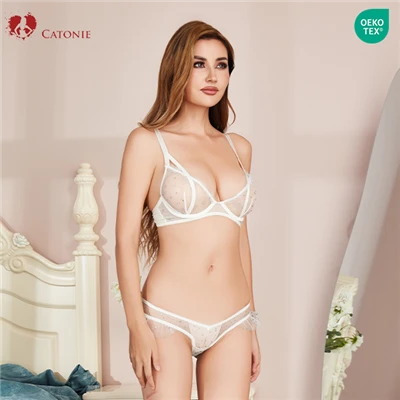
The support of a bra largely comes from its cup structure design; different structures directly affect the support effect. Cups with a three-dimensional cut usually provide more stable coverage, while simpler structures tend to offer a lighter support experience. Cup depth, side panel design, and cup shape also affect breast stability and pressure distribution. When choosing a bra, if you prioritize everyday stability, focus on the integrity of the support structure; if you prioritize comfort, you can reduce your requirements for strong support.
Underwire and Band Design are Important Sources of Support
Support comes not only from the cups, but also from the underwire and band design. A well-designed structure provides more stable support and a more balanced pressure distribution.
- Underwire design helps enhance basic support stability.
- Widened underband usually improves overall support.
- Side-tightening structure helps improve stable wrapping performance.
- High-elasticity underband is suitable for balancing support and comfort.
- Wire-free structures are more suitable for scenarios requiring light support.
Understanding the functions of these structures helps in judging the support logic of a product when purchasing, rather than just relying on advertising descriptions.
Support Needs Differ for Different Wearing Scenarios
The choice of support level also needs to be determined based on the actual wearing scenario. Daily commutes are more suitable for stable and comfortable balanced support designs, preventing excessive pressure from affecting the experience during long-term wear. Scenarios involving exercise or high activity levels are more suitable for structural designs with stronger support and higher stability to reduce displacement. Formal wear or specific clothing combinations may emphasize shaping effects, and the direction of support will also differ. Choosing the support level according to the scenario is more reasonable than rigidly pursuing a certain support style.
The Fitting Experience Determines Whether the Support is Truly Suitable
Even if the parameters and structural design seem appropriate, whether the support is truly suitable still needs to be determined through a fitting. Ideal support typically manifests as stable yet non-compressive, providing a sense of support during activity, without issues such as marks, gaping cups, or the underbust riding up. If you feel concentrated pressure or restricted movement after wearing it, it may indicate too much support; if it lacks stability, it may indicate insufficient support. Combining the fitting experience with structural assessment is crucial for accurately choosing the right support level for your bra set.