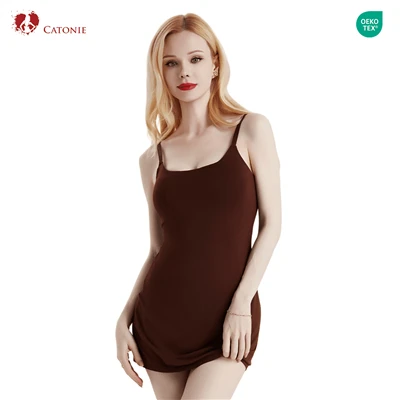
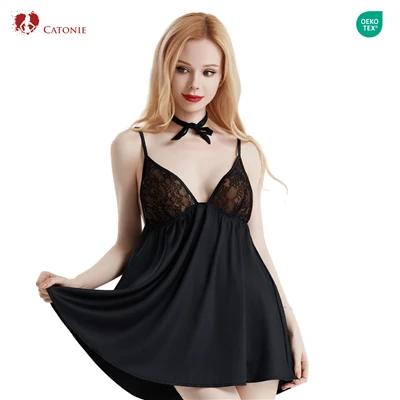
Finding the right lingerie fabric manufacturer is one of the most important steps when developing custom lingerie. Fabric is the foundation of any intimate apparel product, and its hand feel, stretch, breathability, and color consistency can directly affect the finished garment. The challenge is that some suppliers may produce good-looking samples but struggle to maintain the same quality in bulk production. When choosing a manufacturing partner, brands need to look beyond price and consider production capabilities, fabric development, sampling speed, and batch consistency to avoid unnecessary revisions later.

How to Find a Custom Lingerie Fabric Manufacturer?
When searching for a manufacturer, brands can start with industry trade shows, B2B platforms, search engines, and apparel supply-chain networks. However, simply seeing "customization available" on a supplier's website is not enough. A manufacturer suitable for lingerie projects should understand the material requirements of intimate apparel and be willing to participate in product development rather than simply supplying ready-made fabrics.
- Use keywords such as "custom lingerie fabric manufacturer" and "lingerie fabric supplier" to find manufacturers with relevant customization experience.
- Check whether the manufacturer has experience working with lingerie, swimwear, sportswear, or intimate apparel brands.
- Review the types of fabrics available, including lace, cotton, silk, microfiber, satin, and high-stretch fabrics.
- Confirm whether the manufacturer can provide fabric sampling, material matching, and bulk production instead of only selling existing fabrics.
After narrowing down several potential suppliers, send them your product type, target market, expected order quantity, and fabric requirements. The way a manufacturer responds can tell you a lot. A supplier that quickly understands your requirements and gives clear, practical feedback is often more valuable than one with an impressive product catalog but limited development support.
How to Tell If a Lingerie Fabric Manufacturer Can Handle Custom Orders?
Custom projects are different from standard fabric purchasing. A brand may only have a design drawing, while another company may already have a complete technical package. The manufacturer may need to support everything from material recommendations and color matching to sampling and final production. A capable supplier should be able to turn product requirements into practical manufacturing solutions instead of leaving the brand to figure out every detail alone.
|
Selection Item |
What to Confirm |
Why It Matters |
|
Material Development |
Can the manufacturer match the required fabric and composition? |
Determines the basic feel and performance of the product |
|
Color Development |
Can customized colors be produced? |
Helps maintain consistent brand presentation |
|
Sample Production |
How long does sampling take? |
Affects the speed of new product development |
|
OEM Production |
Can production follow the technical specifications? |
Helps ensure the original design is manufactured correctly |
|
ODM Development |
Does the manufacturer have a design library and development team? |
Makes it easier to develop new collections quickly |
|
Bulk Supply |
Can quality remain stable during mass production? |
Reduces quality and delivery risks |
During discussions, also confirm the minimum order quantity, sample fees, revision policy, production lead time, and quality-control procedures. Customized fabrics need particular attention because color, stretch, and hand feel can change between batches. Getting these details clear before production begins can save a great deal of time later.
What Information Should You Prepare Before Contacting a Manufacturer?
Many brands contact a fabric manufacturer with a single product image and ask, "Can you make this?" The response is often a vague quotation or general recommendation. The more information you provide, the easier it is for the manufacturer to understand what you actually need and provide useful material suggestions.
- Provide product images or design drawings so the manufacturer knows what type of lingerie the fabric will be used for.
- Specify the required composition, thickness, stretch, color, and hand feel. If you already have a technical package, send it directly.
- Share the expected order quantity and target launch date so the manufacturer can assess material availability and production scheduling.
- If you already have a physical sample, send it for fabric matching so both sides can discuss the requirements more clearly.
- Explain your target market and product positioning, since premium lingerie, everyday basics, and functional intimate apparel can require very different fabric solutions.
Having the right information ready makes communication much more efficient and allows the manufacturer to provide more specific recommendations. Brands without a complete technical package do not need to finalize everything before contacting a supplier. They can establish the product direction first and work with an experienced development team to refine the material solution along the way.
Why Should a Lingerie Fabric Manufacturer Offer Both OEM and ODM?
When a brand already has a finished design, OEM production is a practical option for manufacturing according to existing specifications. When the product is still being developed, ODM services provide more flexibility. Working with a supplier that offers both models allows brands to choose the right approach at different stages without searching for a new manufacturing partner every time they launch a collection.
CATONIE started as an OEM factory in 2013 and gradually expanded its production capabilities as market demand increased. The company later established an R&D center in Dongguan with a team of 26 experts focused on product development and innovation. Today, CATONIE has more than 189 employees, an annual production capacity of 2 million pieces, and services covering material matching, sample development, and bulk production. Brands looking to move quickly can also explore its continuously updated swimwear and intimate apparel design library, then customize selected styles to match their brand positioning and target market.
Finding the right custom lingerie fabric manufacturer is not about collecting the largest possible list of suppliers. The real goal is to find a partner that understands intimate apparel, can maintain stable material quality, and is willing to support product development. Brands can start by evaluating manufacturing experience, material capabilities, sampling services, and bulk-production consistency, then use samples to verify the actual results. A manufacturer such as CATONIE, with both OEM production and ODM development capabilities, can manufacture an existing design according to specifications while also helping brands that are still developing their products with fabric, style, and product-development support.
Once you have found a reliable manufacturer, the key questions are whether the samples meet your requirements, whether bulk production can maintain consistent quality, and whether communication and delivery schedules are dependable. Choosing the right lingerie fabric can make pattern development, sewing, and final garment production much easier. If the decision is based only on the lowest price, any initial savings can quickly disappear when fabric quality becomes inconsistent, samples need to be remade, or production is delayed. For brands preparing a new lingerie collection, careful manufacturer selection and sample approval are often much more valuable than simply choosing the cheapest quotation.